Mayan Ruins In Mexico: An Overview
Mexico holds hundreds of Maya archaeological sites, but a traveler based in Tulum can reach five of the most important ones in under three hours each. This overview maps the country's ruin regions, then narrows to the corridor where one base covers Tulum, Coba, Muyil, Ek Balam and Chichen Itza.
Short answer
The main Mayan ruin regions of Mexico are the Yucatan Peninsula, Chiapas, Campeche and the Gulf coast, holding thousands of recorded sites. The Tulum corridor is the efficient pick for a first trip: Tulum, Coba and Muyil sit within 45 minutes of town, Ek Balam within two hours, and Chichen Itza about two hours by toll road, so one base covers five major sites.
Mexico records thousands of Maya archaeological sites, from the giant capitals of the Yucatan to jungle cities in Chiapas and Campeche that most travelers never reach. The practical question for anyone planning a trip is not which ruins exist, it is which cluster of them you can actually visit without burning half the vacation on buses. The answer, for most first-time visitors, is the corridor that runs from Tulum through Coba and Valladolid up to Chichen Itza: five major sites, all within a two-hour drive of one beach town, with the quietest of the five, Muyil, sitting inside the Sian Ka'an biosphere.
This overview covers the country's ruin regions first, then narrows to that corridor and the real numbers a planner needs: distances, entrance fees in pesos, opening hours, and the climbing rules that differ sharply from one pyramid to the next.
Where Are The Main Mayan Ruins In Mexico?
The major Mayan ruin regions of Mexico are the Yucatan Peninsula (Chichen Itza, Uxmal, Ek Balam, Coba, Tulum), the state of Campeche (Calakmul, Edzna), Chiapas (Palenque, Yaxchilan, Bonampak), and the Gulf coast (El Tajin, though that site is Totonac rather than Maya). For trip planning, the Yucatan Peninsula wins on access: its sites sit close together, on flat roads, within a few hours of Cancun, Merida and Tulum.
The Maya world never respected modern borders. It stretched across southern Mexico, Guatemala, Belize and Honduras, and Mexico holds the largest share of it. But the sites cluster very differently. Chiapas hides Palenque in rainforest foothills reached through Villahermosa or Tuxtla Gutierrez, a separate trip in itself. Campeche's Calakmul sits deep in a biosphere reserve, a five-hour drive from the nearest airport, rewarding for serious ruin enthusiasts and impractical for a one-week beach holiday.
The Yucatan Peninsula is different. Cancun and Tulum sit on its eastern edge, Merida on the west, and the great sites fan out between them along flat, fast highways. Chichen Itza, Uxmal, Ek Balam, Coba and Tulum are all within a few hours of at least one major airport. That density is why most first visits to "the Mayan ruins of Mexico" end up being a Yucatan trip, even though the country's Maya heritage is far wider than that one peninsula.
For a deeper site-by-site comparison of the options around Tulum specifically, the Mayan ruins near Tulum comparison breaks down each site's character, crowds and costs side by side.
Why Is The Tulum Corridor Such An Efficient Choice?
Five major Mayan sites sit within day-trip range of Tulum: the Tulum archaeological zone in town, Coba about 45 minutes northwest, Muyil about 25 minutes south, Ek Balam roughly 1.5 to 2 hours away, and Chichen Itza about two hours via the toll road. One hotel base can therefore cover a coastal fortress, a climbable jungle pyramid, a biosphere site, a stucco masterpiece and the most famous ruin in the Americas.
That spread is unusual. Most ruin regions force a choice: base near one site and accept long drives to the others, or move hotels every two nights. The corridor between Tulum and Valladolid compresses five distinct experiences into a radius you can drive in a morning.
| Site | Distance From Tulum | Typical Drive Time | Character |
|---|---|---|---|
| Tulum archaeological zone | In town | 10-15 min from most hotels | Walled coastal fortress, ocean views |
| Muyil | ~18-25 km south | ~20-25 min | Quiet site inside Sian Ka'an biosphere |
| Coba | ~42-48 km northwest | ~45 min | Jungle site, climbable pyramid, bikes |
| Ek Balam | ~121-130 km | ~1.5-2 hours | Climbable Acropolis, stucco friezes |
| Chichen Itza | ~153 km | ~2 hours via 180D toll road | The flagship, fully restored, crowded |
The efficiency argument is not just about driving. Tulum also gives you the widest choice of bookable day tours, because operators run daily departures to every site on that list. A traveler who wants Coba and a cenote in one day, or Chichen Itza with a Valladolid stop, can buy that as a single product rather than assembling it from colectivos and rental cars. The Coba ruins guide and the Chichen Itza from Tulum guide cover those two day trips in detail.
Three tours stand out for covering this corridor with the least friction: a guided walk of the Tulum zone itself, a small-group Coba day with a cenote and the Mayan museum, and a Chichen Itza day trip with a cenote swim and Valladolid.
What Do The Tulum Ruins Themselves Offer?
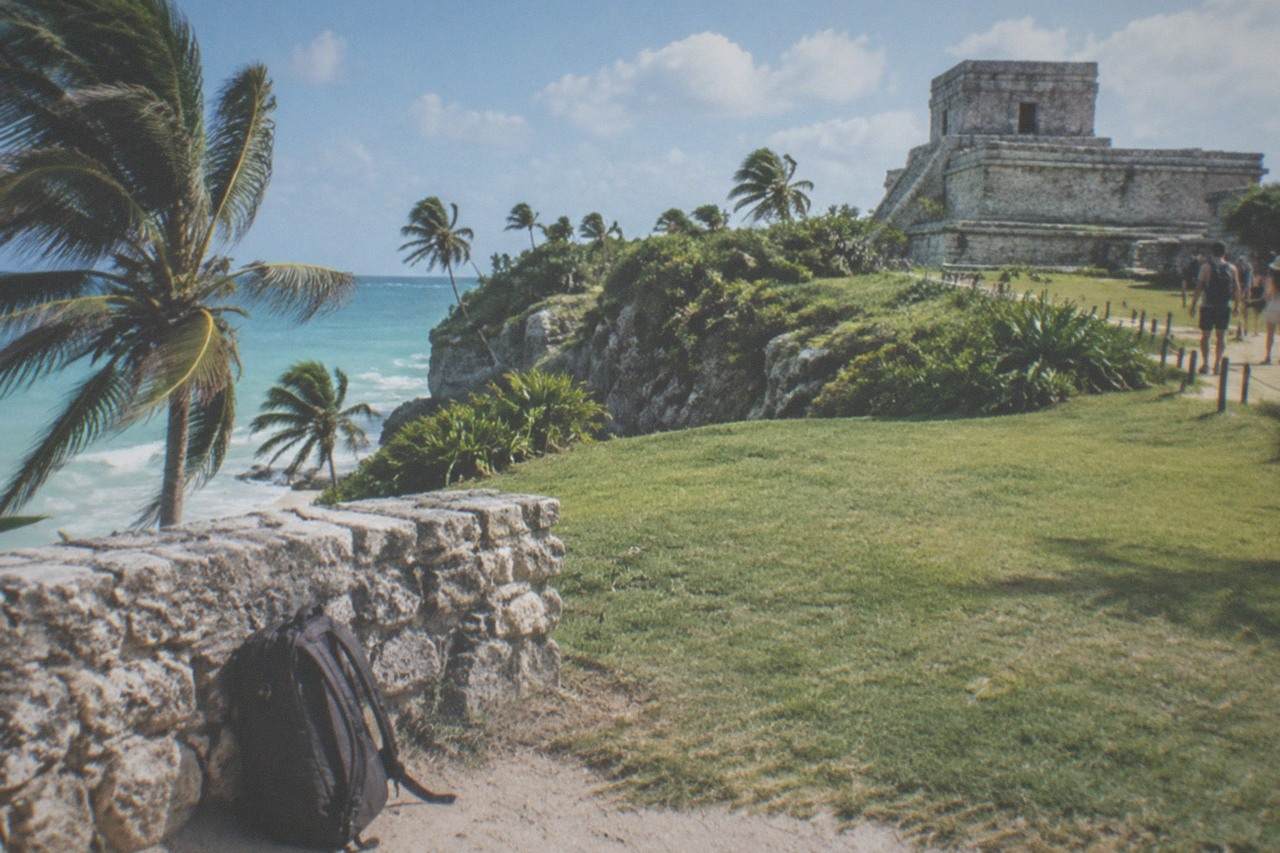
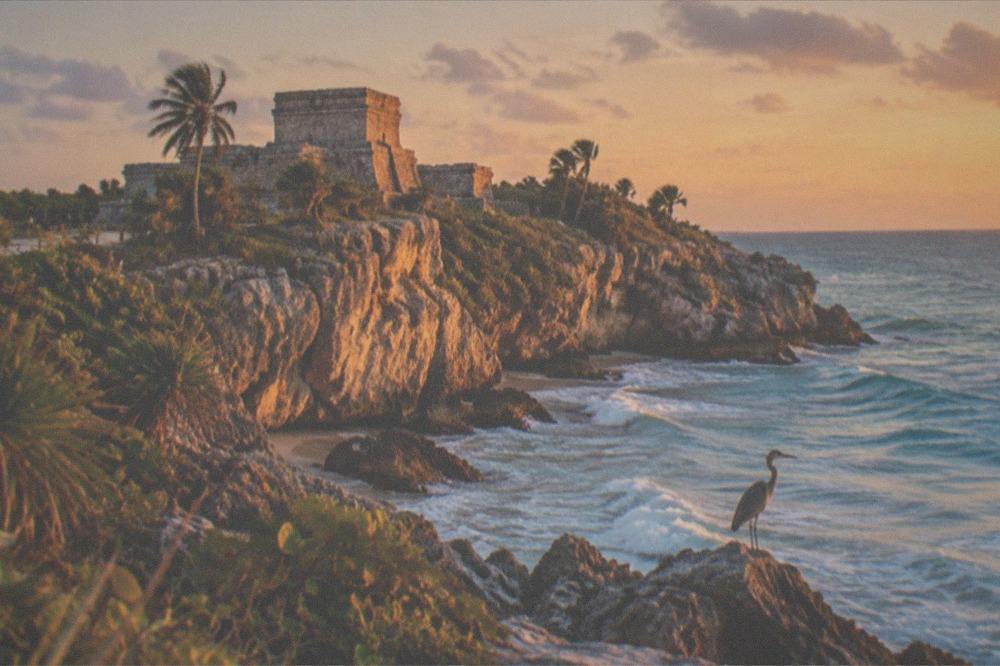
The Tulum archaeological zone is a walled Late Postclassic Maya city (roughly 1200-1550 AD) on a cliff above the Caribbean, with El Castillo, the Temple of the Frescoes and the Temple of the Descending God as its headline structures, plus a small swimmable beach cove inside the gate. Most visitors spend 1.5 to 3 hours on site, and the unified entrance fee is 265 MXN for foreign visitors, roughly $13-15.
Tulum is the smallest of the corridor's sites and the easiest to reach, which cuts both ways: it is the one ruin you can visit before breakfast, and it is also the one that gets crowded by mid-morning. The INAH page for the zone lists daily hours of 8:00 to 17:00 with last entry at 15:30, and the busiest window runs roughly 10:00 to 15:00. Arriving at opening is the standard advice, and it works.
Historically, Tulum was a trading port, not a ceremonial giant. INAH's own records note Stela 1 bears a date of 564 AD, pointing to earlier occupation, but the visible city belongs to the Postclassic era when it served as a coastal hub exchanging cotton, cacao, obsidian and jade, likely linked to the inland power of Coba. The wall that gives the site its name encloses the ceremonial core on three landward sides, with the sea cliff forming the fourth. El Castillo, the tallest structure, may even have functioned as a beacon guiding canoes through the reef gap, a detail INAH archaeologists have argued from its window alignments.
One point that trips up many planners: there is no swimmable cenote inside the ruins zone. Casa del Cenote is a named structure, not a swim spot. There is ocean beach access at a small cove below El Castillo, reached by a wooden staircase, and the separate cenotes like Gran Cenote sit outside the gate entirely. The Tulum ruins site guide covers the structures and routes in full.
The cheapest guided introduction on this site's lineup is the archaeological zone walking tour, from $18 per person, a 1.15-hour guided walk rated 4.9 from 109 reviews, with beach access at Parque del Jaguar and transport not included. For a town-based traveler, it is the lowest-friction way to put a guide's knowledge on top of a site you can walk into.
Can You Still Climb Any Mayan Pyramid In Mexico?
Yes, but only at two of the corridor's sites. Coba's Nohoch Mul pyramid reopened to climbers around December 2025 on a new wooden staircase, with small groups, a roughly 8:00-15:30 climbing window and a ~15-minute summit limit, and Ek Balam's Acropolis is climbable via steep stone steps with rope assistance. Climbing is banned at Chichen Itza since 2006 and not permitted on any structure at Tulum or Muyil.
This is the single most confused topic in Maya travel planning, and the confusion is understandable because the rules genuinely differ by site and have changed over time.
| Site | Can You Climb? | Rules And Notes |
|---|---|---|
| Coba (Nohoch Mul) | Yes | Wooden staircase over original steps, groups of 14-15, ~8:00-15:30 window, ~15-minute summit limit, closed-toe grip shoes required |
| Ek Balam (Acropolis/El Trono) | Yes | Steep stone steps with rope assist, ~43 m tall; new western Grand Acropolis section opened 2026 with small-group timed access |
| Chichen Itza (El Castillo) | No | Banned since 2006 after a fatal accident and to prevent erosion, fully enforced, barriers keep visitors back |
| Tulum | No | No structure open to climbing |
| Muyil | No | Marked paths and viewing areas only |
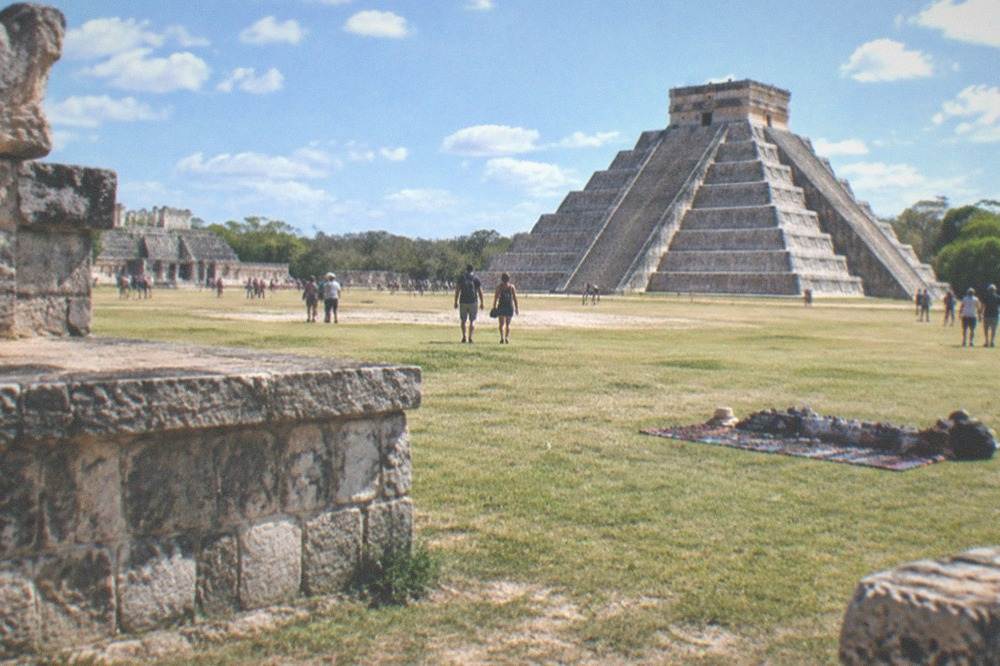
El Castillo at Chichen Itza has been closed to climbers since 2006, and the interior, including the Red Jaguar Throne, remains closed too. Visitors are kept at a distance from the structure. The contrast with Coba is real and current: Nohoch Mul, at 42 meters the tallest Maya pyramid structure in the Yucatan, reopened to climbing after a roughly six-year closure, and 2026 reporting consistently confirms ongoing access under the regulated format. It is one of two of the region's headline pyramids where a casual visitor can stand on top, the other being Ek Balam's Acropolis. The can you still climb Coba ruins piece covers the reopening rules in detail.
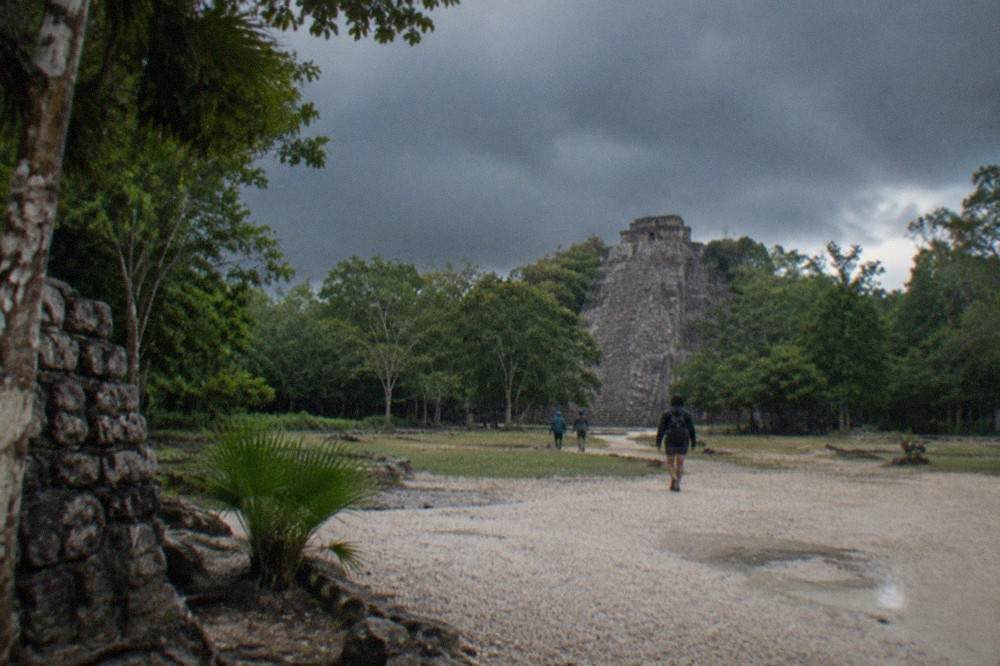
Why the difference? Preservation. Chichen Itza's flagship receives enormous foot traffic, and every climbed step erodes the original stone; the 2006 fatal accident sealed a debate that was already running. Coba's compromise, a wooden staircase that takes the wear instead of the pyramid, is the model that made its reopening possible. Ek Balam's Acropolis is climbable partly because its stucco friezes are what you climb toward, and access rules there are managed with timed small-group entry in the newest section.
How Much Do Entrance Fees Cost Across The Sites?
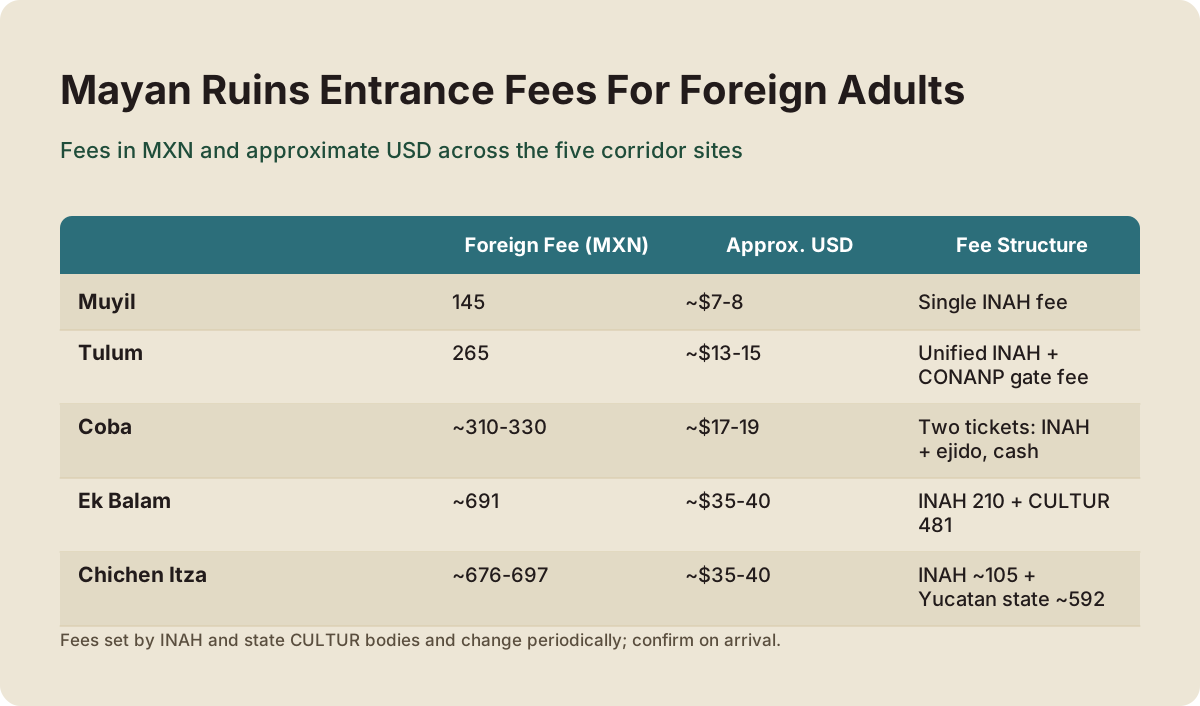
Entrance fees for the corridor's sites range from 145 MXN at Muyil to roughly 697 MXN at Chichen Itza for foreign adults, with Tulum at 265 MXN, Coba around 310-330 MXN total and Ek Balam around 691 MXN total. Fees are set by INAH and state CULTUR bodies, they change periodically, and the current figures are reasonable estimates: confirm on arrival.
The fee structures are not uniform, which is the trap. Tulum now runs a single unified gate fee, 80 MXN for nationals and residents, 265 MXN for foreign visitors, covering both the INAH zone and the CONANP/Parque del Jaguar access in one payment, following a July 2026 federal decree. Coba uses a two-ticket cash system: roughly 210 MXN INAH plus 100-120 MXN local ejido fee for foreigners. Chichen Itza splits its fee between a federal INAH portion and a Yucatan state CULTUR portion, and Ek Balam does the same.
| Site | Foreign Adult Fee (MXN) | Approx. USD | Fee Structure |
|---|---|---|---|
| Muyil | 145 | ~$7-8 | Single INAH fee |
| Tulum | 265 | ~$13-15 | Unified INAH + CONANP gate fee |
| Coba | ~310-330 | ~$17-19 | Two tickets: INAH + ejido, cash |
| Ek Balam | ~691 | ~$35-40 | INAH 210 + CULTUR 481 |
| Chichen Itza | ~676-697 | ~$35-40 | INAH ~105 + Yucatan state ~592 |
Two details save real money. Sunday entry is free for Mexican nationals and foreign residents with valid ID at INAH-run sites, but foreign tourists still pay full price, so a Sunday visit saves you nothing and costs you the biggest crowds of the week. And Yucatan residents are often exempt from the state CULTUR portion at Chichen Itza and Ek Balam, which explains why the same ticket costs locals a third of the foreign price. The Tulum ruins tickets and fees guide tracks the Tulum fee's history, including the early-2026 increase that the July decree then reduced and unified. The official INAH page for the Tulum zone is the primary source for that site's current fee and hours, and the Chichen Itza fee detail page tracks the split fee there.
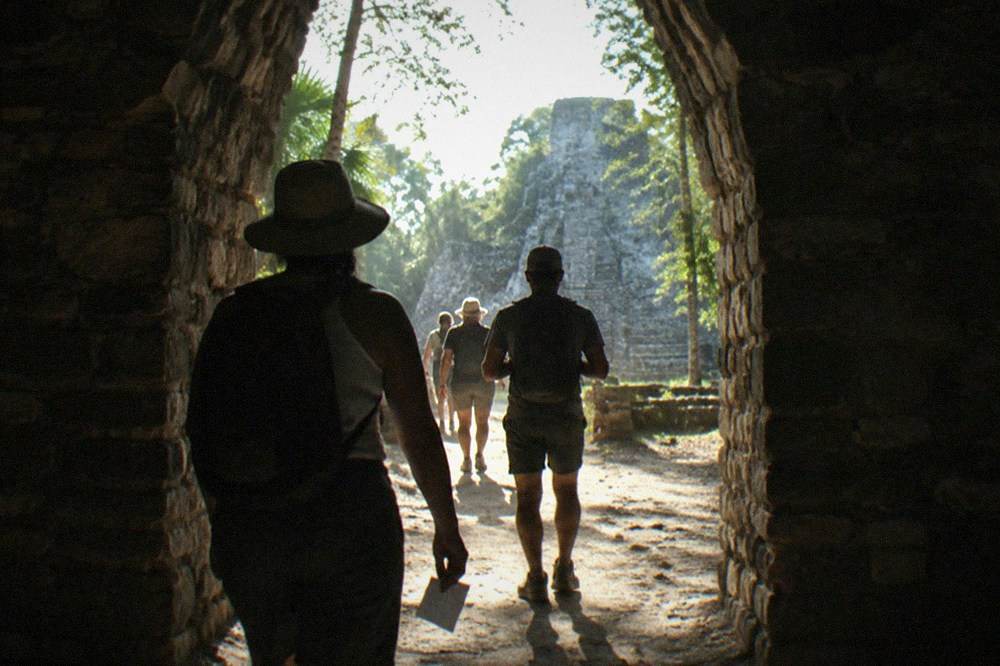
Fees are set by INAH and the state CULTUR bodies and can change, so treat every figure above as a planning range and confirm at the gate.
If the fee table has you leaning toward starting small, the Tulum walking tour is the natural first booking: it covers the easiest site in the corridor, it costs from $18 per person, and the listing offers free cancellation so you can hold your slot while the rest of the itinerary settles.
What Do The Quieter Sites Add To A Mexico Ruins Trip?
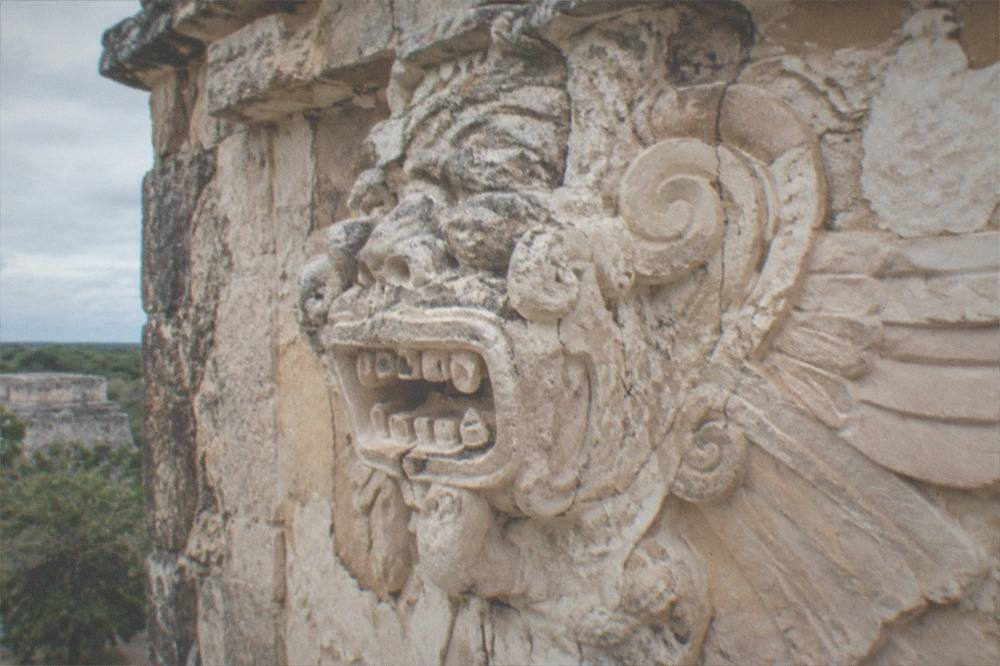
Muyil and Ek Balam are the corridor's low-crowd options. Muyil, inside the Sian Ka'an UNESCO Biosphere Reserve about 25 minutes south of Tulum, charges 145 MXN for foreigners and pairs its ruins with a separate paid lagoon float. Ek Balam, about two hours away, offers the climbable Acropolis and some of the best-preserved stucco decoration in the Maya world, at a fraction of Chichen Itza's crowds.
Muyil reopened to the public in February 2026 after a conservation closure, with an expanded visitor path and finds that included a temazcal and a deity-faced ceramic vessel. The site itself is compact and serene, but its real draw is the setting: ruins at the edge of a lagoon system that the ancient Maya used as a trade route, inside a biosphere reserve. The boat and canal float through the mangroves, often called a lazy river, is a separate paid add-on, around 1,000 MXN per person on typical operator listings, and it is not folded into the ruins entrance fee.
The most-reviewed Muyil product in this lineup is the guided Muyil and Sian Ka'an tour from Tulum, from $169, rated 4.9 across 846 reviews, a 6-hour trip with hotel pickup in Tulum, water, snacks and an air-conditioned minivan. There is also a Muyil ruins and Sian Ka'an lazy river option from $219, hotel pickup and drop-off in Tulum included, rated 4.8 from 439 reviews.
Ek Balam rewards a different kind of visitor: the one who wants to climb something and see original decoration up close. Its Acropolis, about 43 meters tall, carries a rope-assisted stone staircase to the top, and the facade below features stucco friezes in a state of preservation that Chichen Itza's weathered stones cannot match. Daily visitor numbers run in the low hundreds, against thousands at the headline sites. The Ek Balam from Tulum guide and the Muyil and Sian Ka'an guide cover both in depth.
When Is The Best Season To Visit Mayan Ruins In Mexico?
The dry season, roughly November to April, is the best window for ruins visits in the Yucatan: lower humidity, less rain and more manageable heat for walking exposed sites. December to March is the most reliable stretch but also the most crowded. The rainy and hurricane season runs June to November, cheaper and quieter, with afternoon showers and a peak storm risk in September and October.
The corridor's ruins are mostly open-air walks with little shade, so season matters more here than at museum-heavy destinations. Dry-season daytime highs around Tulum run roughly 82-86°F (28-30°C) with lower humidity, which is comfortable for a two-hour walk through Coba's jungle paths or Chichen Itza's exposed grand plaza. In the wet season the same walks become a sauna by 11 a.m., and afternoon storms can shut down a cenote swim or a lagoon float.
Sargassum seaweed, which affects Tulum's beaches mainly from around May to July, does not reach the ruins themselves, so a sargassum summer is still a viable ruins trip. The trade-off in summer is purely heat, rain and the small chance of a storm disruption, balanced against lower prices and thinner crowds.
Within any given week, timing beats season. Arriving at Chichen Itza between 7:45 and 8:15 a.m., ideally Tuesday to Thursday, buys a calm window until roughly 10 a.m., before the buses from Cancun and Playa del Carmen arrive in volume. Midday, 11 a.m. to 2 p.m., is peak crowds, heat and vendor activity everywhere. Equinox days, around March 20-21 and September 22-23, draw very large crowds to Chichen Itza specifically for the serpent shadow on El Castillo.
Is It Safe To Visit The Mayan Ruins In This Region?
Yes, the ruin sites themselves are ticketed, patrolled, daytime-only attractions and are described as generally safe; Quintana Roo state carries a US State Department Level 2 "Exercise Increased Caution" advisory, the same tier as France, Italy, Spain and the UK, which flags crime risk and urges caution after dark in town areas rather than at the archaeological zones. Tulum's violent crime metrics improved sharply through 2025 and 2026 per local reporting.
The honest framing is that the advisory exists and that the ruins are the least of a visitor's concerns. The official Mexico travel advisory places Quintana Roo at Level 2 while Yucatan and Campeche, the states holding Chichen Itza, Ek Balam, Uxmal and Merida, sit at Level 1. Standard guidance is to stay in patrolled tourist zones, be alert after dark downtown, use licensed taxis or arranged transport, and take the usual care with valuables in nightlife settings.
The ruins fit none of the risk categories. They are gated, ticketed, patrolled sites with security presence, including enhanced access controls reported at the Tulum zone. Daylight visits with a booked tour or an early independent arrival are the norm, and tourist-targeted violence at archaeological sites remains rare. Local reporting through 2026 recorded a sharp decline in Tulum municipality homicides alongside isolated incidents away from tourist zones, so the level-2 tier is context, not a reason to skip the corridor. The is there a cartel presence in Tulum piece covers this question in full.
Which Mayan Ruin Should You Actually Visit First?
For most first-time visitors the answer is Tulum first for its ease and setting, then Chichen Itza for the scale and fame, then Coba if climbing a pyramid matters to you, with Muyil or Ek Balam as the quiet alternatives. The deciding factors are climbing rules, crowds and drive time, not ranking: Chichen Itza is the most impressive and the most crowded, and Coba and Ek Balam are the two headline pyramids you can climb.
A simple decision path works better than a ranking. If your trip is short and you want one ruin, take a Chichen Itza day trip from Tulum: the drive is about two hours on the toll road, the site is the most famous in the country, and the small-group tours that bundle a cenote swim and a Valladolid stop turn the long drive into a full, varied day. The most-reviewed Chichen Itza product on this list, from $214 and rated 4.9 across 2,207 reviews, runs about 10 hours with Tulum hotel pickup, a guided Chichen Itza visit, a cenote swim and lunch. The cheapest headline is $90, a 12-hour trip rated 4.6 from 377 reviews with hotel pickup from Tulum and a regional buffet lunch.
If you want to climb a pyramid, go to Coba instead, and go early: the climb window runs to about 3:30 p.m., but the heat and the crowds both argue for a morning arrival. The small-group Coba, Multun Ha cenote, Tulum and Mayan museum tour, from $109 and rated 4.5 from 774 reviews, packs Coba and a cenote into a 10-hour day with transport included, though the Tulum entrance fee is extra on that one.
And if your base is Tulum itself, start with the walk into the archaeological zone, from $18 with a guide, because it is the ruin you can do before breakfast and it sets up the history you will see everywhere else. The site behind this guide, Tulum Ruins Tours, exists precisely because that one small walled city is the natural anchor for the whole corridor.
Whichever order you choose, book the long day trips early in your stay rather than late: a tour with free cancellation lets you reshuffle if weather or energy demands it, and the early-morning departures that beat the crowds are the first slots to fill.
Common Questions About Mayan Ruins In Mexico
Which mayan ruin is the best to visit?
For a first trip, Chichen Itza is the most impressive single site and the most famous, but the best overall choice depends on what you want: Tulum for ocean views and ease, Coba for its climbable headline pyramid, Ek Balam for quiet and preserved stucco, and Muyil for a biosphere setting.
Are tulum ruins worth visiting?
Yes, for most travelers. The walled city above the Caribbean is small, reachable from town without a car, and pairs with a swimmable beach cove inside the gate. Visit at opening to avoid the 10:00-15:00 crowds, and expect 1.5 to 3 hours on site.
Can you still walk up coba ruins?
Yes. Nohoch Mul reopened to climbers around December 2025 on a wooden staircase, with small groups of 14-15, a climbing window of roughly 8:00 to 15:30, a 15-minute summit limit and closed-toe grip shoes required.
Why can't you go inside chichen itza?
Climbing El Castillo has been banned since 2006, after a fatal accident and to prevent erosion of the original steps, and the ban is fully enforced. Visitors are kept back from the structure and the interior, including the Red Jaguar Throne, is closed.
Which mayan ruins are better to visit, coba or tulum?
They serve different trips. Coba offers a jungle setting, bike paths between structure groups and a climbable headline pyramid; Tulum offers the cliffside setting, the easiest access and a swim. With a car or a tour, many visitors do both in one day.
Is ek balam worth visiting?
Yes, especially for travelers who want to climb a pyramid or see original stucco decoration without Chichen Itza's crowds. The Acropolis is climbable via steep rope-assisted steps, daily numbers run in the low hundreds, and the site sits about 1.5 to 2 hours from Tulum.