Muyil Ruins And Sian Ka'an: The Full Guide
Muyil sits inside a UNESCO biosphere reserve about 20 minutes south of Tulum, charges 145 MXN for foreign visitors, and is quiet enough that you can hear birds instead of tour buses. This guide covers the fees, the hours, the lagoon float, and how to decide between the bookable tours.
Short answer
Muyil (Chunyaxche) is a small Maya archaeological site inside the Sian Ka'an Biosphere Reserve, roughly 18 to 25 km south of Tulum on Highway 307. Foreign visitors pay 145 MXN at the gate, parking is free, and the site is open daily 8:00 to 17:00 with last entry at 16:30. The lagoon float is a separate paid add-on.
Muyil is the Maya site you drive past on the way to Bacalar without knowing it. It sits inside the Sian Ka'an Biosphere Reserve, a UNESCO-listed stretch of wetlands, lagoons and mangrove forest about 20 minutes south of Tulum on Federal Highway 307, and it charges foreign visitors 145 MXN at the gate, with free parking. While Tulum's walled city drew roughly 1.03 million visitors in a recent year, Muyil stays quiet enough that you can stand at the base of its castle pyramid and hear wind in the trees rather than a crowd. INAH's official site record for the zone lists it as Chunyaxche, its pre-Hispanic name, and the site reopened to visitors in February 2026 after a conservation closure that restored paths and expanded access to structure groups that had been off-limits.
That reopening is the main reason Muyil belongs on a Riviera Maya itinerary right now. The site traded two quiet years for improved walkways, signage and a wider visitor circuit, and it still receives a fraction of the traffic of the coast's better-known ruins. This guide covers what Muyil is, what it costs, what the famous lagoon float actually involves, how to reach it, and how the three bookable Muyil and Sian Ka'an tours differ, so you can decide whether the quiet site inside the reserve suits your trip better than the headline names.
What Are The Muyil Ruins And Why Were They Built Here?
Muyil, also called Chunyaxche, is a Maya archaeological zone inside the Sian Ka'an Biosphere Reserve in Quintana Roo, about 18 to 25 km south of Tulum on Highway 307. It was a trading settlement tied to the lagoon and canal systems of the reserve, and its most visible structure today is a castle pyramid rising above the jungle canopy. The site is managed by INAH and recorded under the name Chunyaxche on the official site register.
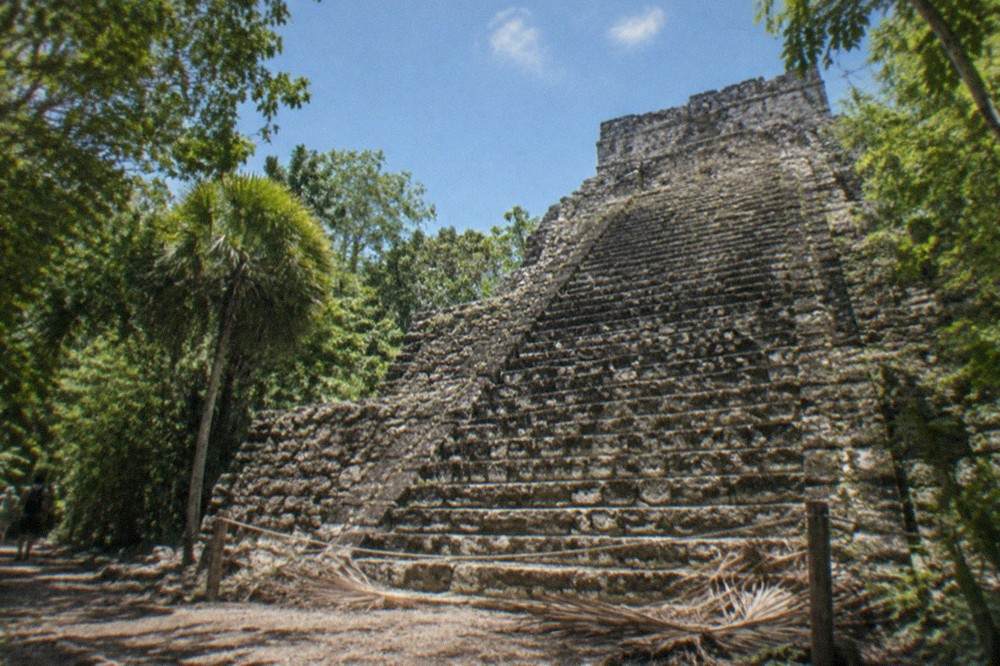
The site's position is the whole story. Muyil sits a short walk from the Chunyaxche Lagoon, which connects through natural and ancient-modified canals to the Boca Paila channel and the Caribbean. For the Postclassic Maya, that made Muyil a working port: goods could move from the coast inland through the lagoon system, and the settlement controlled that route. The castle pyramid, El Castillo, is the tallest structure on the visible circuit and shows East Coast architectural style similar in period to Tulum's buildings, with construction phases spanning the Late and Terminal Classic into the Postclassic.
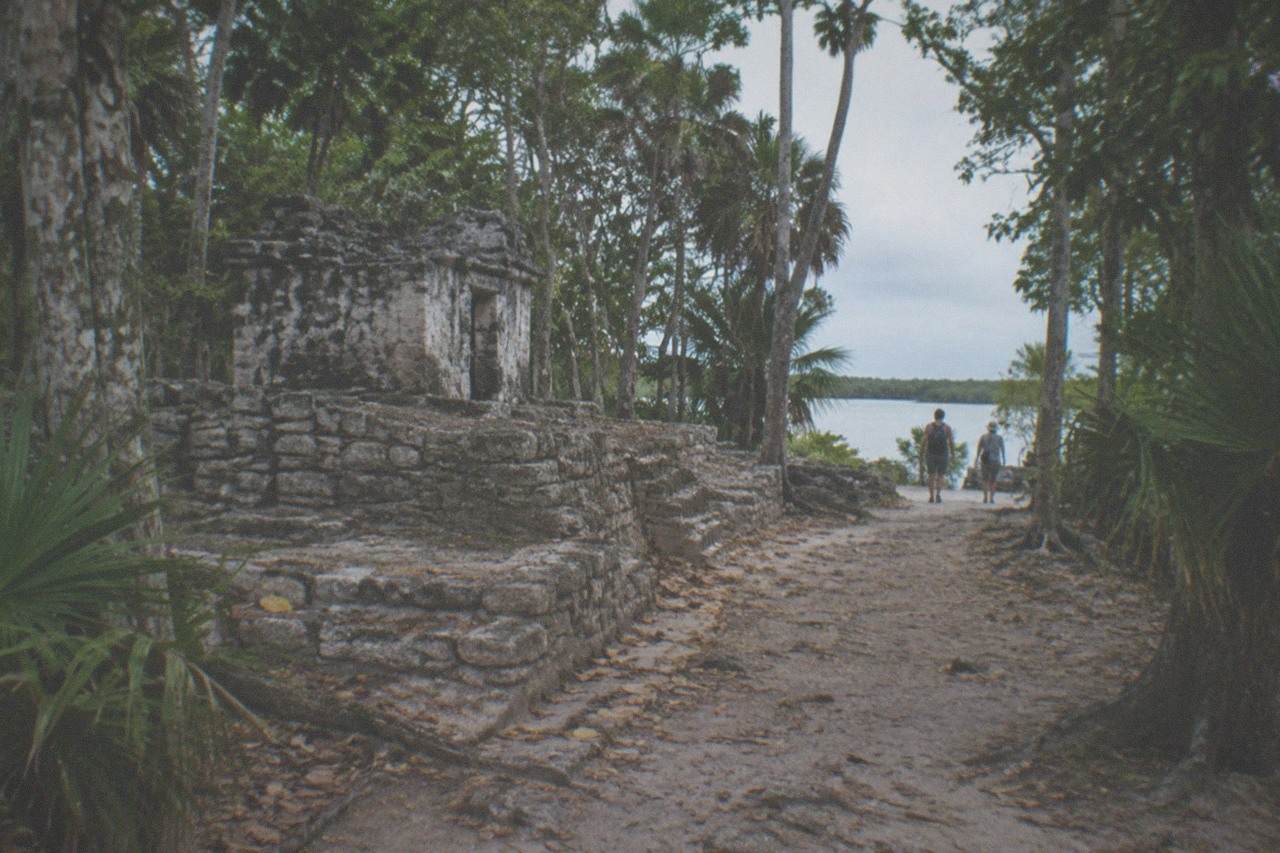
Unlike Tulum, Muyil was never a walled coastal fortress. It is a low-rise, spread-out site where temples, plazas and platform groups sit along a forest path that runs roughly a kilometer from the entrance to the lagoon lookout. The walk between structures is the experience: tall canopy, exposed roots, and, on most mornings, more birds than people. INAH's record for the site notes the daily hours of 8:00 to 17:00 with last entry at 16:30, and the zone is open every day of the week.
What you cannot do at Muyil is climb. Conservation rules keep visitors on marked paths and viewing areas, and no structure is open to walking on or ascending. That contrasts with Coba, where the Nohoch Mul pyramid reopened to climbers in December 2025, and with Ek Balam, where the Acropolis remains climbable with a rope-assisted staircase. If standing on a pyramid is the goal, Muyil is the wrong site; if a shaded, uncrowded walk through a functioning ancient landscape is the goal, it is hard to beat in this region. For a wider view of the options, the Mayan ruins near Tulum comparison ranks all the sites by drive time, fee and crowd level.
How Much Does It Cost To Enter Muyil?
Foreign visitors pay 145 MXN at the gate, roughly $8 to $9 USD, while Mexican nationals and residents pay 80 MXN. Parking at the site is free. Fees are set by INAH and can change, so confirm the posted rate on arrival. The site is open daily 8:00 to 17:00, with last entry at 16:30, and Sunday entry is free for Mexican nationals and foreign residents with valid ID, not for foreign tourists.
The gate fee covers the archaeological zone only. That distinction matters more at Muyil than anywhere else on this coast, because the site sits inside a biosphere reserve and the water-based activities are run separately. The lagoon boat trips and the canal float, the famous lazy-river drift through mangroves and clear channels, are operated by local cooperatives and tour companies as paid add-ons, typically around 1,000 MXN per person when booked on-site or through an operator, and daily reserve entries can be limited. Nothing in the 145 MXN ruins ticket includes water access.
Here is the full cost picture for a visit, with fees in MXN first and approximate USD ranges as parentheticals. Exchange rates move, so treat the dollar figures as planning ranges only.
| Item | MXN | Approximate USD | Notes |
|---|---|---|---|
| Muyil entrance, foreign visitors | 145 MXN | $8-9 | INAH gate fee |
| Muyil entrance, nationals/residents | 80 MXN | $4-5 | Valid ID required |
| Parking | Free | Free | On-site lot at the highway entrance |
| Lagoon/canal float tour | ~1,000 MXN per person | $55-60 | Separate paid add-on, not in the gate fee |
| Sunday entry, nationals/residents | Free | Free | Foreign tourists still pay full price |
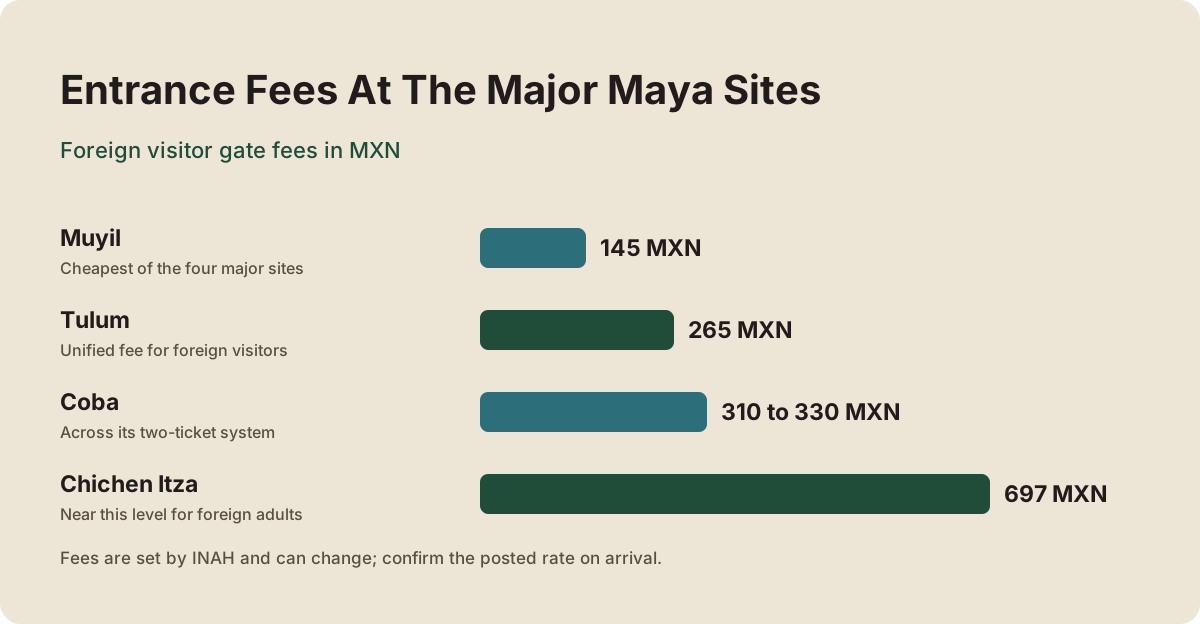
Compare that with the coast's other gates and the value is clear. Tulum's unified fee is 265 MXN for foreign visitors, Coba runs about 310 to 330 MXN across its two-ticket system, and Chichen Itza sits near 697 MXN for foreign adults. Muyil is the cheapest of the four major sites, and it is the only one that comes with a UNESCO-listed wetland attached. The trade is scale: Muyil's visible circuit is small, an hour to 90 minutes on foot, so most visitors pair it with the lagoon or move on to something else in the afternoon.
Can You Combine The Muyil Ruins With A Sian Ka'an Lagoon Float?
Yes, and that combination is the reason most people make the trip. The ruins walk ends near the Chunyaxche Lagoon, where local operators run boat trips and a canal float through mangroves and clear shallow channels. The float is a separate paid activity, typically around 1,000 MXN per person booked on-site or through a tour operator, and it is not included in the INAH entrance fee.
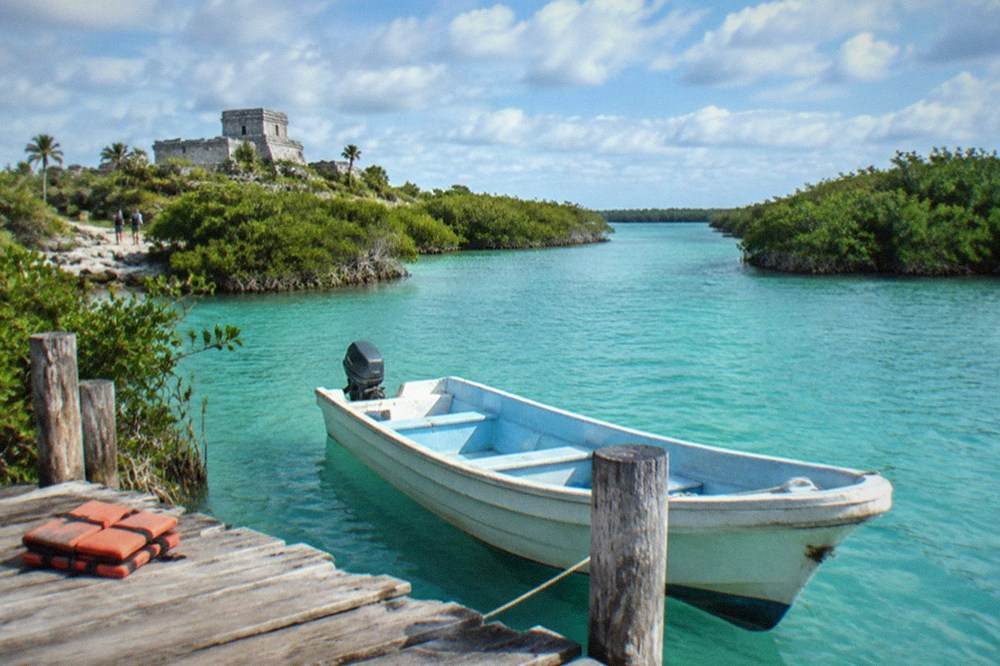
The float works like this. A small boat carries you across the lagoon to the mouth of an ancient canal system, and from a platform at the canal's start you drift with the current down a narrow, clear channel, part mangrove tunnel, part open water, until the boat collects you near the lagoon edge. The drift is gentle, life jackets are standard, and the water is shallow enough that the experience reads as scenery rather than sport. Trips usually run about two hours with the boat legs included. Daily entries to the reserve are limited, which is one reason the site never feels crowded even when the tours are running.
Three bookable products cover this combination, and they differ in what they take care of. The Muyil Archaeological Site and Sian Ka'an Guided Tour from Tulum runs from $169 per person, holds a 4.9 rating across 846 reviews, and includes hotel pickup and drop-off in Tulum, an air-conditioned minivan, a driver and a professional guide, plus bottled water and snacks; the float itself is arranged as part of the day. The From Tulum Muyil Ruins and Sian Ka'an Lazy River tour starts from $219, carries a 4.8 rating across 439 reviews, and pairs the guided Muyil ruins visit with the boat and lagoon float, with Tulum hotel pickup and drop-off included. The Sian Ka'an Lagoons tour, rated 4.7 across 21 reviews, leans toward the water: a 3 to 4 hour boat and lagoon focus with all fees and taxes, snorkeling equipment, snacks, water and a professional guide.
The practical difference is emphasis and review depth. The 846-review guided tour is the most-reviewed Muyil product on this list and the safest default if you want ruins and reserve in one booked day with transport handled. The lazy-river product is the pick when the drift itself is the point. The lagoons tour suits a traveler who wants the biosphere's water and wildlife more than its archaeology; with 21 reviews its rating carries less weight, so read the recent feedback on the tour page before booking. If you would rather build the day yourself, drive to the gate, pay the 145 MXN, walk the circuit, and negotiate the float at the lagoon dock, that works too, with the caveat that cooperative boats fill on busy days and cash is king.
What Can You Actually See At Muyil Today?
The visible circuit includes the entrance group, the castle pyramid known as El Castillo, temple and platform groups along a forest path, and a lagoon lookout at the end of the walk. Climbing is not permitted on any structure. The site reopened in February 2026 after a conservation closure, with expanded access to additional groups, improved paths and better signage than in previous years.
The reopening is recent enough that older trip reports understate what is open. Work during the closure restored visitor infrastructure and opened access to groups beyond the old El Castillo circuit, including areas along the sacbe, the raised white causeway the Maya built through the wetlands, and the Gran Plataforma. Restoration also surfaced finds that INAH and local reporting connected to the reopening: a temazcal, a sweat-bath structure, a collapsed vault containing a ceramic vessel with a deity face, and a necklace of jade and seashell. Those pieces speak to how much of Muyil's story still sits in the ground; the site's surroundings hold an estimated spread of structures far beyond what is visible.
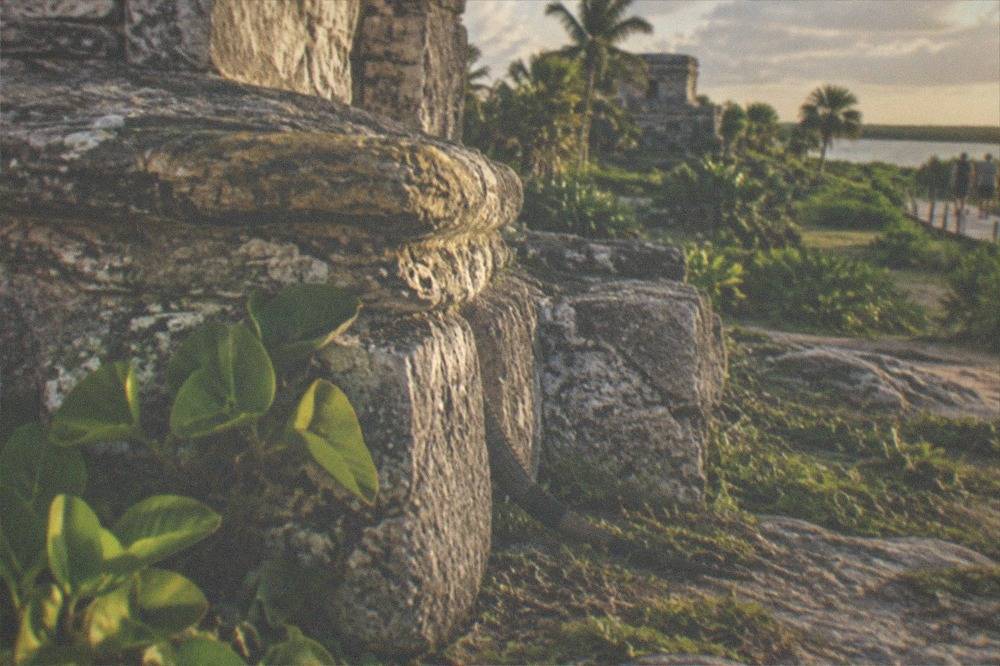
On a normal visit you walk the forest path, stop at the pyramid, continue to the lookout over the lagoon, and return. Signs are limited, which is the standard argument for a guide: a guide puts names and trade routes onto what would otherwise read as pretty stones. Guides are optional at the gate, not mandatory, and the on-site cost is negotiated directly. The full walk plus photo stops runs about an hour to 90 minutes, and adding the lagoon lookout sit-down is worth it for the contrast of turquoise water framed by green.
Bring the same kit you would take to any exposed lowland site: closed walking shoes, a hat, water, and insect repellent for the shaded stretches near the water. Reef-safe sunscreen matters if you will swim or float, since the reserve's waters are protected. There is no dress code at the ruins, and no verified ban on sunscreen at the archaeological zone itself; the guidance is environmental, not regulatory. For a fuller packing rundown built around this coast's conditions, the Tulum ruins what to bring guide applies to every INAH site in the region.
How Do You Get To Muyil From Tulum?
Muyil is about 18 to 25 km south of Tulum on Federal Highway 307, roughly a 20 to 25 minute drive, with the site entrance marked near kilometer 208 on the Carrillo Puerto stretch. Parking at the site is free. There is no direct colectivo route to the gate, so the realistic options are a rental car, a taxi, or a tour with hotel pickup included.
By car, the drive is the easiest on this coast: straight down 307, a signed turnoff, and a small lot at the highway entrance. The road quality is good and traffic is light compared with the Tulum hotel zone. Taxis from Tulum town can make the run, but agree on the return leg in advance, since standing at the highway shoulder waiting for a cab is the failure mode. Colectivos run the 307 corridor frequently between Tulum and Felipe Carrillo Puerto, but they drop on the highway, and the walk from the road to the entrance adds distance in heat; travelers do it, but it is the budget option, not the comfortable one. Other pages covering the same trip are gathered on Tulum Ruins Tours.
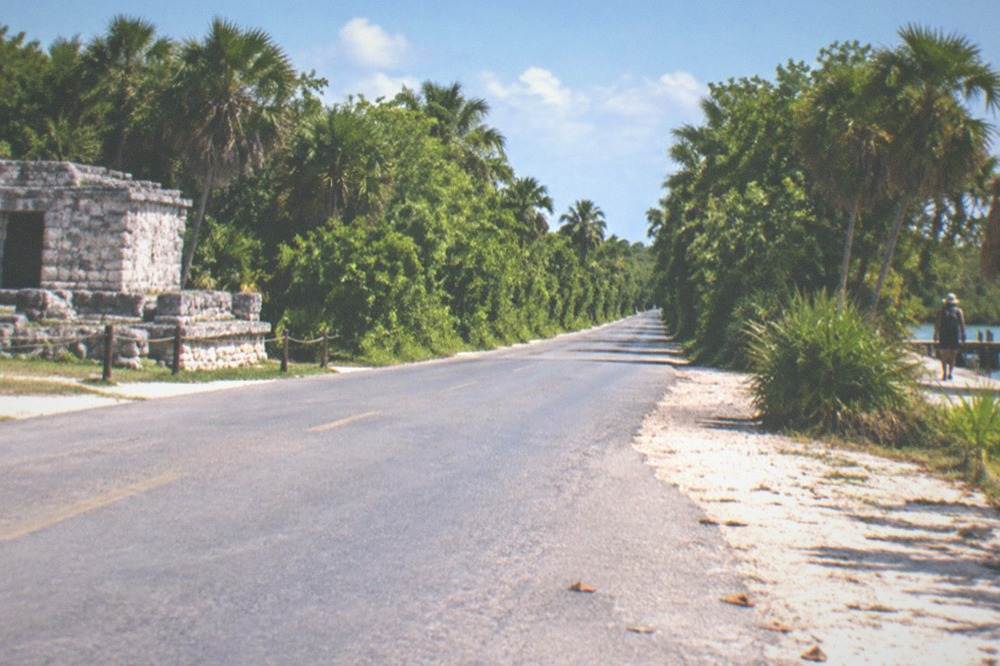
This is where the tours earn their keep. All three Muyil and Sian Ka'an products on this site's lineup include transport from Tulum, and the Muyil Archaeological Site and Sian Ka'an Guided Tour from Tulum lists hotel pickup and drop-off in Tulum with an air-conditioned minivan, bottled water and snacks, from $169 per person. Against the 145 MXN gate fee that looks expensive, but the arithmetic changes once you add the float, the boat cooperative's fee, and the cost of a half-day taxi hold. The tour also removes the timing risk: the float windows and the 16:30 last entry both punish a late start.
If you are staying in Tulum without a car and want to keep costs down, the honest budget plan is a colectivo or taxi to the gate in the morning, the ruins walk before the heat peaks, and the float booked on-site if space is available. If you are combining Muyil with anything else in a single day, or traveling with family, the pickup-included tours are the practical choice. The Tulum ruins getting there guide covers the same transport logic for the coastal sites and applies here for the Tulum-end logistics.
When Is The Best Time To Visit Muyil?
The dry season, roughly November through April, offers the most comfortable conditions for the exposed walk and the water activities, with lower humidity and less rain. Arrive at opening, 8:00, or early morning regardless of season, because the float trips and the boat cooperatives run on daylight and the site's last entry is 16:30. September and October carry the highest hurricane-season risk.
Mornings do double duty at Muyil. The forest path is shaded but humid by midday, and the lagoon is at its calm, glassy best before the afternoon wind picks up, which matters more here than at a dry inland site like Chichen Itza because the float is the headline activity. The reserve's daily entry limits also favor early arrival: boat slots go first, and a 9:00 start has more float availability than a 13:00 one. Weekdays are quieter than weekends, and Sundays bring free national entry, which raises local attendance even though foreign visitors still pay the 145 MXN gate fee.
The shoulder months of November and April are the value pick: dry-season reliability with fewer visitors and softer hotel prices than the December-to-March peak. The rainy season, June through November, is cheaper and greener, with afternoon showers that can cut a float short, and the peak-risk months of September and October are when tropical systems most often disrupt travel plans on this coast. Sargassum seaweed mainly affects the open beaches, not the reserve's lagoon, so it is not a Muyil problem in the way it shapes beach days in Tulum. For the season-by-season breakdown applied to the whole region, the Tulum ruins hours and best time guide carries the detail.
How Does Muyil Compare To The Other Ruins Near Tulum?
Muyil is the smallest and quietest of the region's major sites, the cheapest to enter at 145 MXN for foreign visitors, and the only one inside a UNESCO biosphere reserve. Tulum has the beach and the crowds, Coba has the region's only major climbable pyramid, Ek Balam has a rope-assisted Acropolis climb, and Chichen Itza has the fame and the highest fees. Muyil trades scale for stillness and water.
The comparison below uses the verified fee and access figures for each site. Coba's and Chichen Itza's entrance figures are current reasonable ranges with minor source variance, and every fee here is set by INAH or CULTUR and can change, so confirm on arrival.
| Site | Foreign entrance fee | Drive from Tulum | Climbing | Crowd level |
|---|---|---|---|---|
| Muyil | 145 MXN ($8-9) | 20-25 min | Not permitted | Very low |
| Tulum | 265 MXN ($13-15) | 10-15 min | Not permitted | Very high |
| Coba | ~310-330 MXN ($17-19) | ~45 min | Nohoch Mul reopened, regulated | Moderate |
| Ek Balam | ~691 MXN ($35-40) | 1.5-2 hours | Acropolis, rope-assisted | Low |
| Chichen Itza | ~697 MXN ($35-40) | ~2 hours | Banned since 2006 | Very high |
The climbing column deserves a plain sentence: Muyil's structures are not open to climbing, Tulum's are not, Chichen Itza's El Castillo has been closed to climbers since 2006, Coba's Nohoch Mul reopened to climbers in December 2025 with a wooden staircase, small-group limits and a roughly 15-minute summit window, and Ek Balam's Acropolis is climbable via steep stone steps with rope assistance. If standing on a pyramid matters to you, Coba or Ek Balam is the trip, and the Ek Balam from Tulum guide covers the climbable option in depth.
The honest case for Muyil is what it lacks. No bus parking lot, no vendor gauntlet, no queue at the ticket window, no jostling for a photo angle. The honest case against it is that the visible ruins are modest: a visitor hoping for Tulum's cliff-top drama or Chichen Itza's monumental scale will find Muyil underwhelming in 45 minutes. The fix is the water. Ruins plus lagoon plus float is a half-day that feels like a full day, and it is the combination that justifies the drive. Readers weighing the whole region should also see the Chichen Itza from Tulum guide for the heavyweight alternative.
Should You Visit Muyil On A Tour Or On Your Own?
On your own works well if you have a car, want the lowest cost, and are comfortable arranging the float at the lagoon dock with cash. A tour is the better fit if you are staying in Tulum without transport or want the float guaranteed with a timed slot. The guided tour from Tulum runs from $169 with pickup included and a 4.9 rating across 846 reviews.
The independent visit is genuinely easy: free parking, one gate fee, one path, and a dock. The two friction points are the float's availability, cooperatives can fill, and cash, since the two-ticket and cash norms that apply across the region's rural sites apply here too. Budget travelers should carry pesos for the gate, the boat and any snacks, and should not count on card infrastructure at the site. Muyil's signage is thin, which is the standard argument for a guide: a guide puts names and trade routes onto what would otherwise read as pretty stones.
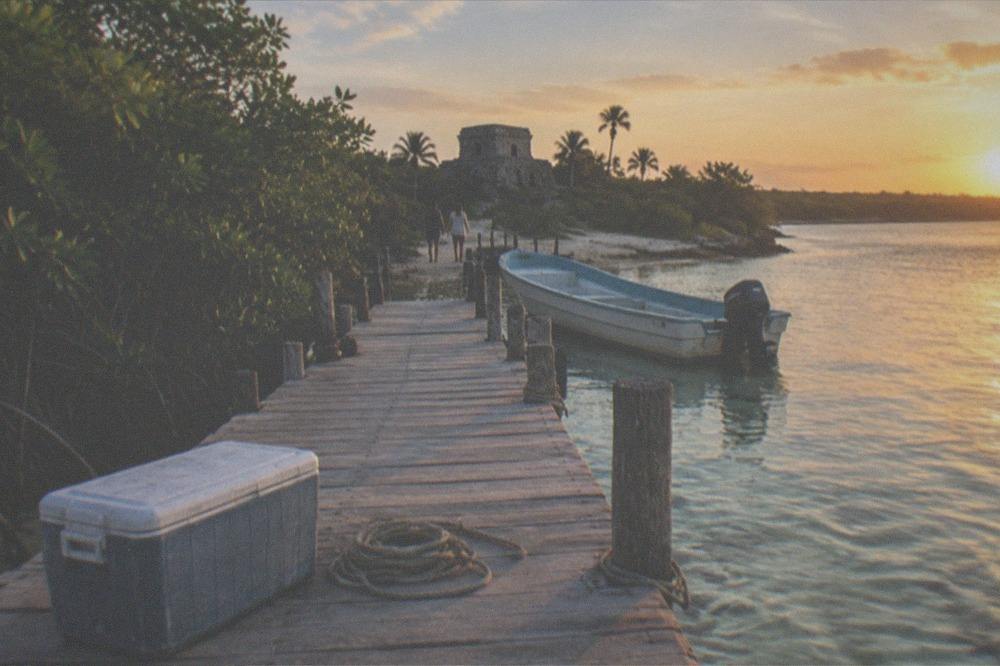
The tour case is strongest for the float-inclusive day. The From Tulum Muyil Ruins and Sian Ka'an Lazy River tour, from $219 with a 4.8 rating across 439 reviews, bundles the guided Muyil visit with the boat and lagoon float and handles Tulum hotel pickup in both directions, which removes every timing decision from the day. For travelers who want the water emphasized over the archaeology, the Sian Ka'an Lagoons tour from $219 covers a 3 to 4 hour lagoon and boat focus with fees, gear, snacks and transport included; its 4.7 rating comes from 21 reviews, a small pool, so weigh the recent feedback on the tour page rather than the number alone.
A middle path also works: book the guided tour for the logistics and the float, and save the independent style for a second site. Muyil pairs naturally with a morning at Tulum's ruins before the 10:00 crowd build, or with an afternoon in Bacalar on the way south. What it does not pair well with is Chichen Itza; the two sit in opposite directions from Tulum with a combined drive of more than three hours, and doing both in one day means seeing neither properly.
One safety note, stated plainly because this site's readers ask: Quintana Roo, which includes Tulum and the Muyil corridor, carries a US State Department Level 2 advisory, "Exercise Increased Caution," the same tier assigned to several Western European countries. The advisory flags crime risk and urges caution after dark in downtown areas. The ruins and the reserve are ticketed, patrolled, daytime-only sites, and the drive down 307 is a main tourist corridor. Normal precautions, licensed transport and daylight timing, are the whole of it; the State Department's Mexico advisory page carries the current text.
Planning Summary: The Muyil Day At A Glance
A full Muyil day runs roughly 4 to 6 hours: about 25 minutes of driving each way from Tulum, an hour to 90 minutes on the ruins circuit, and about two hours on the water if you add the lagoon float. Independent costs are the 145 MXN gate fee plus the roughly 1,000 MXN float, before transport; the all-inclusive tours run from $169 to $219 per person with pickup, guide and the water activities arranged.
The table below compresses the decisions into one view. Fees are MXN-first with approximate USD ranges; all fees are set by INAH, CULTUR or the reserve's operators and can change, so confirm on arrival.
| Decision | Independent | Guided tour from Tulum |
|---|---|---|
| Gate fee (foreign adult) | 145 MXN ($8-9) | Included in tour price |
| Lagoon float | ~1,000 MXN ($55-60), dock availability | Included or arranged by operator |
| Transport | Rental car, taxi or colectivo | Hotel pickup and drop-off included |
| Guide | Optional, negotiated at gate | Professional guide included |
| Timing risk | Float slots and 16:30 last entry | Operator manages the schedule |
| Typical cost basis | Gate fee plus float, before transport | From $169 per person |
The quiet-site argument, in one paragraph: Tulum's zone received about 1.03 million visitors in a recent year, a roughly 20 percent drop and still the region's busiest ruins, while Muyil on an average weekday sees a trickle. You are trading monumentality for solitude, and adding a UNESCO wetland and a drift down a Maya canal as compensation. For many travelers that trade is the best decision of the trip; for others, the big names are big for a reason. The Tulum ruins site guide and the Muyil and Sian Ka'an pages on this site cover both ends of that choice, and the region comparison guide ranks every site if Muyil leaves you undecided.
Common Questions About Muyil Ruins And Sian Ka'an
How much does it cost to enter Muyil?
Foreign visitors pay 145 MXN, roughly $8 to $9 USD. Mexican nationals and residents pay 80 MXN with valid ID, and Sunday entry is free for them. Parking is free. Fees are set by INAH and can change, so confirm the posted rate on arrival. The lagoon float is a separate paid add-on, typically around 1,000 MXN per person.
Can you climb the pyramid at Muyil?
No. Climbing is not permitted on any structure at Muyil; visitors stay on marked paths and viewing areas. If a climbable pyramid is the goal, Coba's Nohoch Mul reopened to climbers in December 2025 under group and time limits, and Ek Balam's Acropolis is climbable with rope assistance.
Is the Sian Ka'an lagoon float included in the Muyil entrance fee?
No. The float is run by local cooperatives and tour operators as a separate paid activity, typically around 1,000 MXN per person booked on-site or through an operator, and daily reserve entries are limited. The gate fee covers the archaeological zone only.
How far is Muyil from Tulum and how do you get there?
Muyil is about 18 to 25 km south of Tulum on Federal Highway 307, a 20 to 25 minute drive. There is no direct colectivo to the gate, so the realistic options are a rental car, a taxi with a pre-agreed return, or a tour with Tulum hotel pickup included.
Is Muyil worth visiting compared to Tulum or Chichen Itza?
It depends on what you want. Muyil is the quietest and cheapest major site in the region, inside a UNESCO biosphere reserve, with modest visible ruins and a unique lagoon float. Tulum has the coastal setting and crowds; Chichen Itza has the monumental scale and the highest fees. Many travelers do Muyil for the stillness and the water.
What are the Muyil opening hours?
The site is open daily from 8:00 to 17:00, with last entry at 16:30. Arrive early: the float trips run on daylight, boat slots fill first, and the forest path is at its most comfortable before midday heat builds.