What To Bring To The Tulum Ruins
The Tulum ruins sit on an exposed, sun-baked headland with a five to ten minute walk from the parking lot, a cash-based fee system, and a small beach cove inside the gate. What you carry decides how the visit feels.
Short answer
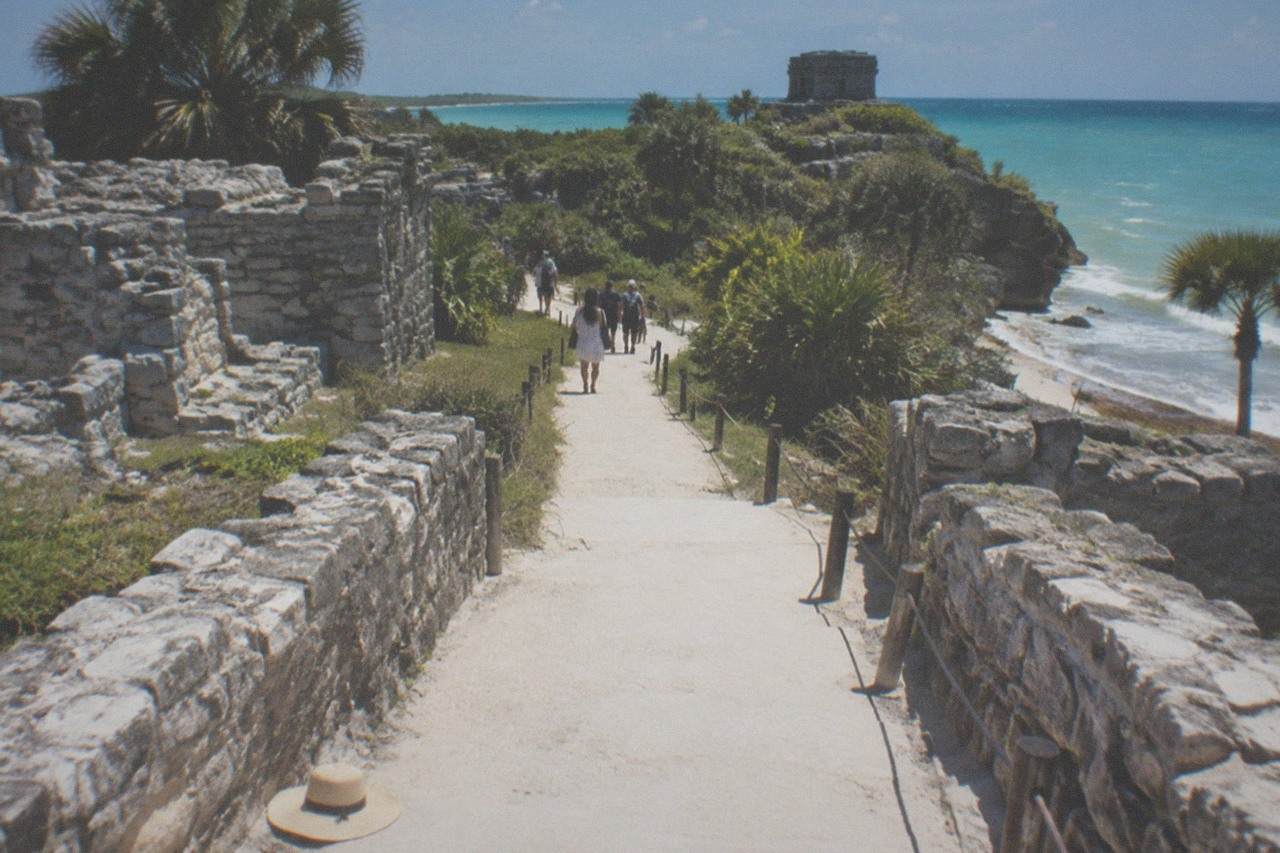
Bring closed walking shoes, a hat, and more water than you think you need, plus cash: the unified entrance fee is 265 MXN for foreign visitors (80 MXN for Mexican nationals and residents), parking runs roughly 80-100 MXN, and the optional shuttle inside the park costs about 20 MXN. Reef-safe sunscreen matters if you plan to swim at Playa Ruinas or visit a cenote afterward.
The Tulum archaeological zone is a short visit with a long exposure problem. The site opens daily at 8:00 and closes at 17:00, and almost everything a walker sees sits on open limestone and thin shade: a cliff-top plateau, wide gravel paths, and a roughly one kilometer stretch between the highway parking lot and the ticket area. INAH's own zone page lists the hours, the unified fee, and the access basics, and none of it involves air conditioning. What goes into your day bag is not a trivial question here the way it is at a museum.
This guide is the packing side of the visit. The fee structure, the ticket mechanics and the parking walk each get their own treatment in the Tulum ruins tickets and fees guide, and timing is covered in the best time to visit the Tulum ruins. Here the question is narrower and more practical: what do you actually carry through the gate, what does the site's own guidance say, and what can you safely leave in the hotel room.
What Should You Actually Pack For The Tulum Ruins?
The core list is short and unglamorous: closed walking shoes, a brimmed hat, one to two liters of water per person, cash in pesos for the entrance fee and parking, a small day bag, and reef-safe sunscreen if a beach or cenote stop is on the same day. The ruins zone has no verified sunscreen or dress-code ban, so the list is driven by heat, footing and payment logistics rather than posted prohibitions.
Everything on that list maps to a real condition at the site. The paths are a mix of paved walkway and uneven stone, and the walk from the Parque del Jaguar parking lot to the entrance takes roughly five to ten minutes on a flat, paved stretch, longer in midday heat with children in tow. The gate fee is 265 MXN for foreign visitors and 80 MXN for Mexican nationals and residents under the unified fee introduced by the July 2026 federal decree, one payment covering both the INAH zone and the CONANP park access, and the system is cash-friendly in a way card-reliant travelers sometimes discover the hard way. Parking at the main lot runs roughly 80-100 MXN per car, and the optional electric shuttle inside the park costs about 20 MXN per adult.
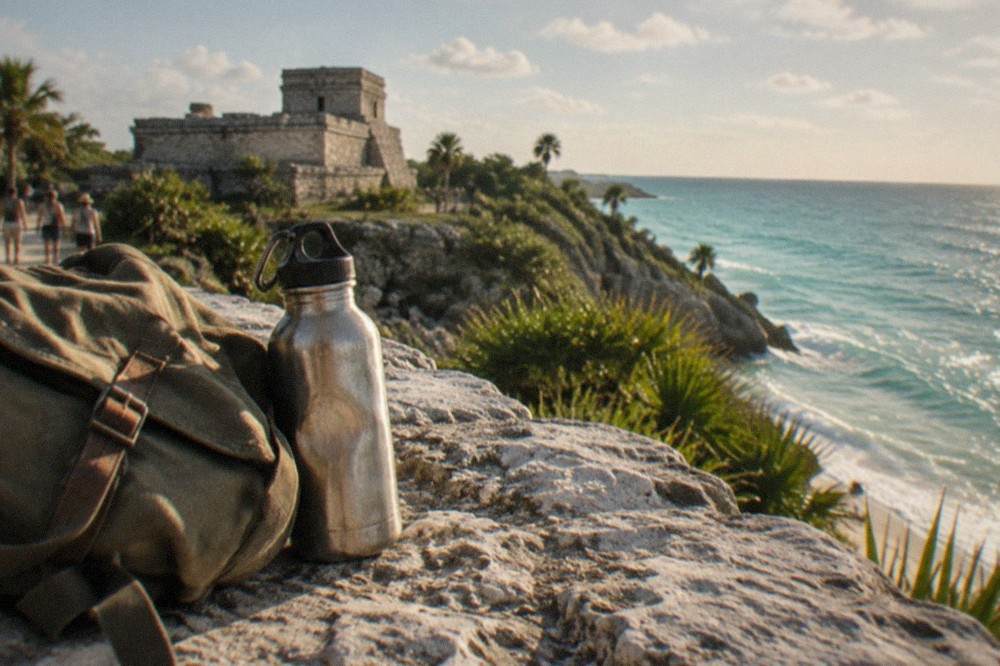
The list below is the practical version, split by what each item is actually solving. Fees are set by INAH and CULTUR and can change, so confirm on arrival rather than treating any figure as permanent.
| Item | Why It Earns Its Spot | Notes |
|---|---|---|
| Closed walking shoes | Uneven stone and hot paved paths | Sandals work but grip is worse on the cliff stairs |
| Wide-brimmed hat | Almost no shade on the plateau | Better than a cap for the back of the neck |
| Water, 1-2 liters per person | Heat and the parking walk | No reliable refill point inside the zone |
| Cash in pesos | Gate fee 265 MXN foreign visitors, 80 MXN nationals/residents | Parking ~80-100 MXN, shuttle ~20 MXN |
| Small day bag | Hands free for stairs and photos | Large backpacks may face restrictions |
| Reef-safe sunscreen | For Playa Ruinas swimming or a cenote stop | No verified ban inside the ruins zone itself |
| Swimsuit and quick-dry towel | Playa Ruinas cove inside the gate | Reached by a wooden staircase below El Castillo |
One honest caveat: the official INAH page for the zone does not publish a detailed prohibited-items list, and general visitor guidance emphasizes comfortable shoes, a hat and water rather than rules. Treat anything beyond that as site-practice rather than regulation, and check with staff at the entrance if you are carrying something unusual like a tripod or a large bag.
Why Closed Walking Shoes Matter More Than You Think?
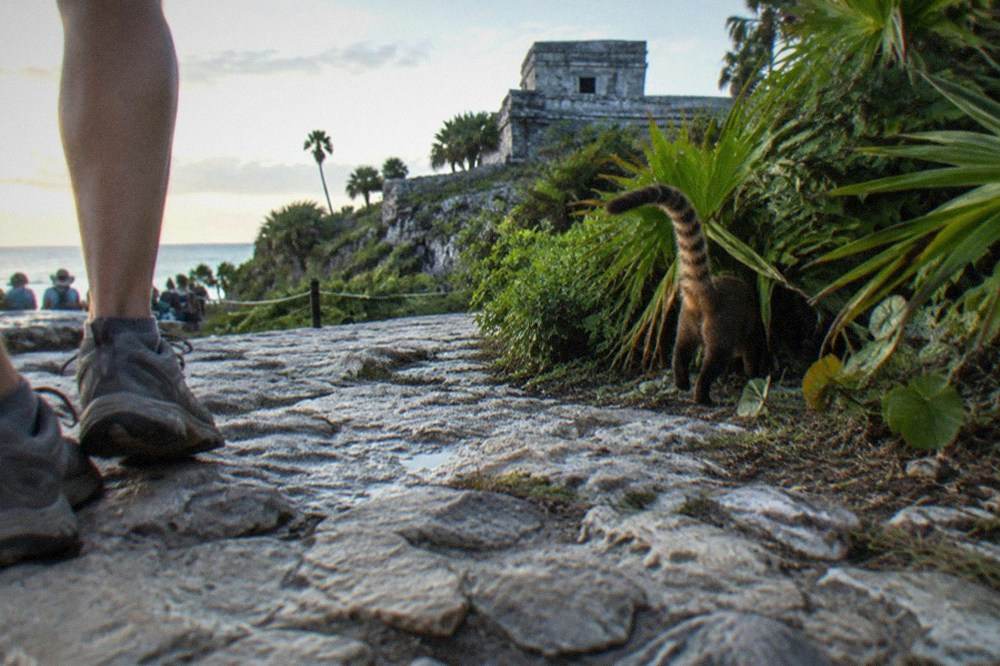
Closed shoes with real grip are the single most useful item on the list, because the site combines hot paved walkways, uneven original stone, and a wooden staircase down to the beach cove, and because the same shoes that survive Tulum's paths are also what Coba's reopened Nohoch Mul climb requires if a two-site day is planned. Flip-flops are the most common footwear mistake reported at the gate.
The terrain argument is straightforward. The main loop is walkable, but it is not smooth, and the staircase to Playa Ruinas is a steep wooden structure that gets slippery when wet. What tips the decision toward closed shoes is the wider day: many visitors pair the Tulum ruins with a cenote swim or a second site, and if that second site is Coba, the pyramid climb that reopened around December 2025 explicitly requires closed-toe shoes with grip, small groups of 14 to 15 at a time, and a roughly 15-minute summit limit within an 8:00 to 15:30 climbing window. One pair of shoes covers both.
The walking tour in that selection, the tulum-archaeological-zone-guided-walking-tour product, is a 1.15-hour guided walk rated 4.9 across 109 reviews, with beach access at Parque del Jaguar and the mandatory INAH entrance fee paid on arrival. Its price sits on the tour page, and it pairs naturally with a light packing day: you carry water, shoes and cash, and the guide carries the context.
Footwear is also where the site's honest limits show up. Tulum's structures are not open to climbing at all, on any footwear, so the shoes are for walking comfort, not summit access. If standing on a pyramid is the goal for the trip, that is a Coba or Ek Balam question, not a Tulum one, and the Coba ruins guide covers what the reopened climb actually involves.
How Much Cash Should You Carry To The Tulum Ruins?
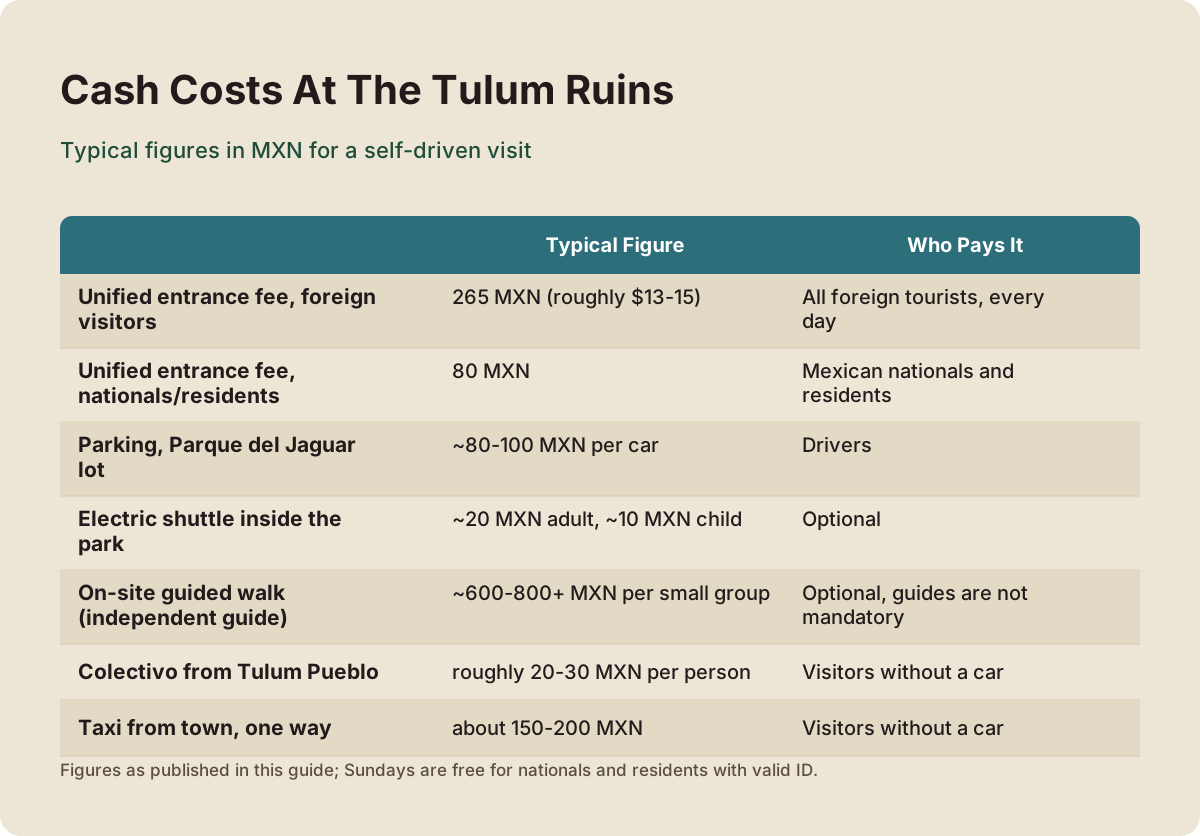
Plan on roughly 400-500 MXN per foreign adult for a self-driven visit: 265 MXN for the unified entrance fee, 80-100 MXN for parking if you drive, about 20 MXN if you take the optional in-park shuttle, and a buffer for water or a colectivo. Mexican nationals and residents pay 80 MXN, and Sundays are free for them with valid ID, while foreign tourists pay full price every day.
The fee itself is the best-documented number on this site. The July 2026 decree unified what had been a confusing split system, and reporting on the earlier 2026 fee increases traces the history: Tulum was placed in a higher category early in the year before the mid-year decree cut and consolidated the charge into the single 80/265 MXN gate fee that now covers INAH access plus the CONANP park entry through Parque del Jaguar, with no separate payment at the site. The decree is why older blog posts and forum threads quote wildly different numbers, some near 210 MXN, some higher still. None of those apply now.
| Cash Item | Typical Figure | Who Pays It |
|---|---|---|
| Unified entrance fee, foreign visitors | 265 MXN (roughly $13-15) | All foreign tourists, every day |
| Unified entrance fee, nationals/residents | 80 MXN | Mexican nationals and residents |
| Sunday entry | Free with valid ID | Nationals and residents only |
| Parking, Parque del Jaguar lot | ~80-100 MXN per car | Drivers |
| Electric shuttle inside the park | ~20 MXN adult, ~10 MXN child | Optional |
| On-site guided walk (independent guide) | ~600-800+ MXN per small group | Optional, guides are not mandatory |
Fees are set by INAH and CULTUR and can change, so confirm on arrival. The Sunday-free policy is longstanding INAH practice, confirmed on the institute's own communication about free Sunday access, and it applies to Mexican nationals and foreign residents with valid official ID, never to foreign tourists.
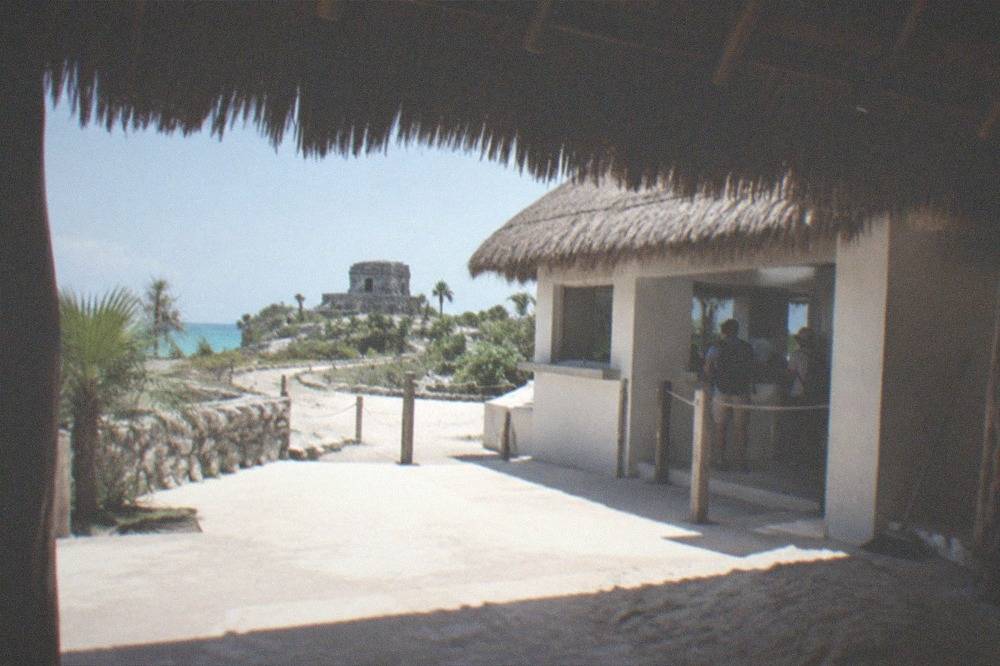
If you are arriving without a car, the cash math changes but does not disappear. Colectivo vans from Tulum Pueblo run toward the ruins every 10 to 15 minutes for roughly 20-30 MXN per person, taxis from town run about 150-200 MXN one way, and ADO buses serve the Pueblo terminal rather than the ruins gate. The getting to the Tulum ruins guide breaks down each option, but the packing consequence is the same: small bills and coins make every one of those transactions faster.
Deciding between carrying all that cash yourself or letting a tour absorb the logistics? The tulum-archaeological-zone-guided-walking-tour product handles the guidance side from $18 while you keep the gate fee as an optional add-on.
Is Sunscreen Banned At The Tulum Ruins?
No verified sunscreen ban applies inside the Tulum archaeological zone itself; the official INAH page and consistent 2026 sources publish no such prohibition for the ruins, and general guidance only recommends reef-safe sunscreen for any beach swimming. The strict bans travelers hear about belong to the region's cenotes, many of which prohibit any sunscreen, biodegradable or not, before swimming.
This distinction matters because it gets garbled constantly in traveler forums. The cenote rules are real and strict: many cenote operators require you to rinse off or prohibit lotions entirely to protect the freshwater systems. Playa Ruinas, the small cove inside the ruins zone reached by a wooden staircase below El Castillo, is ocean swimming, and the guidance there is the marine one: reef-safe sunscreen, applied before you get in. If your Tulum day is ruins in the morning and a cenote in the afternoon, pack the sunscreen but expect to leave it in the bag at the cenote and rely on the hat, shirt and timing instead.
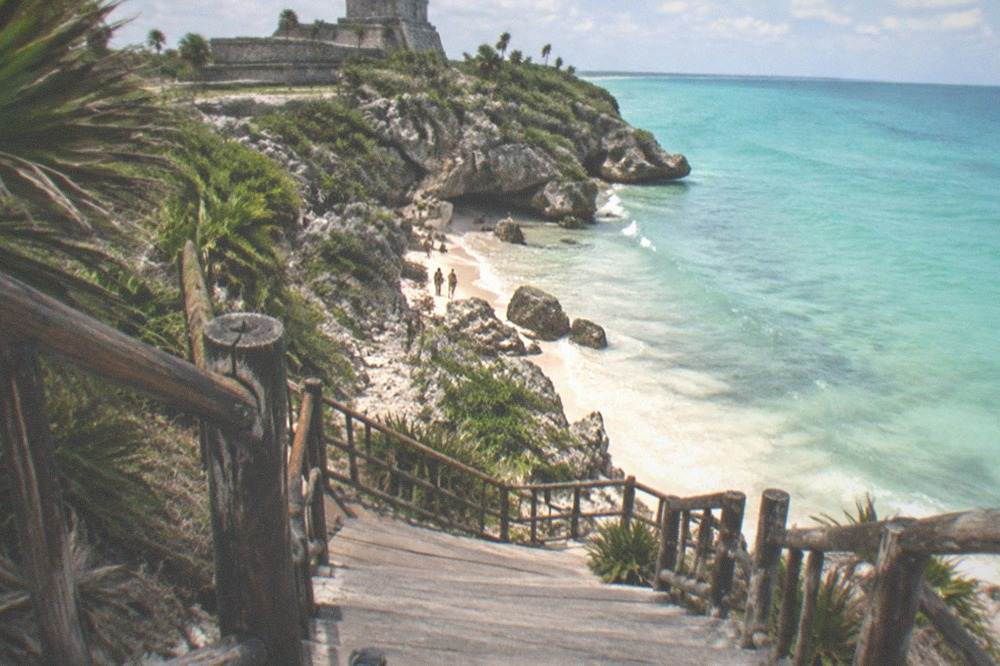
The honest summary for packing purposes: bring reef-safe sunscreen for any swimming, do not treat it as forbidden at the ruins, and follow whatever the individual cenote or beach operator posts. There is no swimmable cenote inside the Tulum archaeological zone itself; Casa del Cenote is a named structure at the site, not a swim spot, and the famous cenotes like Gran Cenote are nearby but outside the gate.
What About Water, Food And Sun Protection On Site?
Carry one to two liters of water per person, eat before you arrive or pack a small snack, and treat the hat as non-negotiable: the site's busiest, hottest window runs roughly 10:00 to 15:00, most visits last 1.5 to 3 hours, and the exposed plateau offers little shade between the parking walk and the cliff edge. Arriving at the 8:00 opening reduces both the heat load and the crowd.
The heat is not a footnote. Daytime conditions in the dry season peak months sit around 28-30 degrees Celsius, and the rainy season from June to November adds humidity on top. There is no reliable refill point inside the zone, the walk from the parking lot adds five to ten minutes of unshaded pavement before you even reach the ticket area, and the crowding pattern is well documented: mid-morning through mid-afternoon, plus weekends, when free Sunday entry for nationals fills the site. The guided tour versus self-guided comparison covers how a guide changes the time budget, but hydration is the same either way.
Food deserves one honest line: the archaeological zone is not a picnic ground, and large bags can draw attention at the entrance. Eat a real breakfast in town, carry water and perhaps a small snack, and plan the actual meal for after the visit, which in Tulum is not a hardship.
Should You Bring A Swimsuit For Playa Ruinas?
Yes, if the visit falls on a hot day: Playa Ruinas is a small protected cove inside the archaeological zone, reached by a wooden staircase below El Castillo, and swimming is possible there, so a swimsuit under clothes and a quick-dry towel are the two items most visitors wish they had packed. Conditions vary, and the staircase is steep, so closed shoes earn their keep twice on this stop.
The cove is one of the site's genuine surprises, a strip of Caribbean sand inside the ticket you already paid. It is small, it fills up in the busy window, and it closes with the site at 17:00, but for a morning visit it turns a two-hour ruins loop into a half-day outing. Pack the swimsuit worn under clothes, a towel that dries fast, and the reef-safe sunscreen from the section above.
If the beach stop is the point of the day, a combo tour does the swimming logistics for you. The riviera-maya-tulum-ruins-and-2-cenotes-half-day-tour product pairs the guided ruins visit with swims at two cenotes, rated 4.4 across 1,166 reviews, with hotel pickup included and the Tulum entrance fee of roughly 265 MXN, about $13 to $15 per adult, paid extra.
What Should You Leave At The Hotel For The Tulum Ruins?
Leave the large backpack, the drone, the selfie stick mentality and any expectation of climbing: Tulum's structures are not open to climbing on any terms, large bags may face restrictions at the entrance, and the site is a compact 1.5 to 3 hour loop where heavy gear is a burden rather than a benefit. A small day bag with the core list does the whole job.
The climbing point deserves emphasis because the region's rules differ site by site and travelers arrive with mixed information. Tulum: no climbing, full stop. Chichen Itza: El Castillo has been climb-banned since 2006 and the ban is fully enforced. Coba: Nohoch Mul reopened to climbers around December 2025 with a wooden staircase, group limits and time limits. Ek Balam: the Acropolis is climbable via steep stone steps with a rope assist. Packing for Tulum means packing for looking, and the Mayan ruins near Tulum comparison maps which nearby site fits which ambition.
| Item | Bring Or Leave | Reason |
|---|---|---|
| Small day bag | Bring | Holds water, cash, sunscreen without weighing you down |
| Large backpack | Leave | May face entrance restrictions, adds heat |
| Drone | Leave | Not flown over the archaeological zone |
| Closed walking shoes | Bring | Stone paths, beach staircase, cenote ladders |
| Heavy camera rig | Leave | A phone or compact camera covers this compact site |
| Swimsuit | Bring on hot days | Playa Ruinas cove is inside the gate |
| Pesos in small bills | Bring | Gate, parking, shuttle and colectivos are cash-friendly |
One more honest note on valuables: the site is ticketed, patrolled and daytime-only, and the region's ruins are described in current safety reporting as generally safe during opening hours. Quintana Roo as a state carries a US State Department Level 2 advisory, the same tier as several Western European countries, urging standard caution after dark in town areas. None of that changes the packing list, but it does mean the ordinary rule applies: do not carry more cash or gear than the visit needs.
How Does Packing Change For A Ruins Plus Cenote Day?
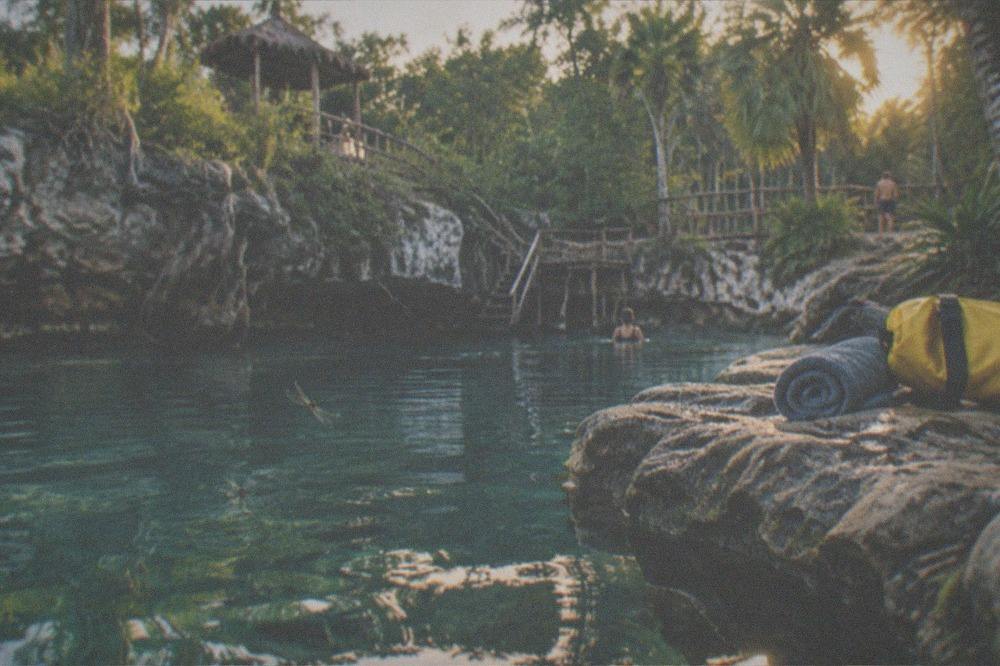
Add a dry bag or ziplock for the phone, keep the closed shoes, swap the towel for a quick-dry one, and confirm each cenote's sunscreen rule on arrival, because the combo day is where Tulum's no-ban-verified ruins and the cenotes' strict no-lotion rules collide in one bag. Water, hat and cash requirements stay identical; only the swimming kit grows.
The combo day is the most common Tulum itinerary, and the lineup reflects it: six ruins-plus-cenote products run from $36 to $250. The packing delta is modest but real. Towel, dry bag, and a suit that dries between stops. Life vests and lockers are typically provided on the organized tours, which is one quiet argument for letting an operator run the day.
For a longer version of the same day, the tulum-ruins-turtles-in-akumal-and-cenote-tour product is the most-reviewed ruins-plus-cenote option on this list, priced on the tour page, rated 4.9 across 2,114 reviews, an 8-hour day combining the guided Tulum ruins visit, an Akumal turtle snorkel, a cenote swim, transport and a lunch buffet. On a day that full, the tour handles the kit list and you carry only the personal items: shoes, hat, water, cash, sunscreen for the ocean legs.
Which Tour Handles The Packing List For You?
If the logistics in this guide sound like chores, the three Tulum-ruins formats on this list each absorb a different slice of them: the $18 guided walking tour covers context and beach access, the $36 half-day combo adds transport and two cenotes, and the $129 full day stacks turtles, a cenote and lunch onto the ruins visit. Every one of them still expects you to bring shoes, a hat and water.
The choice is mostly a time-and-inclusions question. The walking tour is the lightest commitment at 1.15 hours and leaves the rest of the day free. The half-day combo from $36 is the value pick for a first cenote. The full day from $129 is the one for travelers who want the ruins to be one-third of a bigger day rather than the whole story. All three are bookable through Tulum Ruins Tours, and each listing states exactly what is and is not included, which is the packing list's best friend: read the inclusions, then pack the gaps.
Common Questions About Packing For The Tulum Ruins
how much does it cost to enter the tulum ruins?
The unified entrance fee is 265 MXN for foreign visitors and 80 MXN for Mexican nationals and residents, one gate payment covering the INAH zone plus the CONANP park access. Parking runs roughly 80-100 MXN extra at the Parque del Jaguar lot. Fees are set by INAH and CULTUR and can change, so confirm on arrival.
Do I need closed shoes for the Tulum ruins?
They are strongly recommended rather than mandatory. The paths mix pavement and uneven stone, the beach staircase is steep, and if your day includes Coba's reopened Nohoch Mul climb, closed-toe shoes with grip are an explicit requirement there.
Can I bring sunscreen into the Tulum ruins?
Yes. No verified sunscreen ban applies inside the archaeological zone itself. Use reef-safe sunscreen for any swimming at Playa Ruinas, and expect stricter no-lotion rules at the region's cenotes, where many operators prohibit all sunscreens before entering the water.
Is there a place to buy water at the Tulum ruins?
Do not count on it. Carry one to two liters per person, especially in the 10:00 to 15:00 heat window. The walk from the parking lot to the entrance adds five to ten unshaded minutes before the visit even starts.
are tulum ruins worth visiting?
For most travelers yes: it is the only major Maya site set directly on a Caribbean cliff, visits run 1.5 to 3 hours, and the gate now charges a single unified 265 MXN foreign-visitor fee that includes park access and the swimmable Playa Ruinas cove. Arrive at the 8:00 opening for the calmest experience.
Should I bring a swimsuit to the Tulum ruins?
On a warm day, yes. Playa Ruinas is a small protected cove inside the gate, reached by a wooden staircase below El Castillo, and swimming is possible there. Wear the suit under clothes and pack a quick-dry towel.