Tulum Ruins Hours And The Best Time To Go
The Tulum archaeological zone runs on a simple daily schedule, 8:00 to 17:00, but the experience inside those hours varies enormously depending on when you walk through the gate. Here is how the timing actually works.
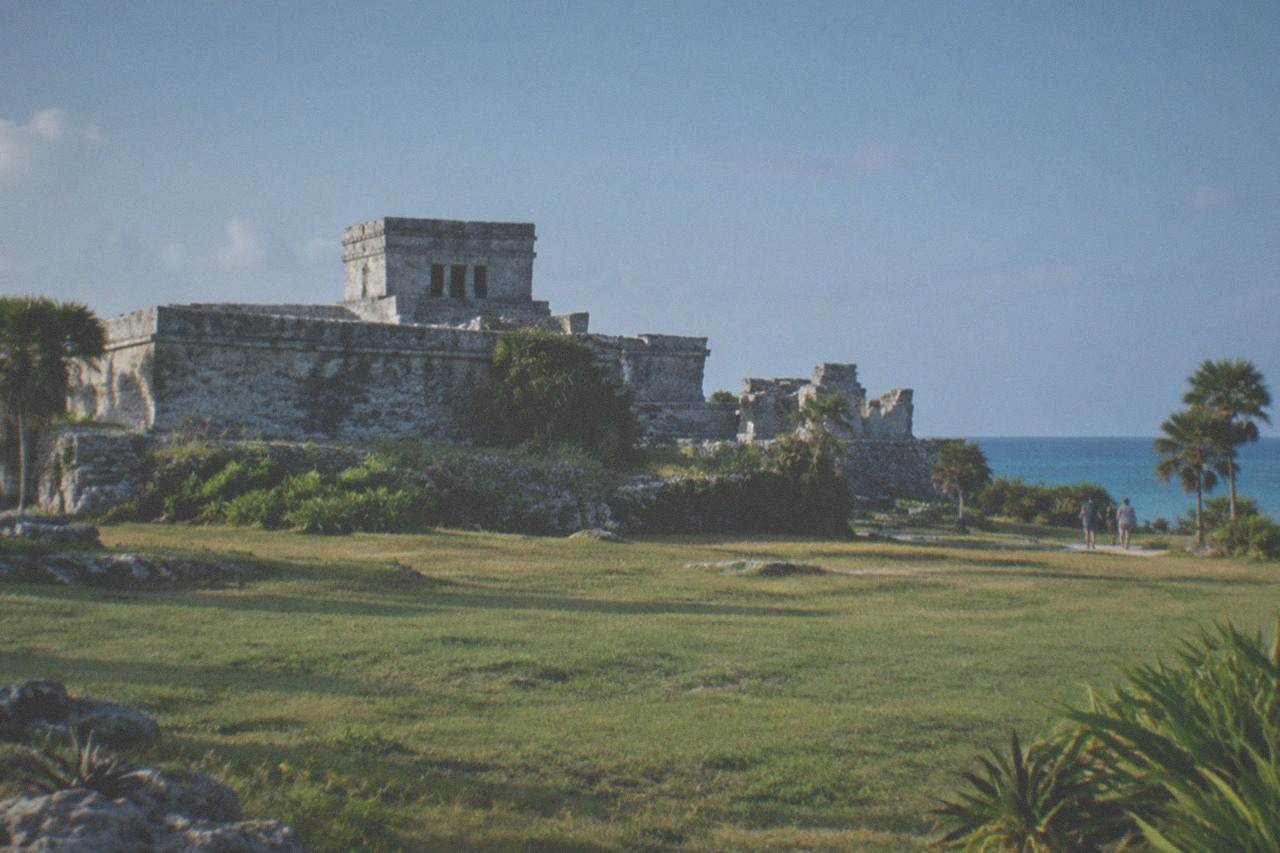
Short answer
The Tulum ruins are open daily 8:00-17:00, with last entry at 15:30. The unified gate fee is 265 MXN for foreign visitors, roughly $13-15. Arrive at 8:00 opening or after 15:00 to avoid peak crowds; the busiest window is 10:00-15:00, especially on Sundays and cruise-ship days.
The Tulum archaeological zone keeps the same hours almost every day of the year: doors open at 8:00 in the morning and close at 17:00, with the last entry permitted at 15:30. That is the easy part. The harder question is when inside that nine-hour window the site actually feels worth walking, and the answer depends on cruise-ship schedules, Sunday free-entry rules for Mexican nationals, and the simple physics of a cliff-side site with almost no shade at midday.
This guide lays out the verified hours, the crowd patterns that repeat week after week, and the honest case for going early or late rather than in the middle of the day. It also covers how a private or early-access product buys back that timing advantage when your schedule does not cooperate. Fees and hours are set by INAH and CULTUR and can change, so confirm on arrival.
What Are The Tulum Ruins Opening Hours?
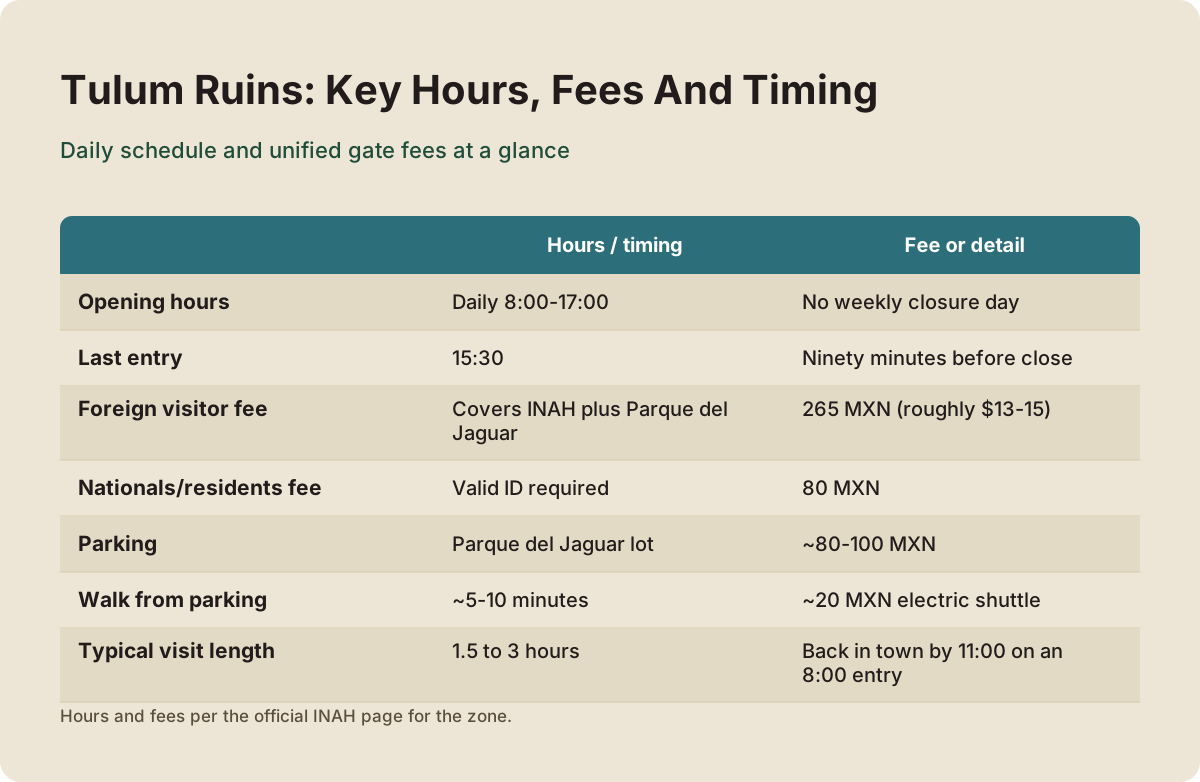
The Tulum archaeological zone is open daily from 8:00 to 17:00, with last entry at 15:30, and no weekly closure day. The unified gate fee is 80 MXN for Mexican nationals and residents, and 265 MXN for foreign visitors, roughly $13-15. The fee covers the INAH zone plus the CONANP/Parque del Jaguar access in one payment, with no separate charges at the site.
Those hours come straight from the official INAH page for the zone, which the institute maintains as the primary source for schedules and fees. The 265 MXN foreign rate is the current unified figure following a July 2026 federal decree that folded what used to be multiple payments into a single gate fee. Before that decree, early-2026 rates had climbed higher, and the reduction was part of a broader plan to restore visitor flow to the site.
One number matters more than most visitors realize: 15:30. That is the last entry, a full ninety minutes before the 17:00 close. Arrive at 15:40 and you will not get in, regardless of what the sign on the highway says. Plan around the last entry, not the closing time.
| Item | Detail |
|---|---|
| Opening hours | Daily 8:00-17:00 |
| Last entry | 15:30 |
| Foreign visitor fee | 265 MXN (roughly $13-15) |
| Nationals/residents fee | 80 MXN |
| Parking | ~80-100 MXN at the Parque del Jaguar lot |
| Walk from parking | ~5-10 minutes, or a ~20 MXN electric shuttle |
| Typical visit length | 1.5 to 3 hours |
The parking situation shapes your effective arrival time. The main lot sits at the highway entrance, and the walk from there to the ticket area runs roughly five to ten minutes on a flat paved path, or about a kilometer in some descriptions. An optional electric shuttle inside the park costs about 20 MXN per adult. If your goal is to be through the gate at 8:00 sharp, you want to be parking by 7:40.
For the full fee picture, including the Sunday free-entry rules and what the unified fee does and does not cover, the Tulum ruins tickets and fees guide breaks it down line by line.
When Is The Best Time Of Day To Visit The Tulum Ruins?
The best time of day is 8:00 at opening, or after 15:00 in the late afternoon. The busiest window runs from roughly 10:00 to 15:00, when tour buses and cruise groups stack up. Early morning gives cooler air, softer light for photos, and thinner crowds; late afternoon gives heat but far fewer people and shorter lines.
The site's own crowding pattern is remarkably consistent. Mid-morning through mid-afternoon is the crush, driven by two overlapping flows: coach tours departing Cancun and Playa del Carmen hotels around 7:00 to 8:00 that arrive at Tulum by 10:00 or 11:00, and cruise passengers whose ships dock early and whose shore excursions hit the ruins late morning. By noon on a busy day, the main path between El Castillo and the Temple of the Frescoes can feel like a queue with scenery.
Early arrival solves most of it. At 8:00 the site is at its quietest, the Caribbean is at its most photogenic with the sun still low over the water, and the temperature is genuinely comfortable even in the wet season. Most visitors spend 1.5 to 3 hours on site, so an 8:00 entry has you back in town or at the beach by 11:00, before the heat peaks.
The late slot is the underrated alternative. Entry is permitted until 15:30, and the final ninety minutes before close see a real thinning of the crowd as tour groups hit their departure deadlines. You trade that away for hotter air and harsher light, but in the dry season, from roughly November through April, a 15:00 entry is a perfectly pleasant way to see the site with breathing room.
For travelers who want the early-morning advantage without organizing it themselves, a guided product handles the logistics. The private early access Tulum ruins tour covers what that kind of product adds, and the selection below shows the three formats that fit this timing strategy best.
How Do Cruise Ships And Tour Buses Shape The Crowd Windows?
Cruise-ship excursions and coach tours converge on Tulum between roughly 10:00 and 14:00, which is why the 10:00-15:00 window is the site's busiest. Coaches from Cancun and the Riviera Maya arrive mid-morning; cruise groups from Costa Maya and Cozumel-ferry routes arrive late morning. Before 10:00 and after 15:00, the site is dramatically quieter.
The mechanics are simple. A coach leaving a Cancun hotel zone at 8:00 reaches Tulum around 9:30 to 10:00 after pickups, and the guide wants the group inside before the sun is punishing. Multiply that by every hotel-departing tour on the coast, and the site absorbs a large share of its daily visitors in a four-hour band. Cruise shore excursions add a second pulse slightly later, since passengers disembark, regroup, and travel inland before arriving.
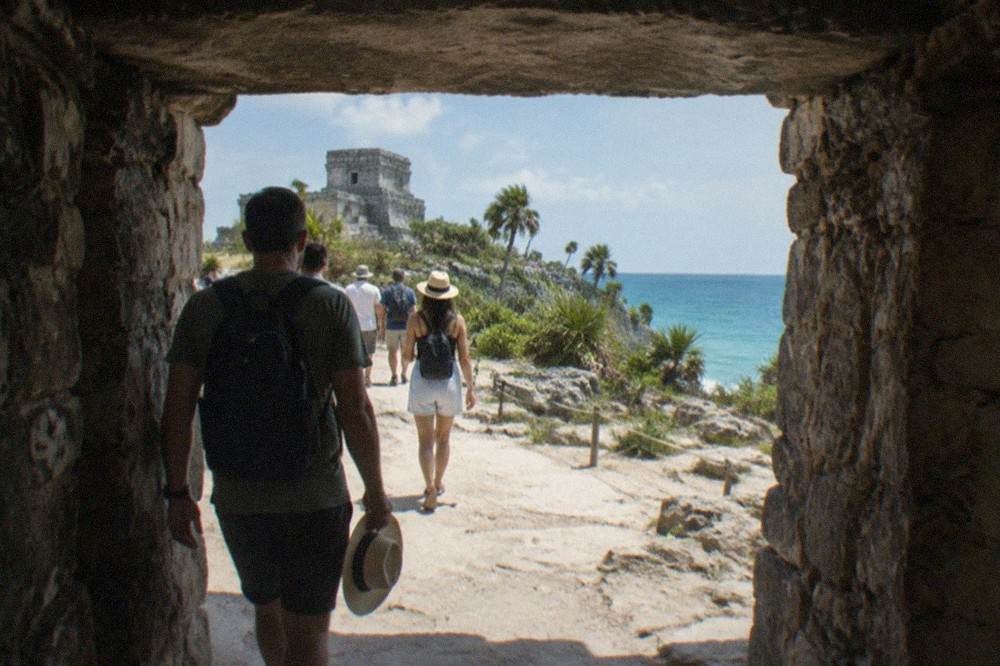
This is not a reason to avoid the site, just a reason to time it. The ruins themselves are spacious, a walled core with cliff-edge views spread over enough ground that even a busy day does not feel like a theme park everywhere at once. But the marquee viewpoints, the wooden staircase down to Playa Ruinas, and the photo spots in front of El Castillo do form lines at peak hours.
The pattern holds weekly too. Sundays are among the busiest days of the week, because INAH's long-standing policy grants free entry to Mexican nationals and foreign residents with valid ID on Sundays. Foreign tourists pay the regular 265 MXN fee on Sundays, but the free national entry fills the site with local families, which is a genuinely good atmosphere but a busier one. If your dates are flexible, a weekday morning beats any weekend.
| Time of day | Crowd level | Notes |
|---|---|---|
| 8:00-10:00 | Low | Coolest air, best light, arrive at opening |
| 10:00-13:00 | High | Coach tours and cruise groups peak |
| 13:00-15:00 | High | Peak heat plus peak crowds, worst combination |
| 15:00-15:30 | Moderate | Last entry at 15:30, crowds thin fast |
| 15:30-17:00 | Low | Final stretch before close, quietest late option |
A private half-day format is the cleanest answer to the cruise-and-coach problem. The private Tulum ruins half-day tour, 4.9 across 239 reviews and from $159, runs about four hours with air-conditioned transport, bottled water, snacks, and all fees included, which means the departure time is set around your schedule rather than a coach manifest. One real paragraph of planning advice applies here: if you are staying in Tulum itself, a private pickup can have you at the gate close to opening without the 7:00 bus-departure scramble.
What Time Of Year Is Best For Visiting The Tulum Ruins?
The dry season, roughly November through April, is the best time of year for the Tulum ruins: lower humidity, less rain, and daytime highs around 82-86°F (28-30°C). December through March is the most reliable window but also the most crowded and expensive. November and April are the smart shoulder picks with nearly the same weather and noticeably fewer people.
The Yucatan's climate splits into two honest seasons. The dry months bring the conditions the postcards promise: manageable heat, low rain chances, and the exposed cliff-top paths of the ruins walking comfortably. The rainy and hurricane season runs June through November, with peak risk in September and October, bringing hotter, more humid conditions, afternoon showers, and occasional disruptions. The ruins stay open through it, and the crowds thin, but a midday visit in August heat is a different activity than the same walk in January.
Sargassum seaweed deserves a mention only because it barely applies here. It mainly affects beaches, worse roughly May through July, not the ruins themselves. The one place it touches a ruins visit is Playa Ruinas, the small cove below El Castillo where swimming is possible, so if a cliff-side swim is part of your plan, check conditions in the wetter months.
| Period | Weather | Crowds | Verdict |
|---|---|---|---|
| November | Dry season begins, warm | Moderate | Excellent shoulder pick |
| December-March | Most reliable, 82-86°F highs | Highest | Best weather, book ahead |
| April | Dry, warming | Moderate | Excellent shoulder pick |
| May-August | Hot, humid, sargassum on beaches | Lower | Go early, swim less |
| September-October | Peak hurricane risk, afternoon storms | Lowest | Cheapest, plan flexibly |
Within any season, the time-of-day rules from earlier still apply, and they matter more in the hot months. An 8:00 entry in August is a pleasant walk; a 13:00 entry in August is an endurance event on shadeless stone. The site has almost no tree cover inside the walled core, so the sun is a scheduling factor, not a comfort detail.
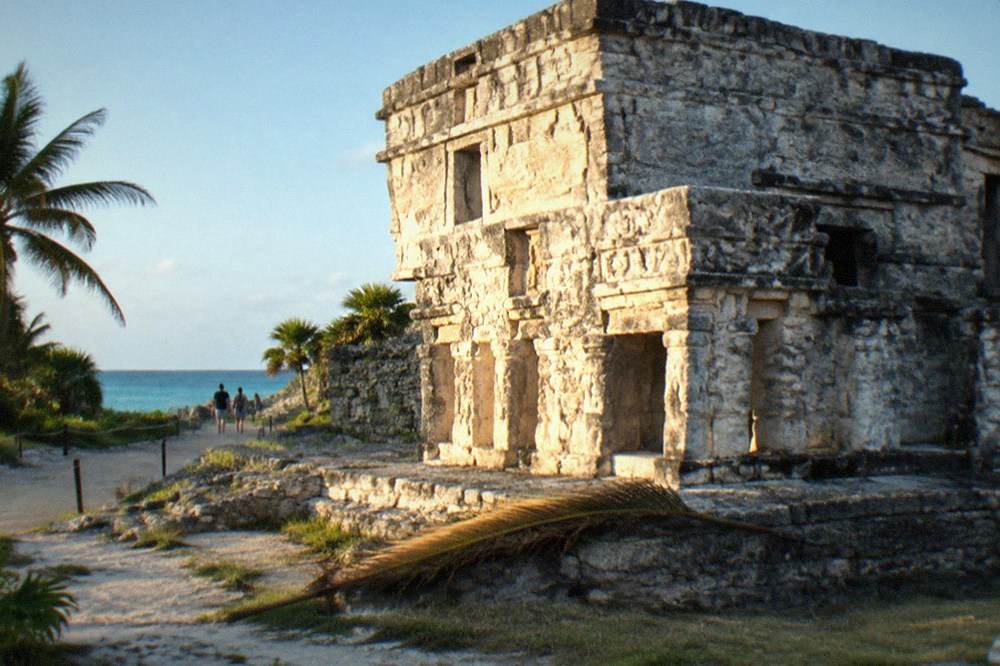
Can A Private Or Early-Access Tour Buy Back The Timing Advantage?
Yes, and it is the single biggest practical benefit of paying for a private format. A private tour sets its own departure time, so a group can be at the gate at or near the 8:00 opening without depending on a shared coach schedule. The trade is price: private options on this lineup generally sit above group tours in price, and exact rates appear on the tour page rather than in fixed figures.
The arithmetic of timing is what you are really buying. A shared small-group tour departing Cancun and the Riviera Maya, such as the Tulum ruins guided tour from Cancun and Riviera Maya at 4.8 across 502 reviews from $67, is built around a pickup circuit, which means the arrival time at the site lands where the circuit lands, typically mid-morning. That is a fine product for the price, with air-conditioned van transport, a bilingual guide, and water and snacks included, and the entrance fee paid separately at the gate. But it does not put you at the front of the 8:00 line. The wider set of guides lives on Tulum Ruins Tours.
A private format does. The private Tulum ruins half-day tour, from $159, includes all fees and hotel-area transport, and its four-hour span is short enough that an early departure still leaves your afternoon free. For visitors combining the ruins with a cenote, the private Tulum ruins and cenote tour from Tulum and Riviera Maya, 5.0 across 80 reviews from $204, adds a cenote swim with snorkel gear and all fees and taxes included in a 4.5-hour span.
The budget counterweight is the Tulum archaeological zone guided walking tour, at 4.9 across 109 reviews and from $18, the cheapest headline price on this list. It is a 1.15-hour guided walk with beach access at Parque del Jaguar, transport not included, which makes it a natural fit for travelers already staying in Tulum who can walk or cab to the gate at opening themselves. You handle the timing; the guide handles the history.
There is also a middle path worth naming: skip the tour entirely and self-time your visit. The guided tour versus self-guided guide walks through when a guide adds real value at Tulum and when the signage and a good map will do. If your only goal is beating the crowds, an independent 8:00 arrival costs you nothing beyond the 265 MXN gate fee and a colectivo fare.
How Long Do You Need Inside The Tulum Ruins?
Most visitors spend 1.5 to 3 hours inside the Tulum archaeological zone. A fast loop of the main structures takes about 90 minutes; adding the beach staircase, photos at El Castillo, and the quieter corners pushes it toward 3 hours. The walled core is compact, so this is a half-morning site, not a full-day one, which is exactly why timing matters so much.
The site's small footprint is the hidden variable in every scheduling decision. Tulum is not Coba, which sprawls across jungle paths with structure groups a kilometer or more apart; the Tulum core is a walkable walled enclosure where the Temple of the Frescoes, El Castillo, the Temple of the Descending God, and the cliff-edge views sit within minutes of each other. A determined visitor can see the essentials quickly.
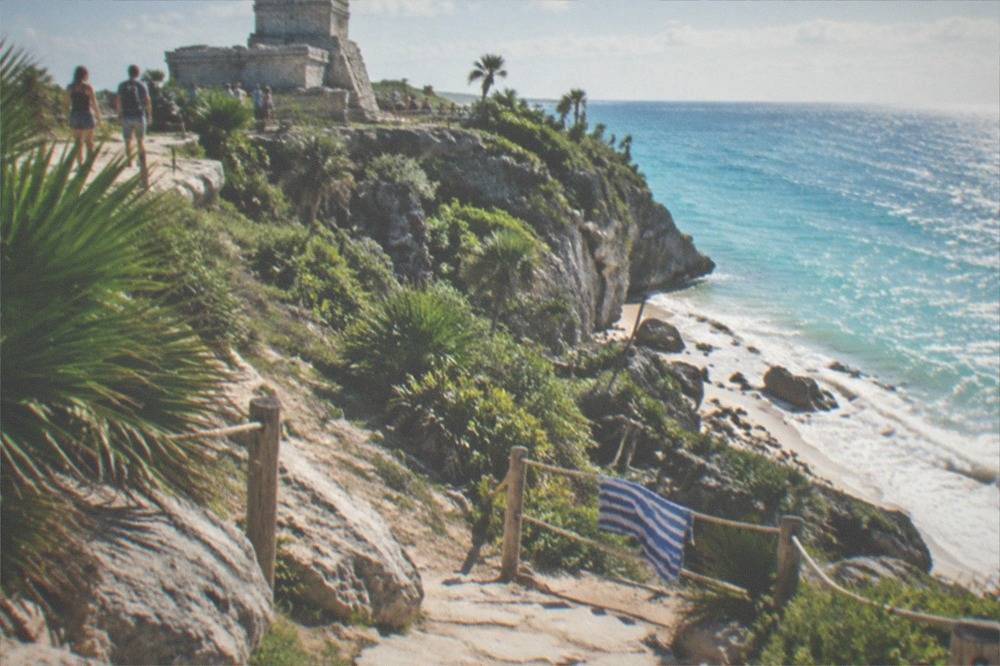
That compactness cuts both ways. It means an early arrival buys you a near-empty site fast, since 90 quiet minutes at 8:00 covers the core. It also means the site absorbs peak crowds more intensely, because everyone at 12:00 is compressed into the same few paths and viewpoints. The same footprint that makes Tulum a short visit makes its midday congestion feel denser than at larger sites.
Plan the beach into your count if it matters to you. Playa Ruinas, the small cove below El Castillo reached by a wooden staircase, offers swimming inside the zone, and a swim plus the ruins loop is closer to the full 3 hours. There is no swimmable cenote inside the archaeological zone itself; Casa del Cenote is a named structure, not a swim spot, and the famous cenotes like Gran Cenote sit outside the gate.
If the ruins-plus-water combination is the goal, a combo product handles both in one block of time. The Riviera Maya Tulum ruins and 2 cenotes half-day tour, 4.4 across 1,166 reviews, covers six hours with hotel pickup and drop-off, guided ruins, swims at two cenotes, water, snacks, and a life vest and locker, with the Tulum gate fee of 265 MXN per foreign adult extra.
What Should You Know About Sunday And Holiday Timing?
Sundays are free for Mexican nationals and foreign residents with valid ID, per long-standing INAH policy, so they are among the busiest days at the ruins. Foreign tourists still pay the full 265 MXN on Sundays. Mexican public holidays and equinox-adjacent dates also draw large local crowds, so a weekday morning remains the quietest combination.
The Sunday rule is a genuine perk for locals and a genuine crowd warning for visitors. INAH's policy grants free Sunday access to Mexican citizens and foreign residents with valid official ID, and it applies at INAH-run sites across the country. Foreign tourists pay the regular fee every day, including Sunday. The result is a site full of families, which many visitors find adds warmth to the atmosphere, but the 10:00-15:00 crush is at its most compressed on Sundays.
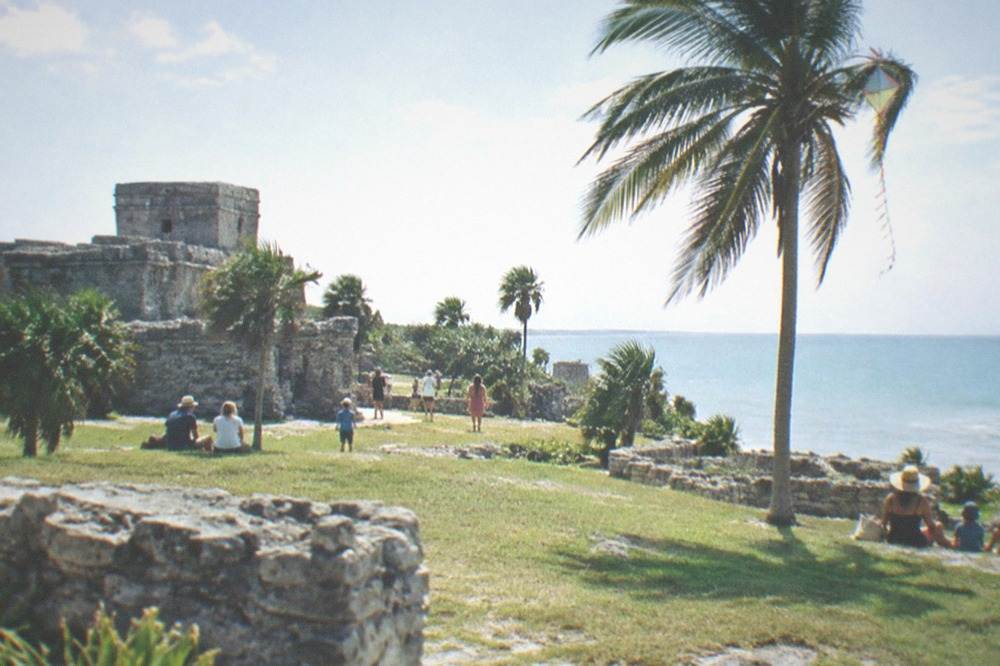
Holiday weeks deserve the same flag. The Christmas and New Year period, Easter week, and Mexican long weekends all push local visitation up sharply, and those dates combine with peak-season foreign crowds. If your trip lands on one of them, the 8:00 opening is not just advice, it is the difference between a pleasant visit and a shuffle.
The quietest realistic combination, ranked: a Tuesday, Wednesday, or Thursday morning at 8:00 in November or April. The busiest: a Sunday at midday in late December. Everything else falls between those poles, and knowing where your date sits on that line tells you how hard to fight for the early slot.
How Do You Get To The Ruins For An Opening-Time Arrival?
From Tulum town, colectivo vans run toward the ruins every 10-15 minutes for roughly 20-30 MXN per person, and taxis cost about 150-200 MXN one way and take 10-15 minutes. ADO buses serve the Tulum Pueblo terminal, not the ruins gate directly. For an 8:00 entry, leave town by 7:15 at the latest, earlier if parking a car.
The logistics are short but unforgiving in the morning. Colectivos are the budget workhorse: white and blue vans, often labeled for the ruins route, that depart from Tulum Pueblo every 10 to 15 minutes and drop passengers along the highway with a short walk to the entrance. They are cash-based and frequent, but frequency at 7:00 is thinner than at midday, so build in a wait.
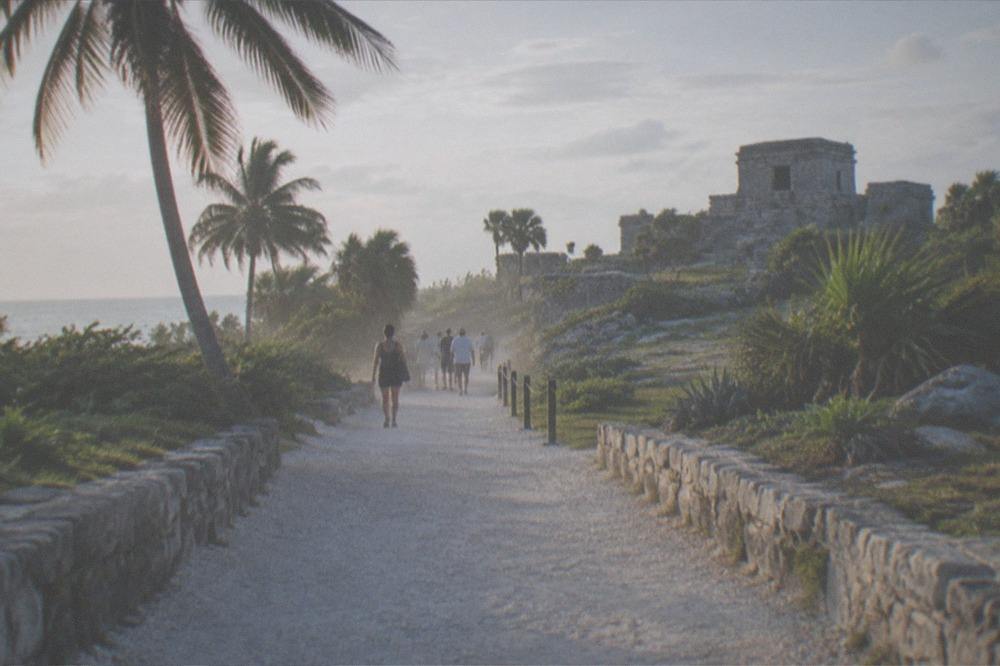
Taxis are the reliable early-morning option, at roughly 150-200 MXN or more one way from town, with a 10-15 minute ride. Drivers in Tulum know the 8:00 opening rush well. If you are driving yourself, remember the parking lot sits at the highway entrance with a 5-10 minute walk, or the ~20 MXN shuttle, between the lot and the gate, so an 8:00 entry means parking by about 7:40.
The full transport picture, including arrival from Cancun, Playa del Carmen, and the airport, is covered in the getting to the Tulum ruins guide, and the site-wide planning basics live in the complete Tulum ruins site guide.
Which Tour Should You Book For Your Time Slot?
For an opening-time visit, book the private Tulum ruins half-day tour from $159 if you want the schedule fully controlled, or the $18 guided walking tour if you are staying in Tulum and can self-arrive. For a mid-morning arrival from Cancun or the Riviera Maya, the small-group tour from $67 is the value pick. For a ruins-plus-cenote day, the $36 half-day combo covers the most ground for the least money.
The choice reduces to one question: who controls your arrival time? If you do, because you are based in Tulum with a flexible morning, the cheap walking tour plus an 8:00 self-arrival beats almost everything on value. If a tour operator controls it, because you are commuting from Cancun or the Riviera Maya, then paying for private transport is the only reliable way to land at the front of the opening line.
| Tour | Price from | Duration | Best time slot |
|---|---|---|---|
| Private Tulum ruins half-day | $159 | 4 hours | Opening, schedule-controlled |
| Tulum archaeological zone walking tour | $18 | 1.15 hours | Opening, self-arrive from Tulum |
| Tulum ruins guided tour from Cancun and Riviera Maya | $67 | 2 hours at site plus transport | Mid-morning, shared circuit |
| Riviera Maya ruins and 2 cenotes half-day | $36 | 6 hours | Early departure, full half-day block |
| Private Tulum ruins and cenote tour | $204 | 4.5 hours | Opening, cenote after |
One caution applies to the mid-morning options: the shared tours from Cancun and the Riviera Maya arrive with the crowd wave, so their 2 hours at the site land inside the 10:00-15:00 busy window by design. That is not a dealbreaker, and a guide mitigates it by moving the group efficiently, but it is the honest trade for the lower price and included transport.
If any of this planning depends on the rest of your day, the wider comparison of every ruin within reach of Tulum, including Coba's reopened pyramid climb and Ek Balam's rope-assisted Acropolis, is laid out in the Mayan ruins near Tulum comparison. Timing strategy at Tulum transfers well: at every site on that list, the opening hour is the quiet hour.
These three formats cover the timing angles this guide has walked through, from the fully controlled private morning to the budget self-arrival walk.
Common Questions About Tulum Ruins Hours And Best Time
What are the Tulum ruins hours?
The Tulum archaeological zone is open daily from 8:00 to 17:00, with the last entry at 15:30. There is no weekly closure day. Hours are set by INAH and can change, so confirm on arrival.
What time is last entry at the Tulum ruins?
Last entry is 15:30, ninety minutes before the 17:00 close. Arrive after 15:30 and you will not be admitted, so plan around the last entry time rather than the closing time.
When is the best time of day to visit the Tulum ruins?
Arrive at the 8:00 opening, or enter after 15:00 in the late afternoon. The busiest window runs roughly 10:00 to 15:00, when coach tours and cruise excursions converge on the site.
What are the Tulum ruins hours on Sunday?
Sunday hours are the same, 8:00 to 17:00 with last entry at 15:30. Sundays are among the busiest days because Mexican nationals and foreign residents with valid ID enter free, while foreign tourists still pay the full 265 MXN fee.
How much time do you need at the Tulum ruins?
Most visitors spend 1.5 to 3 hours. A fast loop of the main structures takes about 90 minutes; adding the Playa Ruinas beach staircase and photos pushes the visit toward 3 hours.
Is the Tulum archaeological zone open year-round?
Yes, the site opens daily year-round, including holidays and through the rainy season. The dry season from roughly November to April offers the most comfortable conditions for the exposed cliff-top walk.