Ek Balam From Tulum: What To Know
Ek Balam is the Yucatan ruin where you can still climb, and it sits close enough to Tulum for an easy day trip. Here is the drive, the fees, the climb rules, and the tours worth booking.
Short answer
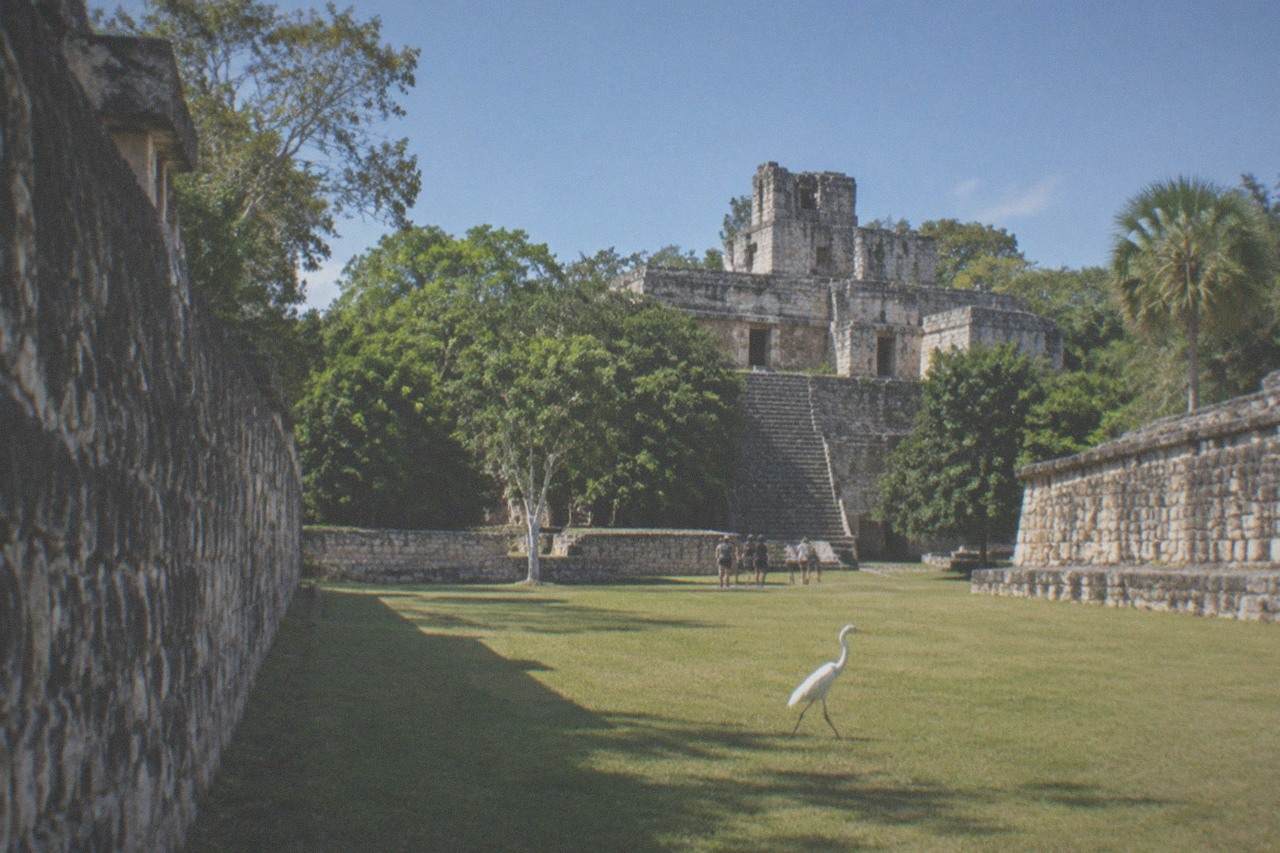
Ek Balam sits about 121-130 km from Tulum, roughly 1.5 to 2 hours by road via Coba or Valladolid. Foreign visitors pay roughly 691 MXN total (about $35-40), split between INAH and CULTUR. The Acropolis is climbable with a rope assist, which sets it apart from Chichen Itza and Tulum.
El Castillo at Chichen Itza has been closed to climbers since 2006, and the structures at Tulum have been off-limits for years. That leaves two headline ruins where you can still climb a major Maya pyramid and look out over the jungle canopy: Coba and Ek Balam. Ek Balam sits roughly two hours inland from Tulum. The site sees low hundreds of visitors a day where Chichen Itza counts its crowds in the thousands, and its Acropolis, at about 43 meters, is taller than the famous pyramid at Chichen Itza. For a traveler basing themselves in Tulum and tiring of bus-queue archaeology, it is the strongest quiet alternative on the map.
This guide covers the practical side of an Ek Balam day trip from Tulum: the drive and the routes, the two-part entrance fee, the climbing rules on the Acropolis, what the site actually contains, and which tours out of Tulum include it. The headline option is the private Ek Balam, cenote and Valladolid tour from Tulum, which bundles the ruins with a cenote swim and a colonial-town stop. Cancellation terms vary, so check the listing. There are also small-group combinations that fold Ek Balam into a bigger Chichen Itza day, and quieter Muyil-based options for readers who want the low-crowd experience closer to the coast.
Why Choose Ek Balam Over The Better Known Ruins?
Ek Balam is one of two major ruins within day-trip range of Tulum where climbing a pyramid is still permitted, alongside Coba, and it draws a fraction of the visitor volume of Chichen Itza or even Coba. The Acropolis, roughly 43 meters tall, is climbed via steep stone steps with a rope assist, and the site receives low hundreds of daily visitors rather than thousands. That combination, climbable stone and quiet paths, exists nowhere else in the region.
The comparison with Chichen Itza is the one most travelers are making, and it is not subtle. Chichen Itza is a magnificent, heavily restored, UNESCO-listed site, and it is also the most crowded archaeological zone on the peninsula. Its great pyramid has been climb-banned since 2006, barriers keep visitors well back from the structure, and the interior, including the Red Jaguar Throne, stays closed. Ek Balam inverts almost every one of those points. The buildings are less fully reconstructed, the vendor pressure is far lighter, and the signature structure invites you up it, with a rope line bolted alongside the steep original steps.
There is a cultural payoff too, and it is one the crowd counters miss. The Acropolis facade at Ek Balam carries some of the best-preserved stucco decoration in the Maya world, including the winged figures of the U-shaped "mouth of the earth" portal framing the tomb of the site's ruler, Ukit Kan Lek Tok. At Chichen Itza you look at architecture from behind a rope line. At Ek Balam you climb up and stand a meter from stucco friezes that survived the jungle for over a thousand years. Readers weighing the trade-off in detail should start with the blog post is Ek Balam worth visiting?, which works through the value question on its own.
For a broader sense of how the quieter sites stack up against the coast's famous clifftop zone, the Mayan ruins near Tulum comparison puts Ek Balam alongside Muyil, Coba, and the Tulum archaeological zone in one table. The short version: Tulum wins on scenery and convenience, Coba wins on jungle scale, and Ek Balam wins on climbable architecture and stucco.
How Far Is Ek Balam From Tulum And What Is The Drive Like?
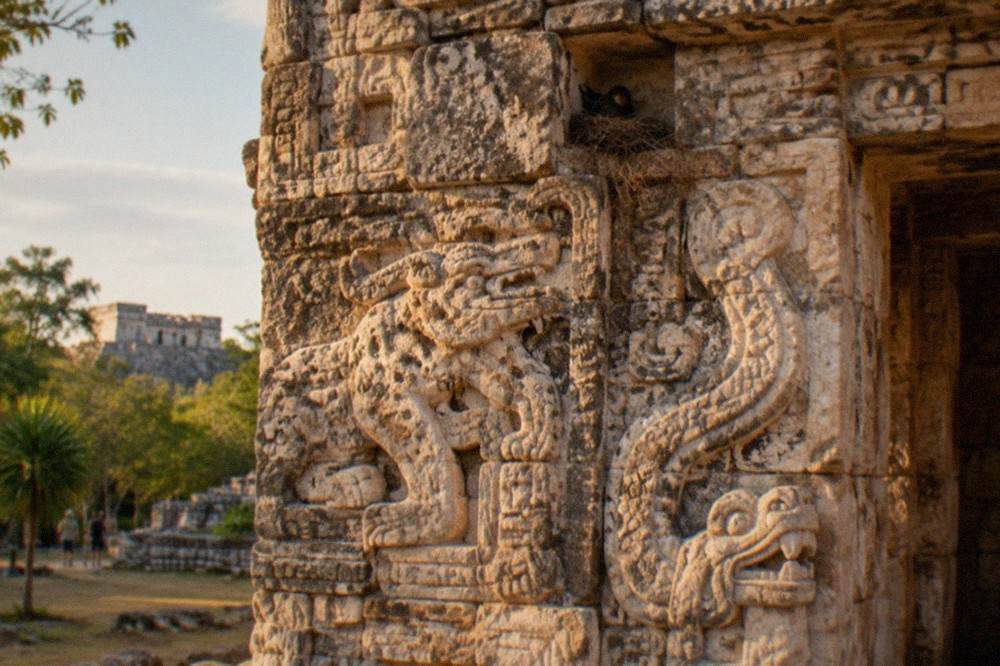
Ek Balam sits roughly 121 to 130 km from Tulum, and the drive takes about 1.5 to 2 hours each way depending on the route, via Coba or via Valladolid. Both routes are paved the whole way and passable in an ordinary rental car. Add tolls and a parking fee of roughly 100 MXN at the site, and the round trip is a comfortable half-day-plus of driving.
Two routes work, and both are real roads, not jungle tracks. The northern route runs up Highway 180D, the toll road toward Valladolid, then cuts north on a well-marked spur to the site entrance. The eastern route tracks through the Coba road, past the turn-offs for a string of cenotes, and joins the Valladolid area network from the south. Drive times land in the same 1.5-to-2-hour band either way, so the choice usually comes down to what else the day contains. A Valladolid lunch stop pairs naturally with the toll road; a cenote swim pairs naturally with the Coba road.
That drive length is the honest cost of the quiet. Muyil, by contrast, is 18 to 25 km south of Tulum, a 20-to-25-minute hop, and it is covered in the Muyil ruins and Sian Ka'an guide. Ek Balam asks for more windshield time than any coast-side ruin except Chichen Itza itself, which is why so many travelers fold it into a combined day rather than treating it as a standalone morning. The most common pairing adds a cenote swim and a walk through Valladolid's colonial center, which is exactly the shape of the private tour in this site's lineup.
A few practical notes for the drive. The toll road is faster and avoids heavier local traffic, but keep some cash for the toll booths and for the site, where the parking fee is an ejido charge of roughly 100 MXN. Fuel up in Tulum or Valladolid rather than counting on a station near the site. And if the plan is a self-drive rather than a tour, leave early: the site opens at 8:00, last entry is 16:00, and the climbing window on the Acropolis closes earlier still.
Driving it yourself is entirely doable, but the arithmetic of a combined day is where tours earn their keep. These three options cover the main ways to build an Ek Balam day from Tulum:
What Does It Cost To Enter Ek Balam?
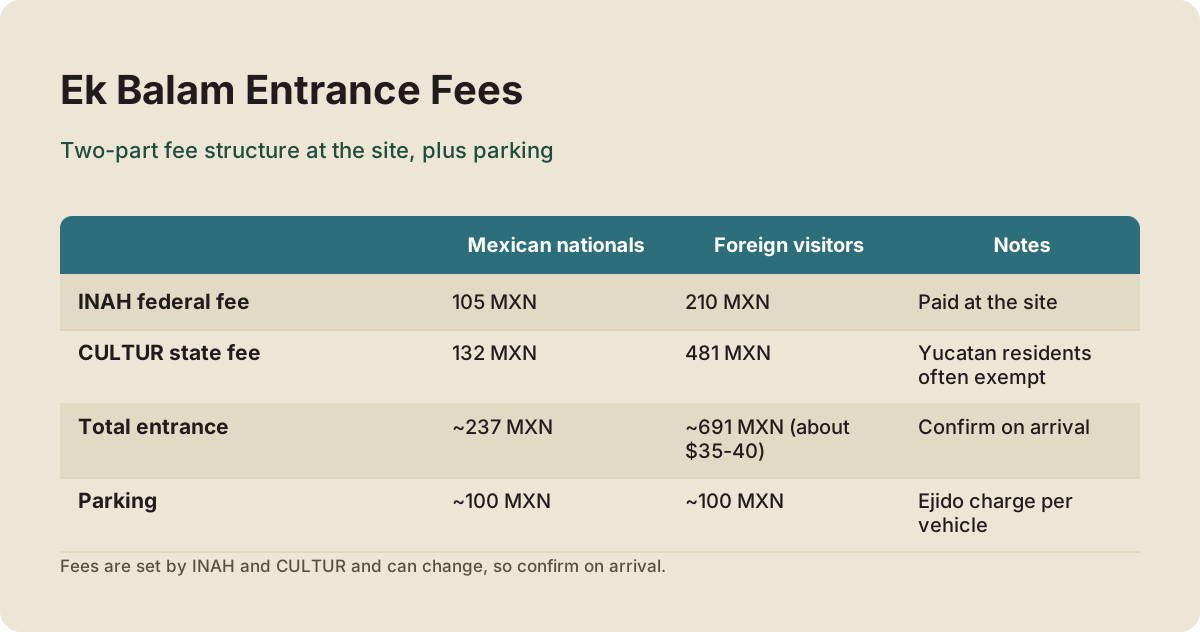
Foreign visitors pay two fees at Ek Balam that total roughly 691 MXN (about $35-40): the INAH federal fee of 210 MXN and the Yucatan state CULTUR fee of 481 MXN. Mexican nationals pay roughly 237 MXN combined. Fees are set by INAH and CULTUR and can change, so confirm on arrival. Parking adds roughly 100 MXN per vehicle.
The two-part structure confuses people, so it is worth spelling out. The federal INAH fee funds the archaeological zone itself. The state CULTUR fee is a Yucatan charge that applies on top, and it is the reason Ek Balam costs foreign visitors noticeably more than Tulum's unified 265 MXN gate fee. Yucatan residents are often exempt from the CULTUR portion and pay only the INAH fee. The official INAH record for the site lists the current fee split, and it is the primary source for these figures: INAH's Ek Balam site record.
| Fee component | Mexican nationals | Foreign visitors | Notes |
|---|---|---|---|
| INAH federal fee | 105 MXN | 210 MXN | Paid at the site |
| CULTUR state fee | 132 MXN | 481 MXN | Yucatan residents often exempt |
| Total entrance | ~237 MXN | ~691 MXN (about $35-40) | Confirm on arrival, fees can change |
| Parking | ~100 MXN | ~100 MXN | Ejido charge per vehicle |
One policy that trips up foreign visitors: Sunday free entry at INAH sites applies to Mexican nationals and foreign residents with valid ID, not to tourists on a one-week pass. Foreign visitors pay full price on Sundays, and Sundays are busier as a result. INAH states the Sunday policy plainly on its own page: free Sunday access for Mexican nationals.
If reading fee tables and route notes is exactly the planning work you would rather skip, the private option bundles it all. The Ek Balam, cenote and Valladolid private tour from Tulum runs from $239, holds a 5.0 rating from 24 reviews, and covers private transport, the ruins visit, a cenote swim, a Valladolid stop, and lunch, with the exact duration set by the operator. You can also check the tour page for the full itinerary, or Check availability for the exact dates.
Can You Climb The Acropolis At Ek Balam?
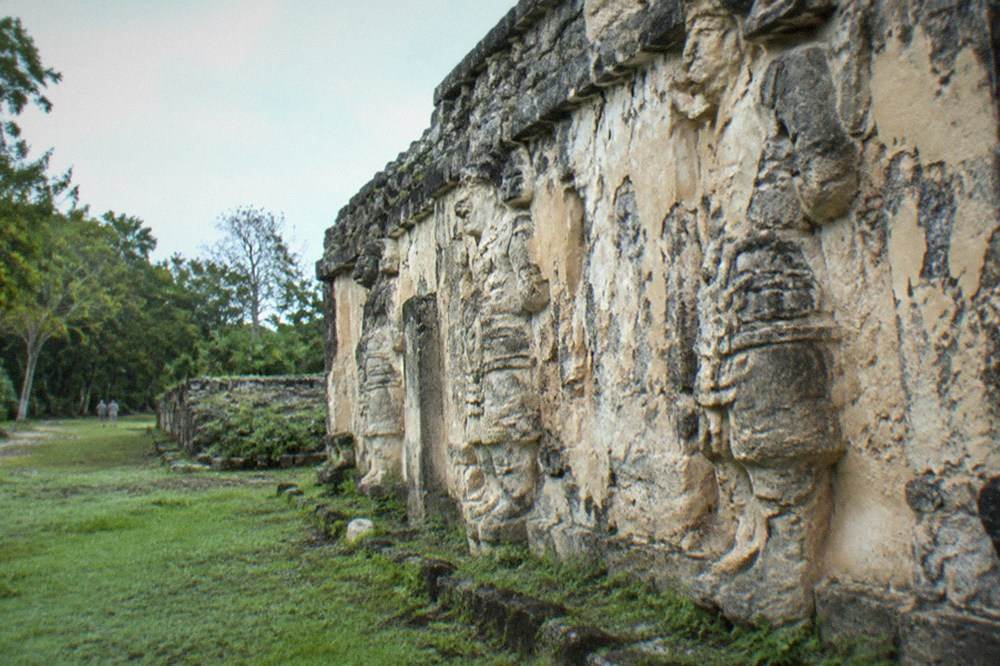
Yes, climbing is permitted on Ek Balam's Acropolis, roughly 43 meters tall, via a steep stone staircase with a rope assist for the final stretch. It is the only major pyramid in day-trip range of Tulum where climbing is still allowed. Access follows INAH rules and can change with conditions, so treat the climb as permitted today rather than guaranteed forever.
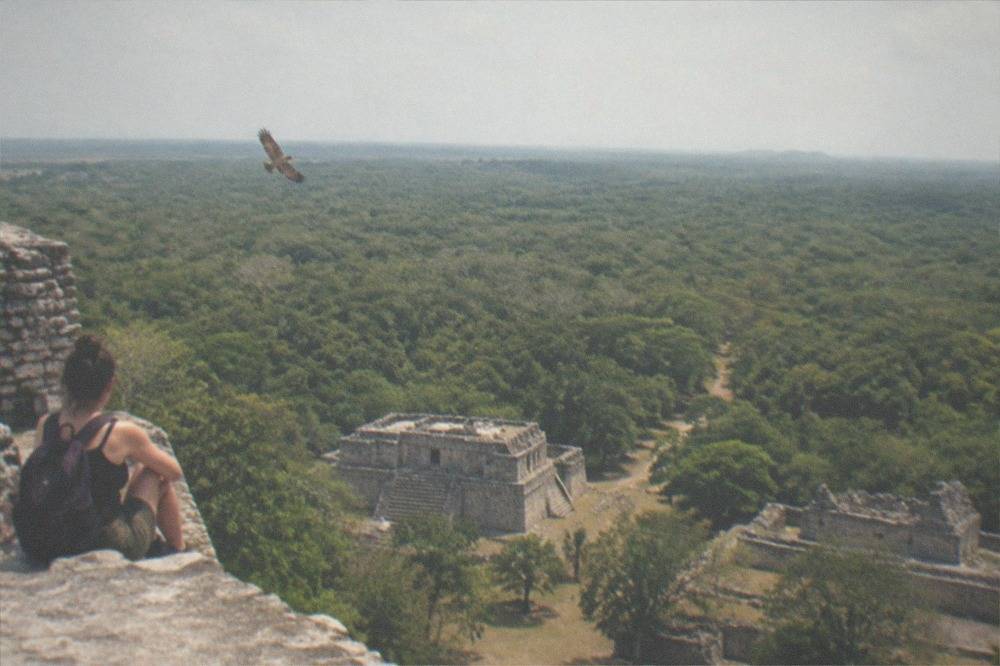
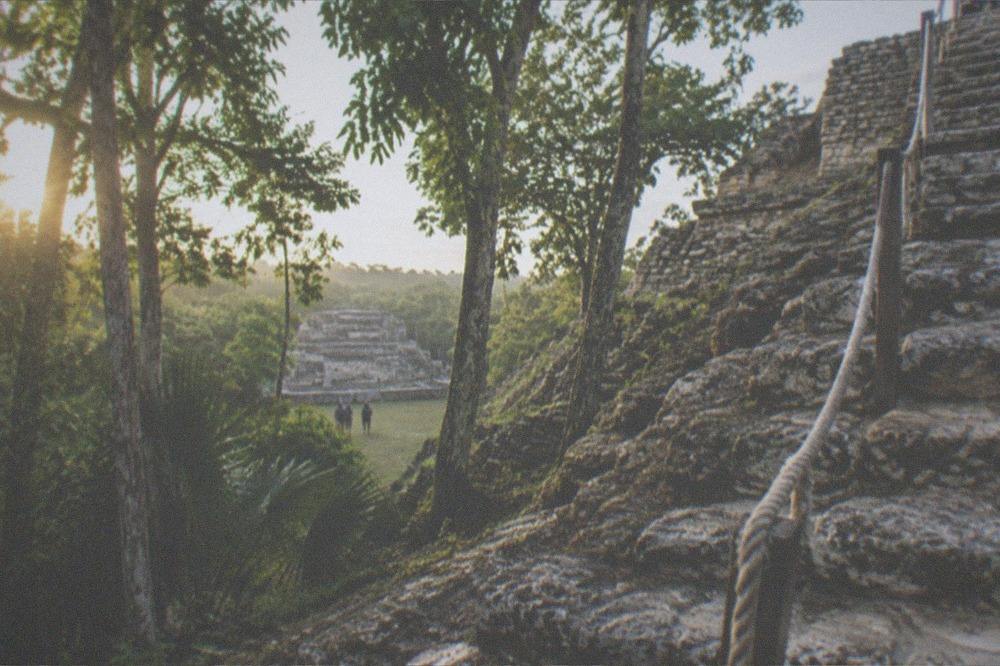
The mechanics matter more than most photos suggest. This is not a gentle walk-up. The staircase is steep, the stone is worn, and a fixed rope line runs alongside for the upper section, which is where most people are glad of it. Closed-toe walking shoes are the right call, and anyone with real trouble with heights or knees should think honestly about the descent, which is the harder half. The reward is twofold: a view over flat jungle canopy to the horizon, and close-up access to the stucco friezes at the summit level, including the winged warriors flanking the tomb entrance that you would otherwise need a long lens to see.
The regional context is what makes this climb worth planning around. At Chichen Itza, El Castillo has been closed to climbers since 2006, following a fatal accident and to prevent erosion, and the ban is fully enforced today, with barriers holding visitors back from the structure. At Tulum, the structures are not open to climbing at all. Coba's Nohoch Mul reopened to climbers around December 2025 on a new wooden staircase, with small groups, a climbing window of roughly 8:00 to 15:30, a summit time limit, and closed-toe grip shoes required, which makes Coba and Ek Balam the region's two climbable headline pyramids. The difference in texture: Coba's summit view is over unexcavated jungle mounds, while Ek Balam's summit puts you next to decorated stucco. The rules detail for Chichen Itza is spelled out here: Chichen Itza's site rules.
One 2026 development worth knowing: a new western patio section of the Grand Acropolis opened to visitors following excavation and restoration work, with small-group, timed access in places. The core climb is the draw, but the site's walkable footprint has grown, and a visit planned around the reopening covers more ground than older guidebooks describe.
What Will You Actually See At The Site?
Ek Balam's core is compact and walkable in about 1.5 to 2 hours: the Acropolis, the Oval Palace, the Twin Pyramids, a ballcourt, and a set of stelae and carved monuments, all connected by short flat paths. The Acropolis dominates everything, both physically and as the site's reason to matter. The site is open daily 8:00 to 17:00 with last entry at 16:00.
The Acropolis is the headline, and it earns it. The lower levels hold residential and administrative rooms, some with surviving painted plaster, and the climb passes them on the way up. The summit facade is the famous part: the monster-mouth portal, a U-shaped frame of stucco representing the entrance to the underworld, flanked by winged figures, built around the tomb of Ukit Kan Lek Tok, a ruler whose burial included offerings that archaeologists recovered largely intact. Standing at the top of a pyramid and being close enough to see original stucco detail is an experience the region's bigger sites simply do not offer anymore.
Around the Acropolis, the rest of the core reads quickly. The Oval Palace, with its rounded corners, is the most photographed secondary structure. The Twin Pyramids and the ballcourt sit along the main axis, and a handful of stelae and carved stones line the paths, some with glyphs still legible. Because the site is compact, it does not demand the bike-rental logistics of Coba, where structure groups sit a kilometer or more apart along jungle paths. You walk Ek Balam on foot, in ordinary shoes, at an ordinary pace.
The quiet is part of the sight. Ek Balam receives low hundreds of daily visitors, against the thousands that move through Chichen Itza and the dense mid-morning flow at Tulum. That changes what photography and simply standing still feel like. At the summit, on a weekday morning, it is realistic to have the view with a handful of other people rather than a queue behind you. Readers who want the full argument for the site as a destination, not just a stop, will find it in the blog post is Ek Balam worth visiting?.
Which Tours From Tulum Include Ek Balam?
Three tour options cover Ek Balam from Tulum: a private Ek Balam, cenote and Valladolid day tour from $239, a 12-hour small-group day combining Chichen Itza, Ek Balam and the Hubiku cenote from $119, and quieter Muyil-based alternatives from $169 for readers who cut the drive. Each fits a different traveler, and the private tour is this lineup's dedicated Ek Balam product.
The private tour is the straightforward choice for an Ek Balam-focused day. It runs from $239, carries a 5.0 rating from 24 reviews, and includes private transport, the ruins visit, a cenote swim, a stop in Valladolid, and lunch. The shape of the day suits families and anyone who wants the climb, the swim, and the colonial town without a 5 a.m. pickup shared with a full van. Because it is private, the pacing flexes: more time on the Acropolis, less in the gift stalls.
The small-group alternative trades exclusivity for scale. The Chichen Itza, Ek Balam and Hubiku cenote small-group tour runs about 12 hours, rated 4.7 from 193 reviews, with an air-conditioned minivan, hotel pickup and drop-off, bottled water, and a meal included. Price sits on the tour page. It is this lineup's way to see both headline pyramids in one long day: Chichen Itza in the morning flow, then Ek Balam, with the Hubiku cenote between them as the swim stop. Twelve hours is a real commitment, and readers should go in knowing the day is long, but for a traveler with one free day and two pyramids on the list, it is the efficient answer.
For readers whose real goal is "quiet ruins, minimal driving," the honest option may not include Ek Balam at all. The Muyil archaeological site and Sian Ka'an guided tour from Tulum runs 6 hours from $169, rated 4.9 from 846 reviews, with Tulum hotel pickup, an air-conditioned minivan, water and snacks, and a professional guide through a site that reopened in February 2026 after restoration work, inside the Sian Ka'an biosphere. It is the most-reviewed Muyil tour on this list, and it delivers the uncrowded-ruins experience without the two-hour drive inland.
A quick comparison of the three:
| Tour | Price from | Rating | Length | What it covers |
|---|---|---|---|---|
| Ek Balam, cenote and Valladolid private tour | $239 | 5.0 from 24 reviews | ~4.5-6 hours | Private Ek Balam day, cenote swim, Valladolid, lunch |
| Chichen Itza, Ek Balam and Hubiku cenote small group | $119 | 4.7 from 193 reviews | 12 hours | Both pyramids plus cenote, minivan, breakfast |
| Muyil and Sian Ka'an guided tour from Tulum | $169 | 4.9 from 846 reviews | 6 hours | Muyil ruins in the biosphere, Tulum pickup |
How Does Ek Balam Compare With Coba And Chichen Itza?
Ek Balam beats both on stucco preservation and climb access, loses to Chichen Itza on architectural fame, and loses to Coba on jungle scale. Chichen Itza is compact, iconic and crowded with a climb ban since 2006. Coba is vast, jungle-immersed, and climbable on Nohoch Mul since its December 2025 reopening. Ek Balam is small, quiet, climbable, and holds the region's best-preserved facade.
The honest framing is that the three sites answer different questions. Chichen Itza answers "what is the most famous Maya site," and its restored grandeur plus its New Seven Wonders status explain the crowds, the roughly 697 MXN foreigner entrance fee (about $35-40, current reasonable figure, confirm on-site), and the two-hour drive from Tulum. Coba answers "what did the biggest Maya cities feel like," with an area of roughly 70 to 80 square kilometers, thousands of mostly unexcavated structures, and bike or pedicab rental to move between groups. Ek Balam answers "what can I still touch," and it is the only one of the three where the answer includes a summit.
| Ek Balam | Coba | Chichen Itza | |
|---|---|---|---|
| Drive from Tulum | ~1.5-2 hours | ~45 minutes | ~2 hours |
| Foreigner entrance | ~691 MXN (~$35-40) | ~310-330 MXN (~$17-19) | ~697 MXN (~$35-40) |
| Climbing | Yes, rope-assisted Acropolis | Yes, Nohoch Mul since Dec 2025 | No, banned since 2006 |
| Crowd level | Low hundreds daily | Moderate | Very high |
| Signature | Stucco facade, tomb portal | Jungle scale, tallest pyramid | El Castillo, ballcourt |
Climbing rules are the sharpest dividing line, and they deserve precision. Nohoch Mul at Coba reopened around December 8, 2025 on a new wooden staircase over the original steps, with small groups of 14 to 15 at a time, a climbing window of roughly 8:00 to 15:30, a summit limit of about 15 minutes, and closed-toe grip shoes required. Ek Balam's Acropolis uses the original steep stone steps with a rope assist, without the same group-timing apparatus in most reporting. El Castillo at Chichen Itza has been closed since 2006, full stop. A traveler whose whole trip is built around standing on top of a pyramid has two real options, and the full Chichen Itza side of the comparison is covered in the Chichen Itza from Tulum guide.
The fee picture also matters for budgeting. Ek Balam and Chichen Itza cost foreign visitors roughly the same, in the 690 MXN band, because both carry a Yucatan state fee on top of the federal one. Coba's two-ticket system lands lower, roughly 310 to 330 MXN for foreigners. Tulum's coastal zone, with its unified 265 MXN foreigner fee covering INAH plus the Parque del Jaguar access, is the cheapest of the four. None of these figures are fixed forever: fees are set by INAH and CULTUR, they have moved repeatedly in recent years, and confirming on arrival is the only reliable rule.
When Should You Visit And What Should You Bring?
Visit Ek Balam in the dry season, roughly November to April, and arrive close to the 8:00 opening to climb before the midday heat. Bring closed-toe walking shoes for the Acropolis, cash for both fee windows and parking, sun protection, and water. The climbing window effectively ends in mid-afternoon, so a late arrival costs the summit.
The seasonal logic is the same as everywhere on the peninsula. The dry months from November to April bring lower humidity, less rain, and more manageable walking conditions on exposed stone; December through March is the most reliable window, with daytime highs around 28-30 C. The rainy season, June through November with peak hurricane risk in September and October, brings hotter, more humid conditions and afternoon storms. The ruins themselves remain visitable year-round, and the low season buys quieter paths at the price of sweat and a chance of a soaking.
Within any given day, the 8:00 opening is the lever that matters most. Early arrival means three things at Ek Balam: cooler stone underfoot for the climb, thinner crowds on the Acropolis staircase, and a full margin before the last-entry cutoff at 16:00 and the effective mid-afternoon end of comfortable climbing. Midday is when the exposed core gets punishing and when the tour vans from Valladolid arrive. The same early-start logic applies at Chichen Itza, where arriving in the 7:45 to 8:15 band, ideally Tuesday through Thursday, buys the calm window before the buses land; equinox days around March 20-21 and September 22-23 draw very large crowds there.
Packing is simple. Closed-toe shoes with real grip, because the rope-assisted stairs punish flip-flops. Cash, because the fee windows and the parking ejido charge run on cash, and because Valladolid and the site shops are cash-friendly. Sun protection and more water than feels necessary; the site is small but shade is thin on the structures. If a cenote swim is on the day's plan, and on most tour itineraries it is, pack the suit and a towel, and use reef-safe sunscreen before the swim rather than a chemical coat.
The planning picture, in one paragraph: pick a dry-season day, leave Tulum early enough to reach the gate near 8:00, carry cash for both fee windows and parking, wear real shoes, and decide in advance whether the day is Ek Balam alone or Ek Balam folded into a Chichen Itza-plus-cenote circuit. The private tour handles all of that for one price; the small-group combo stretches one long day across both pyramids; and a self-drive costs the least but puts the fee math, the route choice, and the timing entirely on you. Whichever way it goes, the summit of the Acropolis is the payoff, and it is a payoff the bigger sites no longer offer. For everything else on the quieter side of the peninsula, Tulum Ruins Tours keeps the full lineup of bookable options, from biosphere floats to cenote combos.
Common Questions About Visiting Ek Balam From Tulum
is ek balam worth visiting?
Yes, for most travelers who want more than a photo stop. Ek Balam offers a climbable Acropolis alongside Chichen-Itza-class stucco facades, at a fraction of the crowd levels. If your priority is iconic architecture and you accept barriers and crowds, Chichen Itza still wins. If your priority is climbing, quiet, and original decoration, Ek Balam is the stronger day.
How long does it take to get from Tulum to Ek Balam?
Roughly 1.5 to 2 hours each way, covering about 121 to 130 km, via either the Coba road or the Valladolid toll-road spur. Both routes are paved and rentable-car friendly. Budget for tolls on the 180D option and a parking fee of roughly 100 MXN at the site.
Can you climb the pyramid at Ek Balam?
Yes. The Acropolis, about 43 meters tall, is climbed via steep stone steps with a rope assist on the upper section. It is the only major pyramid within day-trip range of Tulum where climbing is permitted, since El Castillo at Chichen Itza has been closed since 2006 and Tulum's structures are off-limits. Access follows INAH rules and can change, so confirm on arrival.
How much does it cost to enter Ek Balam?
Foreign visitors pay roughly 691 MXN total (about $35-40), split between a 210 MXN INAH federal fee and a 481 MXN Yucatan state fee. Mexican nationals pay roughly 237 MXN combined. Fees are set by INAH and CULTUR and can change, so confirm on arrival. Parking adds roughly 100 MXN per vehicle.
Is Ek Balam better than Chichen Itza?
They serve different trips. Chichen Itza is more famous, more restored, and more crowded, and its great pyramid has been climb-banned since 2006. Ek Balam is quieter, cheaper to reach in time terms at a similar fee, and lets you climb to original stucco decoration. Travelers with one day and a tolerance for a long itinerary can see both on a 12-hour combo tour.
What should you bring to Ek Balam?
Closed-toe shoes with grip for the rope-assisted climb, cash for both fee windows and parking, sun protection, and more water than seems necessary. If your day includes a cenote swim, add a swimsuit and towel, and use reef-safe sunscreen before the swim. Arrive near the 8:00 opening to climb before the heat builds.