Is Ek Balam Worth Visiting?
An honest verdict on Ek Balam: the climbable Acropolis, the small crowds, the entrance fees, and which tours from Tulum pair it with a cenote and Valladolid.
Is Ek Balam Worth Visiting?
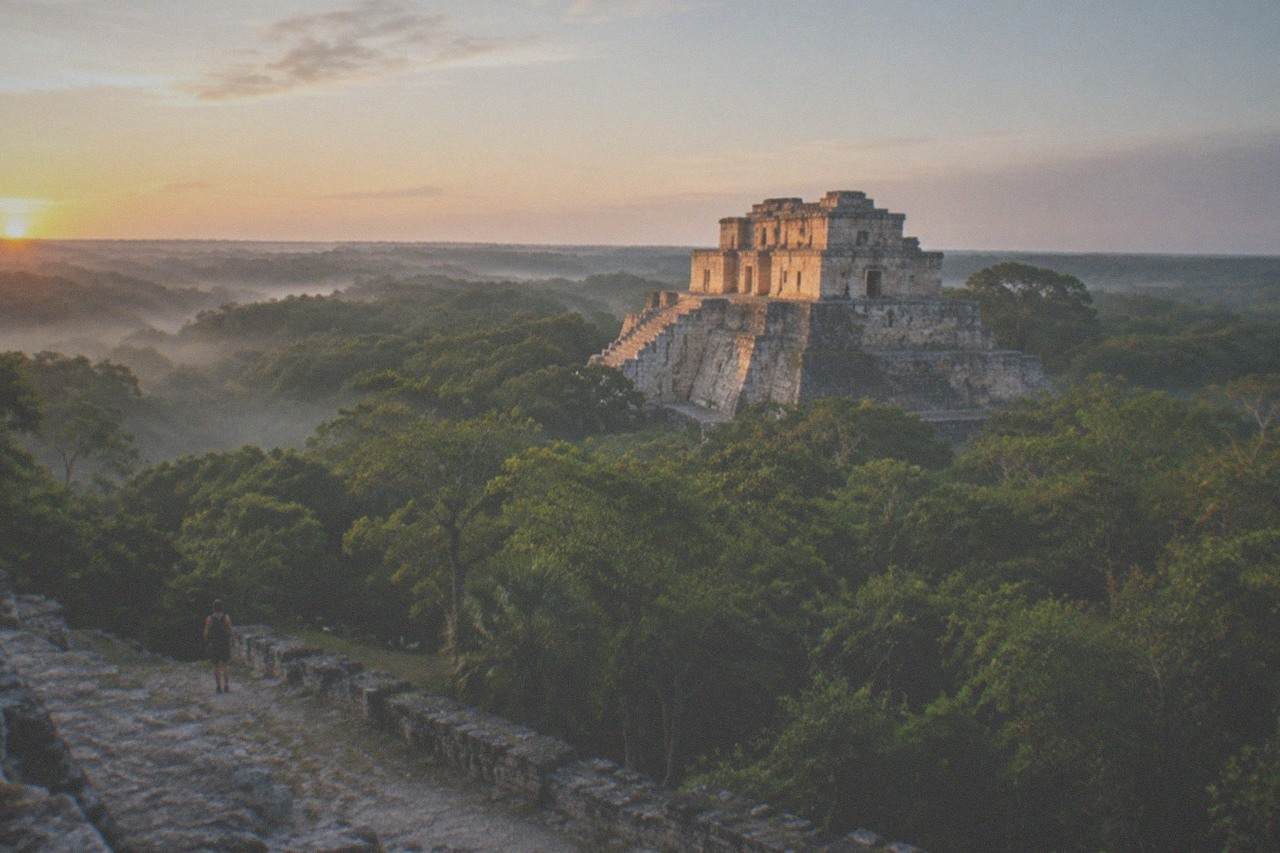
Yes, Ek Balam is worth visiting for most travelers who want more than a photo stop: it is one of two major sites near Tulum where you can still climb the main pyramid, the Acropolis rises about 43 meters, and daily visitor counts sit in the low hundreds against the thousands at Chichen Itza. The honest caveat is distance, roughly 121 to 130 km from Tulum, so it works best as a half or full day, not a quick stop.
That verdict comes with one qualifier worth stating up front. Ek Balam rewards a reader who has already seen one of the busier sites, or who deliberately wants to skip them. If your whole trip allows only one ruin and you want the iconic postcard, Chichen Itza still owns that title. If you want to stand on top of a Maya pyramid, look out over flat green jungle to the horizon, and do it without queueing, Ek Balam is the better day.
The site's name is usually translated as "black jaguar" or "bright star jaguar" in Yucatec Maya, and its standout structure is the Acropolis, also called El Trono. Unlike El Castillo at Chichen Itza, which has been closed to climbers since 2006, the Acropolis here is open to visitors. The climb uses steep stone steps with a rope assist, which is worth knowing before you arrive in sandals. The reward at the top is close access to stucco friezes and decorated facades that you simply cannot see from the ground at the bigger sites.
For travelers basing themselves in Tulum, the practical question is how to spend the day, and three options cover most plans:
The private Ek Balam, cenote and Valladolid tour is the most direct fit for this article's question, and it is covered in detail further down. The Muyil option suits a reader who wants to stay closer to Tulum, and the small-group Chichen Itza combination is the answer for anyone who refuses to choose between the famous site and the climbable one.
What Makes The Acropolis Climb Special?
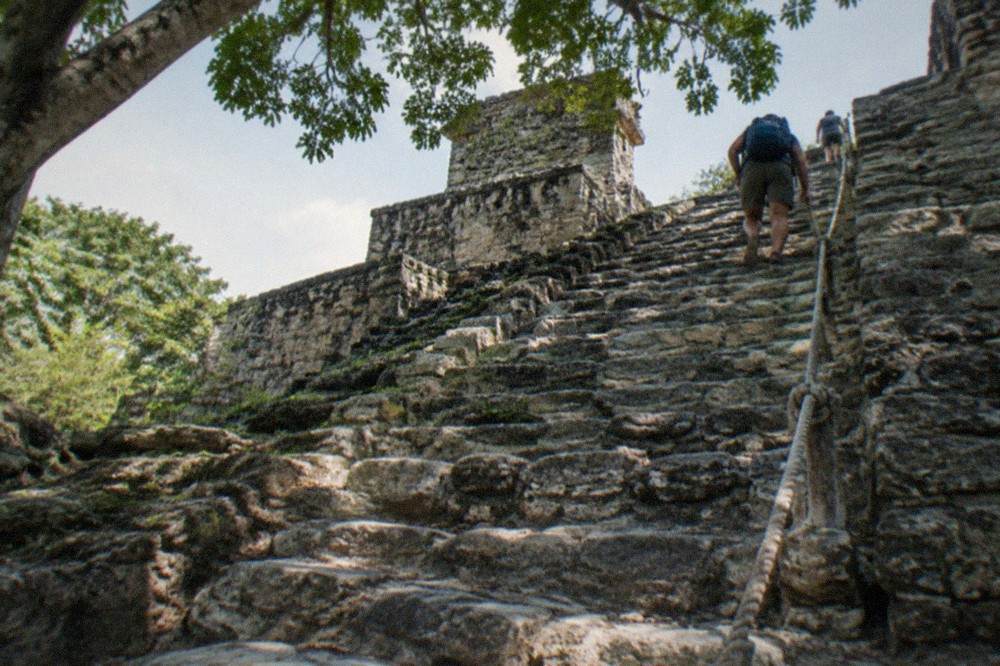
The Acropolis climb is Ek Balam's single strongest argument. At roughly 43 meters, about 141 feet, it is one of the tallest Maya structures in the Yucatan, and unlike every other major pyramid in the region you can still go up it, using steep original stone steps with a rope for support. The 2026 opening of a new western Grand Acropolis section added more to see.
The comparison is what sells it. At Chichen Itza, barriers keep you well back from El Castillo, and the interior, including the famous Red Jaguar Throne, stays closed. At Tulum, the structures sit behind ropes on the cliff edge, and climbing is not permitted anywhere in the zone. Coba reopened its Nohoch Mul pyramid to climbers around December 2025, but under tight regulation: a new wooden staircase, small groups of 14 to 15 people, a climbing window that ends around 3:30 pm, and a roughly 15-minute summit limit. Ek Balam's Acropolis is the calmer version of that experience, a stone staircase with rope assistance rather than a timed queue, per INAH's own Ek Balam site record.
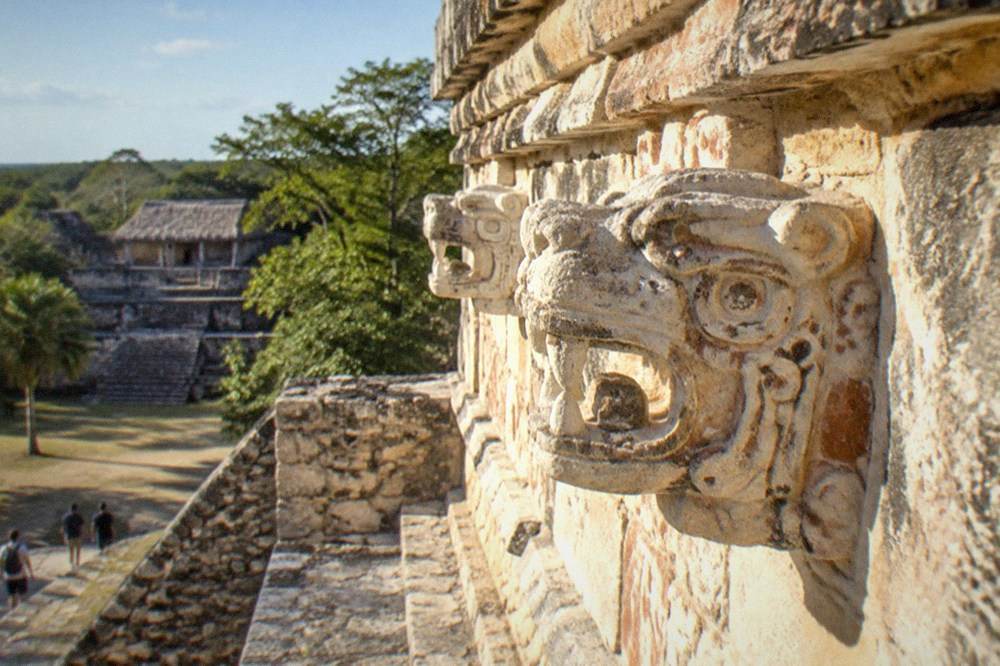
Halfway up, the facade stops being architecture and becomes art. The Acropolis preserves stucco friezes and sculpted decoration, including the winged figure often identified as the site's ruler in a jaguar headdress, in a condition that the bigger, more trampled sites cannot match. You walk within arm's reach of carvings that elsewhere in the region you would view from a distance behind a rope. That closeness, plus the summit panorama over flat jungle canopy, is the thing visitors describe in reviews again and again.
Be honest with yourself about the physical side. The steps are steep, the rope is there for a reason, and the Yucatan heat is real by mid-morning. Closed-toe shoes with grip are the sensible choice, and anyone with knee trouble or a fear of heights should enjoy the facade from the lower platform instead. The climb is optional, not mandatory, and the base of the structure is rewarding on its own.
How Crowded Is Ek Balam Compared To Tulum Or Chichen Itza?
Ek Balam is dramatically quieter than both. Reporting on the site puts daily visitation in the low hundreds, while Tulum's archaeological zone received roughly 1.03 million visitors in 2025, its lowest non-pandemic figure since 2010, and Chichen Itza absorbs several thousand a day, with heavy mid-morning tour bus waves. Ek Balam rarely feels busy at all.
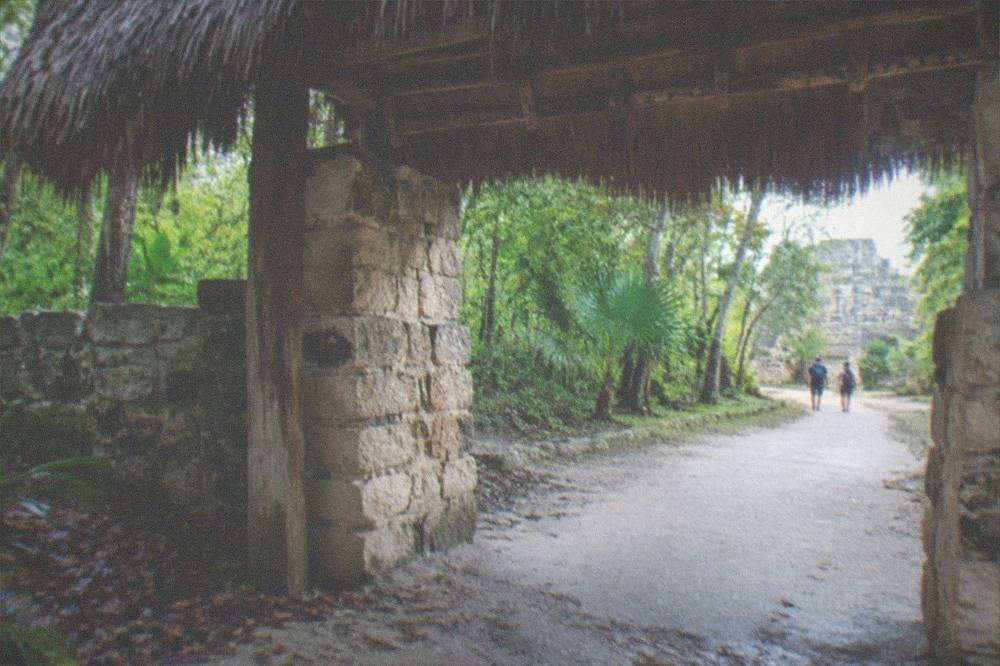
The difference is not subtle, it changes the entire experience. At Tulum, the busiest window runs roughly 10:00 to 15:00, when tour buses and cruise groups stack up along the cliff path. At Chichen Itza, arriving anything after mid-morning means sharing the Great Plaza with a dense crowd and a steady stream of vendors. Ek Balam has vendors too, near the entrance, but the site itself is spread out enough that you can stand at the Acropolis base in near silence.
That quiet comes partly from distance. Ek Balam sits in Yucatan state, 121 to 130 km from Tulum by road, roughly 1.5 to 2 hours of driving via Coba or the Valladolid area. Most Tulum-based visitors default to the closer sites, which is exactly why those who make the drive get the reward. The Tulum Ruins Tours site's own comparison piece on the Mayan ruins near Tulum, compared covers the full field if you are weighing several sites against each other.
If your decision is strictly Ek Balam versus Chichen Itza, the honest framing is this: Chichen Itza is a world wonder with unmatched name recognition, and Ek Balam is the site you can actually touch. Some travelers do both in one long day, which is exactly what one of the tours below is built for.
How Much Does It Cost To Enter Ek Balam?
Foreign adults pay a two-part fee totaling about 691 MXN, roughly $35 to $40 USD: 210 MXN federal INAH plus 481 MXN Yucatan state CULTUR. Mexican nationals pay about 237 MXN total. Parking runs about 100 MXN as a separate ejido fee. Fees are set by INAH and CULTUR and can change, so confirm on arrival.
| Fee | Mexican Nationals | Foreign Visitors |
|---|---|---|
| INAH federal entrance | 105 MXN | 210 MXN |
| CULTUR (Yucatan state) | 132 MXN | 481 MXN |
| Total entrance | ~237 MXN | ~691 MXN (~$35-40 USD) |
| Parking (ejido fee) | ~100 MXN | ~100 MXN |
Two details soften that foreigner total. Yucatan residents are often exempt from the CULTUR portion, paying only the INAH fee, and Sundays are free for Mexican citizens and foreign residents with valid ID, a longstanding INAH nationwide policy. Foreign tourists still pay full price on Sundays, and Sundays are busier as a result.
The two-part structure matters when you plan, because the payments are handled separately and cash is the safe assumption at both windows. Bring pesos, not dollars, and do not expect a card terminal to work. The state portion goes to Yucatan's CULTUR agency rather than the federal institute, which is why Ek Balam's total lands close to Chichen Itza's combined fee of roughly 697 MXN despite Ek Balam receiving a fraction of the visitors.
Hours are straightforward: the site opens daily at 8:00 and closes at 17:00, with last entry at 16:00. Arriving at opening gives you the coolest air, the emptiest stairs, and the best light on the Acropolis facade.
Which Tours From Tulum Include Ek Balam?
This lineup carries two strong options. A private tour from $239 pairs Ek Balam with a cenote swim and a Valladolid stop, with transport and lunch, rated 5.0 from 24 reviews. A small-group day trip from $119 combines Chichen Itza, Ek Balam and the Hubiku cenote in one 12-hour day, rated 4.7 from 193 reviews.
The private option, Ek Balam, cenote and Valladolid from Tulum, suits travelers who want the Acropolis without the schedule pressure of a big combined day. Its shape is a classic Yucatan loop: the ruins first while the air is still cool, a cenote swim after, then time in Valladolid, the colonial town that sits conveniently between Ek Balam and the toll road home. With a 5.0 rating across 24 reviews it is a small but uniformly positive review pool, and private transport plus lunch removes the two-part fee dance at the gate from your morning.
If that shape matches your trip, it is worth checking dates before you commit to the drive on your own. The tour page carries the current price and the free-cancellation terms, and you can reserve without paying everything up front.
The small-group alternative makes sense for a different reader. If this is your one big ruins day and you refuse to choose between the climbable pyramid and the world wonder, the Chichen Itza, Ek Balam and Hubiku cenote combination packs all three into about 12 hours, from $119, with air-conditioned minivan transport, hotel pickup and breakfast included. It is rated 4.7 from 193 reviews. The trade is honest: a long day, less time at each stop, and you climb the Acropolis with a departure time in the back of your mind.
A third direction is worth naming for completeness. If Ek Balam's distance gives you pause and you would rather stay within half an hour of Tulum, the Muyil archaeological site, 18 to 25 km south, reopened in February 2026 after a conservation closure and sits inside the Sian Ka'an biosphere. The Muyil ruins and Sian Ka'an guide covers that quieter option, though note that climbing is not permitted on Muyil's structures.
Is Ek Balam Worth It If You Have Already Seen Chichen Itza?
Yes, arguably more so. Travelers who have stood behind the barriers at El Castillo often rate Ek Balam as their favorite site of the trip precisely because the interaction is physical: you climb, you touch the facade level, you linger. The two sites complement rather than duplicate each other, and both sit in the same region north of Tulum.
Chichen Itza and Ek Balam sit in the same part of the Yucatan, which is why combination tours work so well. Chichen Itza gives you the polished, iconic, heavily restored experience. Ek Balam gives you the rougher, quieter, embodied one. The honest verdict on Chichen Itza itself is covered in its own piece on this site, and the short version is that both sites clear the bar for different reasons.
The reverse question deserves an answer too. If you have already driven out to Ek Balam, skipping Chichen Itza entirely is a defensible call, not a travel failure. You will have climbed what Chichen Itza visitors cannot, seen stucco work they can only view in photos, and spent your afternoon in a cenote instead of a crowd. The one thing you will miss is the equinox-scale grandeur of the Great Plaza, and only you can weigh that.
For a full planning treatment of the bigger site, the Ek Balam from Tulum guide walks the routes, timing and stops in more depth than this verdict piece.
When Is The Best Time Of Year To Visit Ek Balam?
The dry season, roughly November through April, is the best window: lower humidity, less rain, and daytime conditions that make the Acropolis climb far more pleasant. Arrive at the 8:00 opening whenever you go, because the stone steps and the exposed plaza get hot fast, and the last-entry cutoff is 16:00.
The rainy season, June through November with peak hurricane risk in September and October, does not close the site, but it brings humid heat and a real chance of an afternoon downpour. A wet stone staircase with a rope assist is a different proposition from a dry one, and the stucco facades photograph poorly in flat gray light. Shoulder months, November and April, are the sweet spot of decent weather and moderate crowds.
Within any day, the first two hours after opening are the ones to fight for. You get cool air for the climb, low light raking across the Acropolis carvings, and the site nearly to yourself before any mid-morning arrivals. Midday is when the exposed plaza is harshest, so the standard rhythm is ruins early, cenote at midday, and Valladolid in the late afternoon, which is exactly the shape the private tour above follows.
Common Questions About Ek Balam
Is Ek Balam Worth Visiting?
Yes. The climbable Acropolis, the well-preserved stucco facades and the low crowd counts make it one of the strongest ruins experiences in the Yucatan, provided you can spare the half or full day the drive from Tulum requires.
Can You Climb The Pyramid At Ek Balam?
Yes. The Acropolis, or El Trono, is open to climbers via steep stone steps with a rope assist. It stands roughly 43 meters tall. Wear closed-toe shoes with grip, and expect the climb to be strenuous in midday heat.
How Far Is Ek Balam From Tulum?
Roughly 121 to 130 km, about 1.5 to 2 hours by car depending on the route, via Coba or the Valladolid area. Most tours from Tulum fold the drive into a full-day loop with a cenote and a Valladolid stop.
How Much Does Ek Balam Cost To Enter?
Foreign adults pay about 691 MXN total, roughly $35 to $40 USD, split between a 210 MXN federal INAH fee and a 481 MXN Yucatan state CULTUR fee. Mexican nationals pay about 237 MXN. Parking adds about 100 MXN. Confirm fees on arrival, as they can change.
Is Ek Balam Better Than Chichen Itza?
They serve different goals. Chichen Itza is the iconic, heavily restored world wonder where climbing is banned. Ek Balam is quieter and interactive, with a climbable pyramid and close-up stucco carvings. Many travelers do both in one long day.
What Are The Opening Hours At Ek Balam?
Daily from 8:00 to 17:00, with last entry at 16:00. Arriving at opening gives you the coolest conditions for the Acropolis climb and the smallest crowds.