Why Can't You Go Inside Chichen Itza?
The real reason El Castillo at Chichen Itza has been closed to climbers since 2006, what stays off-limits in 2026, and where you can still climb a Maya pyramid near Tulum.
Why Can't You Go Inside Chichen Itza?
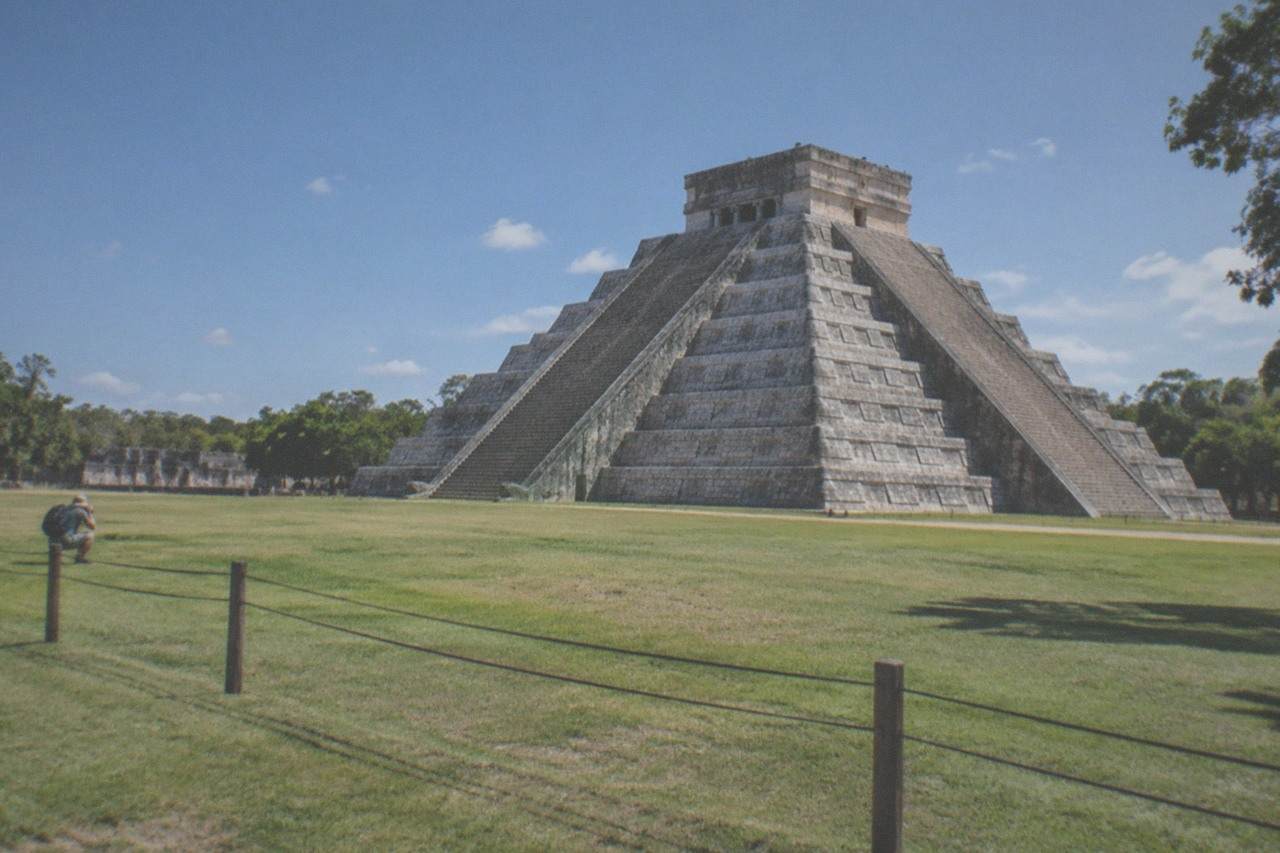
You cannot go inside or climb El Castillo, the Pyramid of Kukulkan, because climbing has been prohibited since 2006 after a fatal accident on the steps, and the closure remains fully enforced in 2026. Barriers keep visitors roughly 15 meters back, the interior, including the Red Jaguar Throne chamber, is closed entirely, and the ban extends to the site's other structures as well.
The short answer is safety combined with conservation. In 2006 a visitor fell from the pyramid's steep stone steps and died, and that accident ended decades of unofficial tolerance for climbing. Erosion was the second reason: tens of thousands of feet a year were wearing down the original staircase and the temple platform at the summit, and Mexico's National Institute of Anthropology and History, INAH, concluded that the only way to preserve the structure was to keep everyone off it. The rule is not a temporary closure or a COVID-era restriction that might lift one day. It has now held for two decades, and the enforcement infrastructure around it, rope barriers, signage, and staffed checkpoints, is permanent.
The interior is a separate question, and the answer there is even firmer. Inside the pyramid, archaeologists found a nested sequence of earlier temples, one stacked inside another, and at the innermost level a chamber holding the Red Jaguar Throne, a sculpture of a jaguar painted red with jade inlays for spots and eyes. That throne and the narrow passages leading to it are not part of any tour, and the interior access that existed decades ago has been closed to the public for years. A pyramid you cannot enter and cannot climb is, for access purposes, a monument you view from the ground. That is the honest expectation to set before you book anything.
None of this makes the site disappointing. El Castillo's geometry, the serpent-shadow effect at the equinoxes, the Great Ball Court, and the Temple of the Warriors are all experienced from ground level, and a good guide makes the view from below feel like the whole point. The most-reviewed Chichen Itza day trip on this list, a small-group tour from Tulum pairing the ruins with a cenote swim and lunch, runs from $214 at 4.9 across 2,207 reviews, and it treats the pyramid the way modern visits work: as something you walk around and understand, not something you stand on. If you want the full planning picture, the Chichen Itza day trip planning guide covers timing, crowds, and what a 12-hour day from Tulum realistically looks like.
What Happened In 2006 To End Climbing At El Castillo?
A visitor died after falling from the pyramid's steps in January 2006, and INAH closed the climb almost immediately, citing both the accident and accelerating erosion of the original staircase. The ban was never lifted, and by 2026 the closure is enforced with barriers, posted rules, and site staff, with visitors held roughly 15 meters from the base.
The accident itself was the trigger. An 80-year-old woman climbed the steps in January 2006, fell on the descent, and died from her injuries. Climbing had already been debated within INAH for years, because the staircase, narrow, steep, and worn smooth in places by millions of visitors, was both a safety hazard and a conservation problem. The fatal fall settled the argument. Within days, the stairway was closed, and what began as an emergency measure became permanent policy.
Erosion is the reason it stayed closed. The pyramid's outer staircase and the temple platform at the summit are original pre-Hispanic fabric, not a reconstruction, and there is no way to let a million annual visitors walk on them without destroying them. Foot traffic grinds down stone edges, and even sweat, sunscreen, and the constant touch of hands deposit salts and chemicals that eat into limestone surfaces. INAH's position, restated consistently in the two decades since, is that the structure survives only if nobody stands on it. The posted site rules spell out the current enforcement: no climbing on any structure, roped-off perimeters, and staff at the sensitive areas.
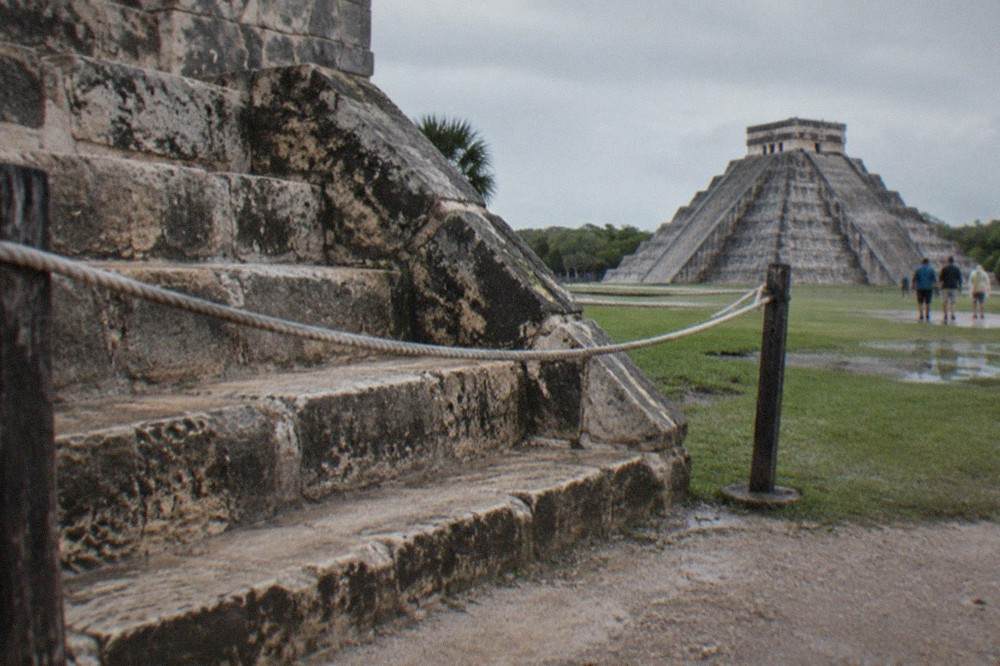
Visitors sometimes ask whether the ban is really enforced, or whether a guard might look the other way at opening time. It is enforced, consistently, and attempting to cross a barrier is the fastest way to be escorted out of the site. The barriers themselves have moved outward over the years, and current reporting places the standoff distance at around 15 meters from the base, which is close enough to see the serpent columns at the top of the staircase clearly but far enough that the summit temple reads as scenery rather than a destination.
The practical takeaway for planning is simple: budget your time at the pyramid for circling it, not ascending it. Most guided visits spend 20 to 40 minutes at El Castillo, walking the north platform where the equinox serpent shadow appears, and then move on to the Great Ball Court and the Sacred Cenote. If you are weighing whether the trip justifies the drive, roughly 153 km and about two hours each way from Tulum via the toll road, plus a combined foreigner entrance fee of roughly 697 MXN (about $35-40 USD, with minor variance across sources, confirm on-site), the answer is yes, but only if you go expecting a ground-level encounter with one of the best-preserved Maya cities in the Americas.
Is The Interior Of The Pyramid Ever Open To Anyone?
No. The interior passages and the Red Jaguar Throne chamber are closed to the public, and no tour, guide, or special access ticket can take you inside El Castillo. The only people who enter are INAH archaeologists and conservation staff, and the throne itself is visible to the public only through photographs and museum reproductions.
The interior is genuinely remarkable, which is why the question comes up so often. Excavation revealed that the pyramid visible today is the latest of at least two nested structures, a common Maya building practice in which a new, larger pyramid was built over an older one rather than demolishing it. Inside the innermost layer, researchers found a chamber containing the Red Jaguar Throne, a life-sized jaguar sculpture thought to have served as a seat of power or a ritual object, its red paint still visible, its teeth and claws originally inlaid with jade and its eyes with pyrite discs.
None of that is visitable. The passages are narrow, unlit, structurally fragile, and were never designed for public traffic, and the humidity and carbon dioxide that human breathing introduces would damage the paint and stucco that survived centuries underground. The closure predates the 2006 climbing ban and has never been relaxed. Any tour description implying "inside the pyramid" access is describing something that does not exist, and if you see one, treat it as a red flag about the operator's other claims. The official fee and access structure covers the archaeological zone only, at ground level.
What you can do is see the interior's story told well. Guides walk visitors through the nested-pyramid concept at the base of El Castillo, and the site museum near the entrance displays artifacts, including sculpture and ceramics recovered from the temple precincts, that put the throne in context. The equinox phenomenon, when the afternoon sun casts a serpent of light and shadow along the northern staircase, is the pyramid's most famous display, and it happens entirely outside, on the balustrade where the stone serpent head sits. You lose nothing of the monument's logic by staying on the ground. You only lose the view from the top, and the view from the top was never the point of this building.
Can You Climb Any Other Structure At Chichen Itza?
No. The climbing ban at Chichen Itza covers every structure on the site, not just El Castillo. The Temple of the Warriors, the Group of a Thousand Columns, the Observatory, El Caracol, and the Nunnery complex are all view-only, and the same INAH conservation logic applies across the board.
The pyramid gets the attention because it is the tallest and most famous structure, but the rule is site-wide. Chichen Itza is a fully consolidated archaeological park, meaning the buildings you see are stabilized original fabric, heavily restored in places but not rebuilt for climbing. INAH manages it as a museum-in-the-open rather than an adventure site, and that management model has been in place long enough that the site's visitor flow, boardwalks, roped perimeters, and designated viewing platforms, is designed around people staying on the ground.
This is worth stating plainly because tour marketing can blur it. A day trip from Tulum that includes Chichen Itza, a cenote swim, and lunch, such as the small-group option running from $214 at 4.9 across 2,207 reviews, gives you about two hours at the site, and every minute of it is spent walking flat plazas. The cheapest Chichen Itza headline on this site's lineup, a $90 twelve-hour trip with hotel pickup from Tulum, a bilingual guide, and a regional buffet lunch, covers the same ground-level territory at 4.6 across 377 reviews. Neither includes climbing, because nothing at Chichen Itza includes climbing. If a seller suggests otherwise, the tour page is wrong.
The compensations are real, though. Chichen Itza's core is compact, roughly 4 to 10 square kilometers of developed area with the main monuments clustered within an easy walk of each other, so a two-hour visit reaches all the headline buildings. The Great Ball Court, the largest in Mesoamerica, is best understood from ground level anyway, since the acoustic quirk, a whisper carrying the court's length, only works when you are standing in it. And the site's scale and polish are the reason it draws the crowds it does: arrive between 7:45 and 8:15 on a Tuesday through Thursday and you get a calm, walkable park before the buses from Cancun and Playa del Carmen arrive in volume.
Where Can You Still Climb A Maya Pyramid Near Tulum?
Coba, about 45 minutes northwest of Tulum, reopened its Nohoch Mul pyramid to climbers around December 2025 after a six-year closure, using a new wooden staircase with small-group limits and a roughly 15-minute summit cap. Ek Balam, roughly 1.5 to 2 hours away in Yucatan, allows climbing the Acropolis, and these are now the region's main legal climbs.
The contrast between the three sites is the honest answer to this whole article's question. Chichen Itza banned climbing in 2006 and never looked back. Tulum's structures have never been open to climbing in the modern tourism era, and its clifftop walls are view-only. Coba went the other direction: Nohoch Mul, at 42 meters the tallest Maya pyramid structure in the Yucatan, closed to climbers for roughly six years, then reopened on or around December 8, 2025 with a redesigned access system. Climbers use a new wooden staircase built over the original roughly 120 stone steps, groups are limited to about 14 or 15 people at a time, the climbing window runs from about 8:00 in the morning until 15:30, and there is a roughly 15-minute limit at the summit. Closed-toe shoes with grip are required.
Ek Balam is the other climb, and the quieter one. Its Acropolis, about 43 meters tall and known as El Trono, is climbed via steep original stone steps with a rope assist, which is worth knowing before you picture an easy staircase. The reward is unusual: partway up, you pass close to original stucco friezes and winged-figure sculptures that survive in remarkable condition, and the summit looks out over flat jungle canopy to the horizon. Ek Balam sees low hundreds of visitors a day, versus thousands at Chichen Itza, and its foreigner entrance total runs about 691 MXN (roughly $35 USD), split between an INAH fee and a Yucatan state fee. A new western section of the Grand Acropolis opened in 2026 with small-group, timed access in places, per the INAH site record.
The comparison in one table:
| Site | Distance From Tulum | Can You Climb? | Foreigner Entrance Fee |
|---|---|---|---|
| Chichen Itza | ~153 km, about 2 hours | No, banned since 2006, all structures | ~697 MXN (about $35-40), confirm on-site |
| Coba | ~42-48 km, about 45 minutes | Yes, Nohoch Mul via wooden staircase, reopened December 2025 | ~310-330 MXN total (about $17-19), confirm on-site |
| Ek Balam | ~121-130 km, 1.5-2 hours | Yes, Acropolis via steep steps with rope assist | ~691 MXN total (about $35), confirm on-site |
| Tulum | In town | No, view-only structures | 265 MXN, one unified gate fee |
If climbing is the priority of your trip, Coba is the efficient choice, and a full-day tour from Tulum can pair it with more than ruins. One tour on this list combines Coba with the Punta Laguna nature reserve, a cenote swim, and a visit with a Mayan family, with transport from Tulum-area hotels and entrance fees included, from $119 at 5.0 across 532 reviews. That tour answers the "what can I actually do" question better than any amount of staring at a rope barrier in Chichen Itza ever will, and it is the natural pick for travelers who booked a Chichen Itza day and left wanting something they could touch.
How Do You Visit Chichen Itza Well Without Climbing?
Go early, go with a guide, and go with realistic expectations: two to three hours at the site covers the main monuments, and the experience is architectural and historical rather than physical. A small-group day trip from Tulum with a cenote and lunch, from $214, is the lineup's most-reviewed way to do it at 4.9 across 2,207 reviews.
Timing matters more than anything else you can control. The site opens at 8:00, and the window from opening until about 10:00 or 10:30 is the calm one, before the tour buses from Cancun and Playa del Carmen arrive in volume. Midday, roughly 11:00 to 14:00, is the peak for crowds, heat, and vendor activity, and equinox days around March 20-21 and September 22-23 draw very large numbers specifically for the serpent shadow. A weekday arrival between 7:45 and 8:15 gives you the plazas in relative quiet, which is when the scale of El Castillo and the Great Ball Court actually registers.
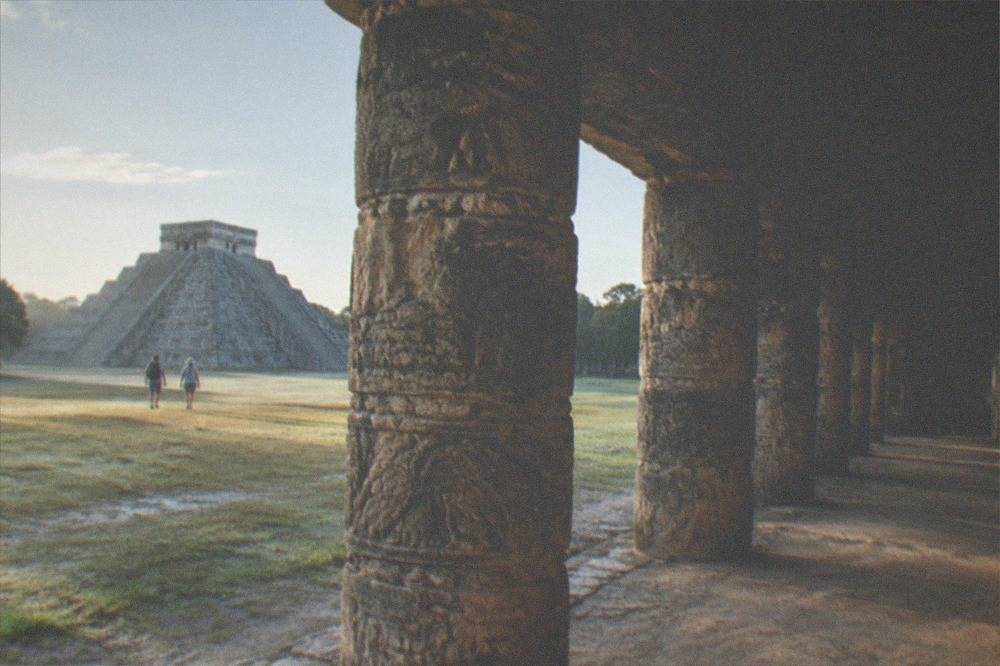
A guide changes the visit substantially, because the site's signage is thin and its stories are not self-evident. The nested pyramid, the ball game's ritual significance, the cenote at the center of the city's religious life, and the Toltec-influenced columns of the Warriors complex are all things a certified bilingual guide can unpack in ninety minutes that a plaque cannot. The strongest option here is the small-group day trip combining a guided Chichen Itza visit with a cenote swim and lunch, about 10 hours door to door with Tulum hotel pickup, from $214. For budget comparison, a $90 twelve-hour alternative with Tulum pickup and a buffet lunch runs at 4.6 across 377 reviews, a solid value pick with a bigger group and a longer day.
The rest of the day matters too. Most Tulum-departing trips add a cenote swim and a Valladolid stop, and those add-ons are where the physical experience of the day lives: swimming in a freshwater sinkhole and walking a colonial town center make up for the pyramid you cannot stand on. For a deeper look at the wider question of which site suits which traveler, the guide to the Maya ruins near Tulum compared breaks down all four sites side by side, and if you are still deciding whether the long drive is worth it at all, the is Chichen Itza worth it guide answers that one directly. The short version, from this site's Tulum Ruins Tours perspective: it is worth it as a once-in-a-trip monument visit, not as a climbing adventure, and booking it that way sets you up for a good day.
Whichever way you go, the decision comes down to what kind of day you want: a monument visit at Chichen Itza with the climb off the table, or a hands-on ruins day built around Coba or Ek Balam where the stairs are open. Both work, and the tours below cover the strongest version of each.
Common Questions About Climbing Chichen Itza
Why Can't You Go Inside Chichen Itza?
Climbing and entering El Castillo has been banned since 2006, when a visitor fell from the steps and died, and INAH kept the closure permanent to prevent erosion of the original stone. The interior passages and the Red Jaguar Throne are closed to everyone except researchers, and the ban covers every other structure on the site as well.
Can You Climb Any Pyramid At Chichen Itza In 2026?
No. The ban is fully enforced in 2026 across all structures, with barriers keeping visitors roughly 15 meters from El Castillo and roped perimeters at the other buildings. There is no tour, ticket, or time of day that changes this.
Where Is The Closest Pyramid You Can Actually Climb?
Coba, about 45 minutes northwest of Tulum. Nohoch Mul reopened to climbers around December 2025 via a new wooden staircase, with small groups, a climbing window from about 8:00 to 15:30, a roughly 15-minute summit limit, and closed-toe shoes required. Ek Balam's Acropolis is also climbable, via steep steps with a rope assist.
Is The Red Jaguar Throne Visible Anywhere?
Not in person. The throne sits inside the pyramid's innermost chamber, which is closed to the public. Photographs and museum reproductions are the only ways to see it, and guides at the site explain the nested-pyramid structure that contains it from the ground.
Why Is It Forbidden To Climb The Mayan Pyramid?
Two reasons: a fatal fall in 2006 ended climbing at El Castillo on safety grounds, and ongoing erosion of the original staircase and temple platform made closure the only viable conservation strategy. INAH's position is that the structure survives only if no one stands on it, and the same logic applies to the site's other monuments.
Is Chichen Itza Still Worth Visiting Without Climbing?
Yes, if you go for the architecture and history rather than the summit. The pyramid's geometry, the Great Ball Court, the equinox serpent shadow, and a good guide's commentary all happen at ground level, and most visitors spend two to three hours covering the main monuments without ever feeling shortchanged.