What Is So Special About Chichen Itza?
The honest case for Chichen Itza: New7Wonders status, the equinox serpent shadow of El Castillo, the site's scale, and the details most visitors miss, plus how to get there from Tulum.
What Is So Special About Chichen Itza?
Chichen Itza is special for four verifiable reasons: it is a voted New7Wonders of the World site, its central pyramid produces a serpent-shaped shadow on the equinoxes, it was one of the largest Maya cities in Yucatan, and its architecture encodes astronomical and acoustic effects that still work today. The hype is real, but it is narrower than the brochures suggest.
The vote is where most of the modern fame comes from. In a global poll run by the New7Wonders Foundation, Chichen Itza was named one of the New Seven Wonders of the World alongside the Colosseum, Machu Picchu, the Great Wall and others. That title did two things at once: it put the site on every bucket list on earth, and it pushed visitor numbers to the point where the experience of being there changed. Today the site is busy, ticketed and strictly controlled, and the things that made it famous are viewed from behind rope barriers rather than from the top of a staircase.
The substance underneath the title is what actually rewards the trip. Chichen Itza was a major political and religious center of the northern Maya lowlands, and unlike most ruins in the region it shows clear central Mexican influence in its stonework, which tells a story of trade, migration and cultural exchange that archaeologists still argue about. The site is compact enough to walk in a few hours, dense enough that a guide changes what you see, and far enough from the coast that a day trip from Tulum is a genuine commitment at roughly 153 km and about two hours each way on the toll road.
For travelers basing themselves in Tulum, the practical question is which tour shape fits. The three most common formats below cover the range, from the cheapest headline price on this list to the most-reviewed Chichen Itza product.
The cheapest of those three, the from-Tulum Chichen Itza, cenote and Valladolid tour, a 12-hour day trip rated 4.6 across 377 reviews, with hotel pickup in Tulum, a bilingual guide, a cenote swim stop and time in colonial Valladolid, plus a buffet lunch along the way. The small-group day trip with cenote and Valladolid is the most-reviewed Chichen Itza option on this list, 4.9 across 2,207 reviews, from $214 for roughly 10 hours. The third, the small-group Ek Balam and Hubiku cenote combination, from $119, adds a second archaeological site and a cenote swim to the same long day. If you are weighing whether the whole outing justifies itself, the deeper comparison lives in the Chichen Itza day trip planning guide.
Why Is El Castillo The Most Famous Pyramid In Mexico?
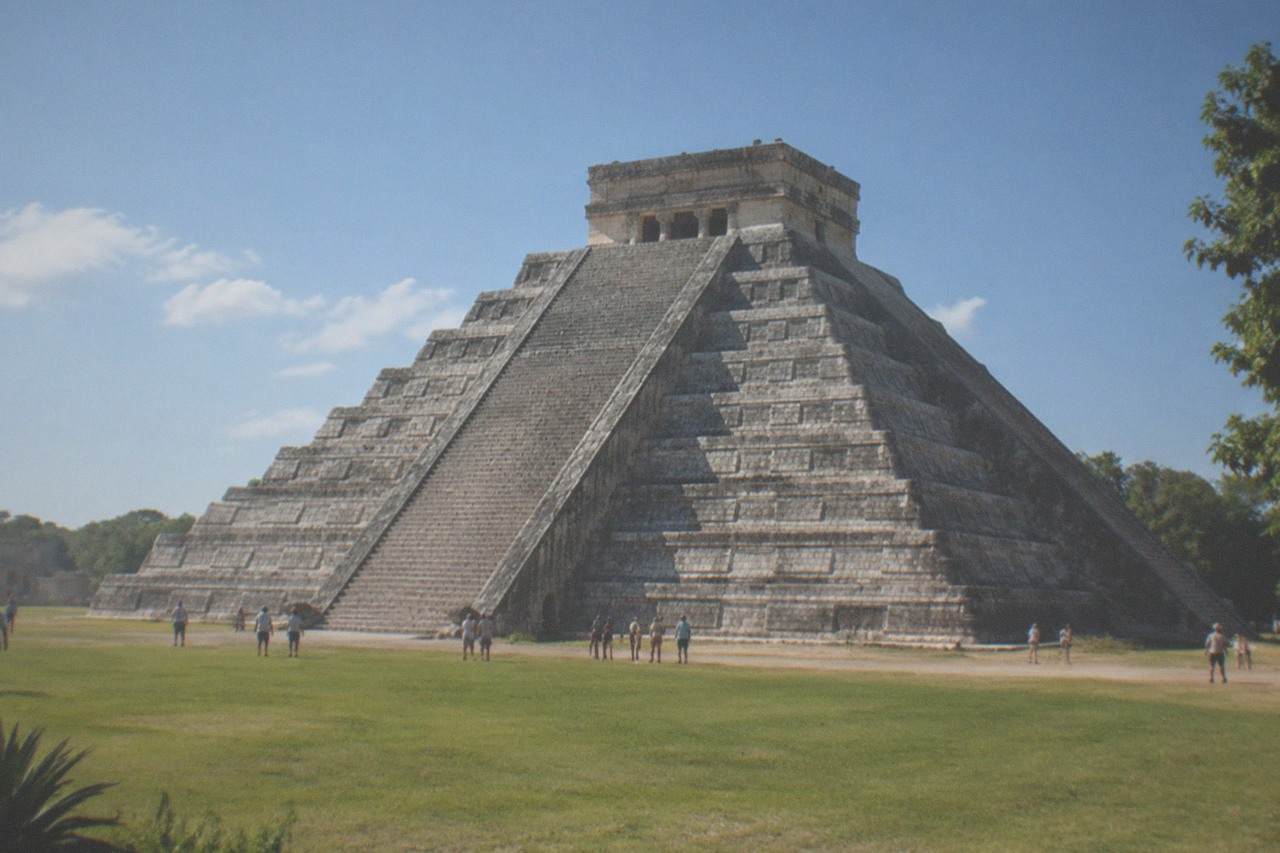
El Castillo, the Pyramid of Kukulkan, is the building that won Chichen Itza its global title. It is a stepped temple pyramid dedicated to the feathered serpent deity, aligned so that on the spring and autumn equinoxes its terraces cast triangular shadows that connect with a carved serpent head at the base. Thousands come specifically to watch it happen.
The shadow effect is the single most photographed phenomenon in Maya archaeology. Around March 20-21 and September 22-23, as the sun sets, the light and shade on the pyramid's north staircase line up so that the shadows of the stepped terraces appear to form the body of a snake, slithering down the balustrade to meet the stone serpent head at the bottom. On those dates the site draws very large crowds, and the effect is genuinely precise: it works because the pyramid's orientation tracks the sun's path, not because anyone faked it for tourists.
The building is also a calendar in stone. Its architecture reflects the Maya ritual count of days in its repeated numbers and terraces, and the pyramid as a whole functions as an oversized astronomical instrument. That combination, a monument that is simultaneously a temple, a calendar and a seasonal light show, is what separates El Castillo from the hundreds of other pyramids in Mexico that look superficially similar.
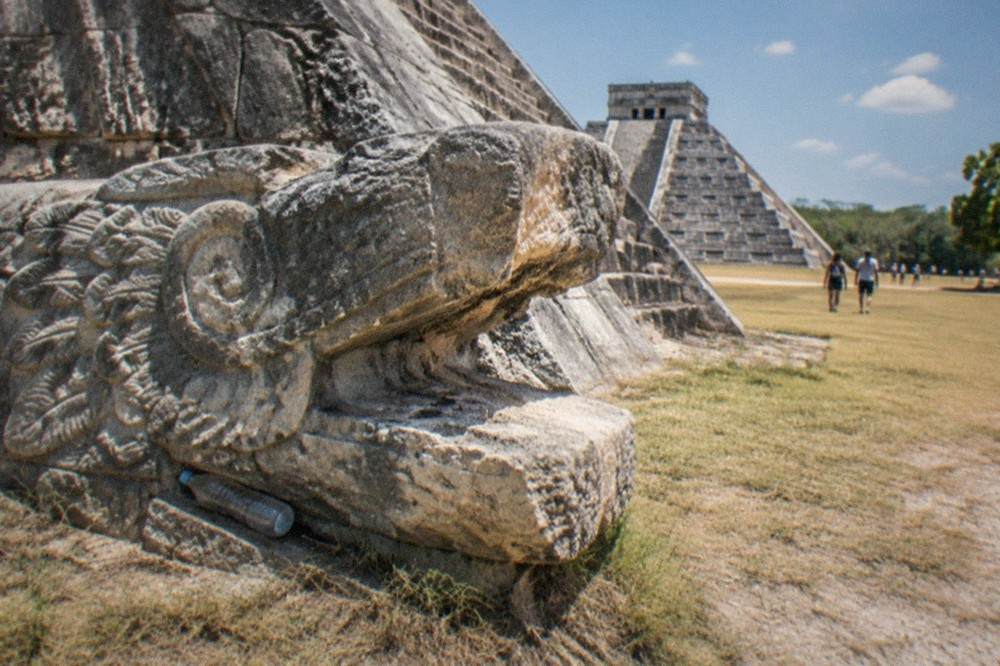
What you cannot do is climb it. El Castillo has been closed to climbers since 2006, after a fatal accident and years of erosion damage to the steps, and the ban is fully enforced today: barriers keep visitors well back, and the interior, including the famous Red Jaguar Throne, remains closed. Anyone promising you summit access at Chichen Itza is selling something that does not exist. The full story of that ban, and why it is permanent, is covered in why you cannot climb Chichen Itza, and the rules are spelled out in detail on the site's visitor rules page.
Is the pyramid alone worth the drive from Tulum? For most people, yes, but the honest answer depends on how much you care about standing in front of a structure you have seen a thousand times in photographs. The site around it is what turns a photo stop into a full morning.
How Big Is Chichen Itza Compared To Other Maya Sites?
Chichen Itza's core is compact, roughly 4 to 10 square kilometers of settled area, far smaller than Coba's sprawling 70 to 80 square kilometers. But it is far denser and more restored: the Great Ball Court, the Temple of the Warriors and the Sacred Cenote sit within short walking distance of each other, so the concentration of major buildings per minute of walking is the highest in the region.
That density is the practical superpower of the place. At Coba the structure groups sit 1 to 2 kilometers apart along jungle paths, and most visitors rent bikes to cover the ground. At Chichen Itza you park, walk through the gate, and within minutes you are standing in front of the largest ball court in Mesoamerica, a playing field flanked by high stone walls where the Maya played a ritual game whose rules are still debated. The scale of that court alone, and the carved serpent columns and skull racks beside it, is something no photograph conveys.
The Sacred Cenote is the other piece of the puzzle. Chichen Itza's name is often translated as "at the mouth of the well of the Itza," and the site grew around a deep natural sinkhole that served as a place of offerings. Archaeologists dredging it recovered gold, jade and human remains, which is why the cenote is fenced and viewed from the rim rather than swum in. It is a reminder that this was a ceremonial destination, a place people traveled to on purpose, centuries before anyone called it a wonder.
Here is how the major structures stack up for a visitor planning a route through the site:
| Structure | What It Is | What You Can Do Today |
|---|---|---|
| El Castillo | Temple pyramid of Kukulkan, the equinox serpent building | View from a barrier, no climbing |
| Great Ball Court | Largest ball court in Mesoamerica, high stone walls | Walk through it freely |
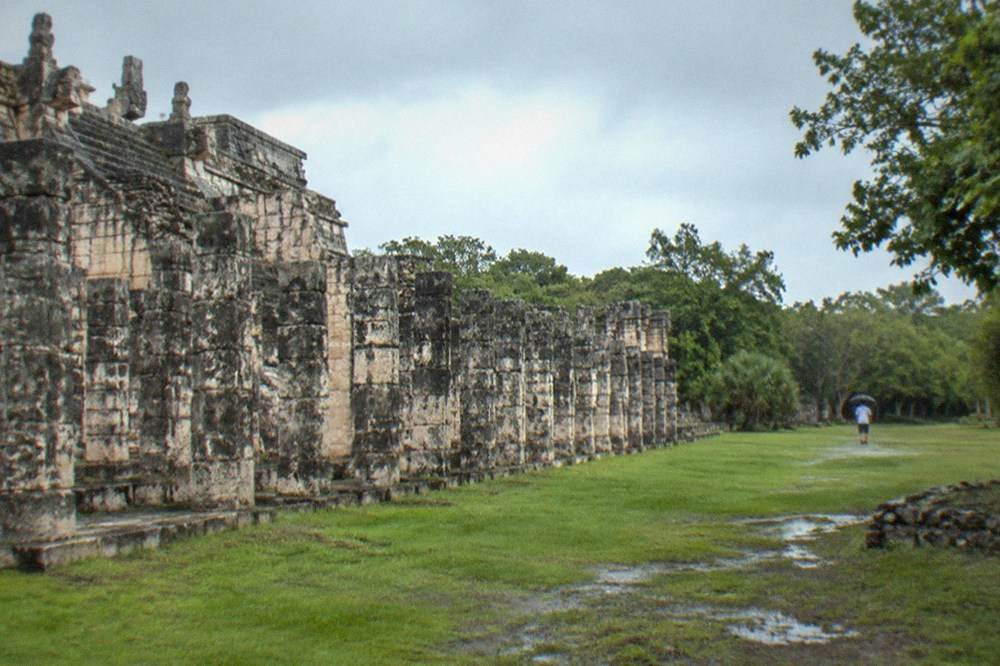
| Temple of the Warriors | Columned hall and thousands of carved columns | View from the front, access restricted |
| Sacred Cenote | Ritual sinkhole at the center of the site's history | View from the rim, no swimming |
| El Osario | A smaller stepped pyramid with a shaft to a cave below | View only |
| Group of a Thousand Columns | Forest of carved stone columns | Walk among the outer columns |
A route through those six stops takes most visitors two to three hours at a comfortable pace, and that is exactly the window most day trips from Tulum build into their schedules. If you would rather hand the logistics to a small-group operator than plan the drive, the tolls and the entry fees yourself, the combination tour below bundles the pyramid, a second climbable ruin and a cenote swim into a single 12-hour day.
What Are The Acoustic And Astronomical Details People Talk About?
The best-known detail is the echo at El Castillo: a clap in front of the staircase returns a chirp-like sound that researchers have compared to the call of the quetzal bird, a sacred animal in Maya cosmology. Whether that was engineered deliberately is still debated, but the effect is repeatable and any guide will demonstrate it. The ball court has its own acoustic trick, carrying a whisper across its full length.
These are the facts that make guides worth their fee. Without someone pointing them out, most visitors walk past the ball court and hear nothing unusual. With a guide standing at one end and you at the other, a normal speaking voice carries the length of the playing field with startling clarity, and a clap near the pyramid produces that strange bird-like return. Skeptics note that we cannot prove intent, since the Maya left no manual explaining their acoustics. What is not in dispute is that the effects exist, that they are consistent, and that they turn a hot walk among old stones into something that feels engineered.
The astronomy is less debatable because it is measurable. The equinox alignment is the headline, but the site's other buildings track the sun's extremes too, and El Castillo doubles as an astronomical instrument, its stairways aligned to the equinox light show. The Maya obsession with timekeeping was not decorative: their calendars organized agriculture, ritual and politics, and a city that could predict the sky's behavior advertised that power in stone.
How Much Does It Cost To Visit Chichen Itza?
Foreign adult visitors pay approximately 697 MXN, roughly $35 to $40 USD, as a combined entrance fee split between a federal INAH portion of about 105 MXN and a Yucatan state portion of about 592 MXN. Some sources report figures in a 676 to 697 MXN range, and fees are set by INAH and CULTUR and can change, so confirm on arrival. Mexican nationals pay less, roughly 298 to 310 MXN on weekdays with ID.
The fee structure is unusual because it is genuinely two fees stitched together, a federal archaeological charge and a Yucatan state charge, often collected at separate windows or through a unified ticket. Yucatan residents are typically exempt from the state portion under a late-2025 decree. Children under 13 are typically free or pay only the federal rate. The current figures are laid out on the entrance fee breakdown page, and the practical takeaway for a foreign visitor is simple: budget around $40 per adult in cash-friendly pesos, and do not be surprised when the number is higher than Tulum's own gate.
That comparison matters for Tulum-based travelers, because the Tulum archaeological zone charges a unified 265 MXN for foreigners after the July 2026 decree, while Chichen Itza sits at more than double that. Add parking, which runs around 80 MXN, tolls on Highway 180D, and food, and a self-drive day costs real money before you have paid a guide. This is one reason organized tours from Tulum, which bundle transport, guide, entry and lunch into one price, are the default format: the arithmetic often works out close to even once you add the DIY costs up.
Hours are typically 8:00 to 16:00 or 17:00 with last entry around 15:00 to 16:00. The best window is arrival between 7:45 and 8:15 in the morning, ideally on a Tuesday through Thursday, which buys you a calmer hour before the buses from Cancun and Playa del Carmen land in volume around mid-morning.
Can You Climb Anything At Chichen Itza?
No. Climbing El Castillo has been banned since 2006 and every other major structure at the site is roped off as well. This is the honest contrast with the region's other big pyramids: Coba's Nohoch Mul reopened to climbers in December 2025 with a wooden staircase and group limits, and Ek Balam's Acropolis remains climbable with a rope assist. Chichen Itza offers no summit at any price.
That contrast is worth knowing before you book, because it shapes which tour you want. If standing on top of a Maya pyramid is the experience you are chasing, Chichen Itza will not deliver it, and a combination tour that adds Ek Balam will. Ek Balam's main Acropolis, roughly 43 meters tall, is climbed via steep stone steps with rope assistance, and a new western section of the Grand Acropolis opened in 2026 with small-group, timed access. Coba's Nohoch Mul, at 42 meters the tallest pyramid structure in the Yucatan, reopened around December 8, 2025 after a six-year closure, with a new wooden staircase over the original steps, small groups of 14 to 15 at a time, a climbing window of roughly 8:00 to 15:30, a 15-minute summit limit and a closed-toe grip shoe requirement.
The small-group Chichen Itza, Ek Balam and Hubiku cenote tour is built exactly around this logic: a 12-hour day with air-conditioned minivan transport, hotel pickup and drop-off, bottled water and a meal included, with the current price shown on the tour page, it pairs the unclimbable wonder with the climbable one, then finishes with a swim at Hubiku cenote. It holds a 4.7 rating across 193 reviews.
If you would rather dig into the climbing question itself, including why the Maya built pyramids that most visitors today can only look at, why climbing the Maya pyramids is forbidden covers the preservation and safety reasoning site by site.
How Do You Visit Chichen Itza From Tulum?
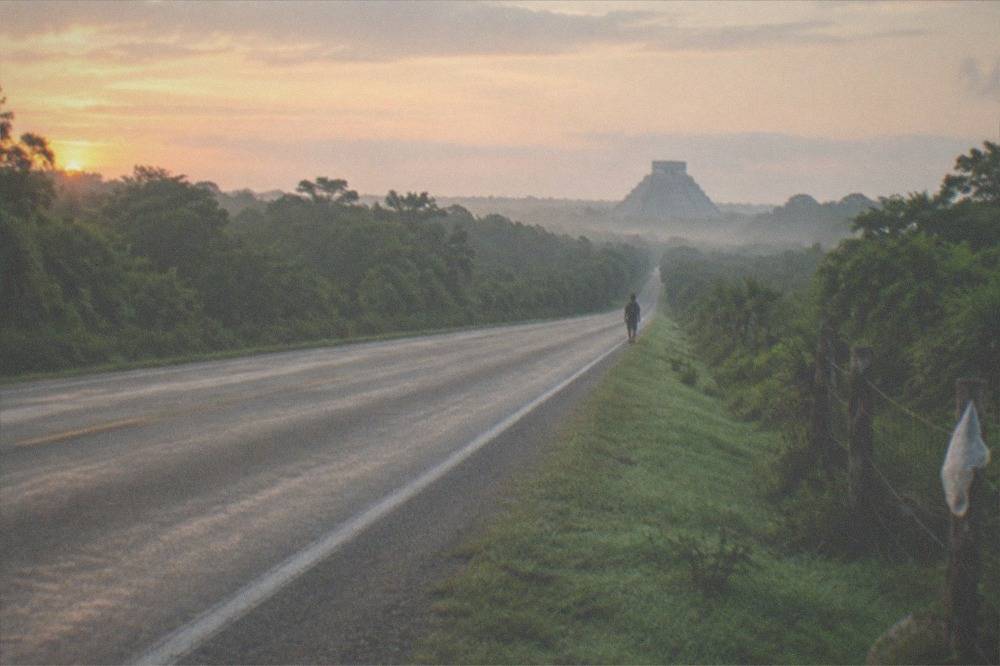
Chichen Itza sits about 153 km, roughly 95 miles, from Tulum, a drive of about 2 hours each way on the Highway 180D toll road. That makes it a 10 to 12 hour commitment door to door, which is why nearly every visitor from Tulum goes on an organized day trip rather than self-driving. Tours from Tulum run from $90 to $214 per person on this site's lineup, with private options higher.
The distance is the whole story of a Chichen Itza day. You leave early, often before 7:00, you spend two hours on a toll road each way, and you get roughly two to three hours at the site itself in the middle. Self-driving gives you flexibility on departure time and lets you stop in Valladolid on your own schedule, but you pay tolls, parking around 80 MXN, the full entrance fee and lunch separately, and you arrive without a guide unless you hire one at the gate. The route and drive-time details are documented on the Tulum to Chichen Itza drive guide.
The organized options from Tulum differ mainly in what they stack into the day. The comparison below draws on the tour pages themselves:
| Tour From Tulum | Price From | Duration | Rating | What The Day Includes |
|---|---|---|---|---|
| Chichen Itza, cenote and Valladolid | $90 | 12 hours | 4.6 across 377 reviews | Tulum hotel pickup, bilingual guide, cenote stop, buffet lunch |
| Chichen Itza, Ek Balam and Hubiku cenote | $119 | 12 hours | 4.7 across 193 reviews | AC minivan, pickup, breakfast, second ruins site, cenote |
| Chichen Itza day trip with cenote and lunch | $149 | 12 hours | 4.0 across 293 reviews | Certified bilingual guide, buffet lunch, Tulum pickup, cenote visit |
| Chichen Itza, cenote and Valladolid small group | $214 | about 10 hours | 4.9 across 2,207 reviews | Small group, Tulum hotel pickup, guided Chichen Itza, cenote swim, lunch |
Two honest notes on that table. The $149 day trip is the lowest-rated product on this site's entire lineup at 4.0, kept listed because it is real and bookable, not because it is the best pick. And the 4.9 small-group option is the most-reviewed Chichen Itza product in this list by a wide margin, 2,207 reviews against 377 for the next largest, which is the kind of review pool that makes a rating meaningful rather than decorative.
For most Tulum travelers the choice comes down to budget and stamina. The $90 option is the cheapest headline price on this list and covers the essentials. The $214 small-group option buys a shorter day, roughly 10 hours instead of 12, and the strongest review record. The $119 Ek Balam combination is the pick if the climbing ban at Chichen Itza leaves you wanting a pyramid you can actually ascend.
If your base is Tulum itself and you want the full local picture, from the coastal ruins in town to the bigger inland sites, the guide to Maya ruins near Tulum lays out every site and how they differ. And if you are still deciding whether the whole long day earns its cost, whether Chichen Itza is worth it works through that question directly.
Common Questions About What Is So Special About Chichen Itza
What Is So Special About Chichen Itza?
It is a New7Wonders of the World site whose main pyramid, El Castillo, produces a serpent-shaped shadow on the spring and autumn equinoxes, sits inside one of the densest concentrations of major Maya architecture in the region, and carries measurable acoustic and astronomical effects. The combination of global fame and genuine engineering is rare.
Can You Climb The Pyramid At Chichen Itza?
No. Climbing El Castillo has been banned since 2006, following a fatal accident and to prevent erosion, and the ban is fully enforced today. Barriers keep visitors back from the structure and the interior, including the Red Jaguar Throne, is closed. No tour can grant summit access.
How Far Is Chichen Itza From Tulum?
About 153 km, roughly 95 miles, which is a drive of around 2 hours each way on the Highway 180D toll road. Expect a 10 to 12 hour door-to-door day, which is why organized tours are the standard way to visit from Tulum.
How Much Does It Cost To Enter Chichen Itza?
Foreign adults pay approximately 697 MXN, roughly $35 to $40 USD, as a combined federal plus state fee, with some sources reporting a 676 to 697 MXN range. Fees are set by INAH and CULTUR and can change, so confirm on arrival. Mexican nationals pay roughly 298 to 310 MXN on weekdays with ID.
When Is The Best Time To Visit Chichen Itza?
Arrive between 7:45 and 8:15 in the morning, ideally on a Tuesday through Thursday, to beat the tour buses that arrive in volume from around mid-morning. Equinox dates around March 20-21 and September 22-23 draw very large crowds because of the serpent shadow effect.
Is Two Hours Enough For Chichen Itza?
Two hours covers the core loop, El Castillo, the Great Ball Court and the Sacred Cenote, at a steady pace with a guide. It is enough to see the essentials but not enough for the quieter groups at the site's edges. Most day trips from Tulum budget two to three hours on site.
Whether Chichen Itza lives up to its wonder-of-the-world billing depends on what you go for. Go for the serpent shadow, the ball court and the story of a city that turned the sky into architecture, and it does. This site, Tulum Ruins Tours, puts the tour options side by side with ratings, durations and review counts, so you can book on numbers rather than brochures.