Is Chichen Itza Mayan Or Aztec?
Chichen Itza is a Maya city, not an Aztec one. Here is the plain factual correction, the Toltec-influence nuance, and how that shapes what you see on a day trip from Tulum.
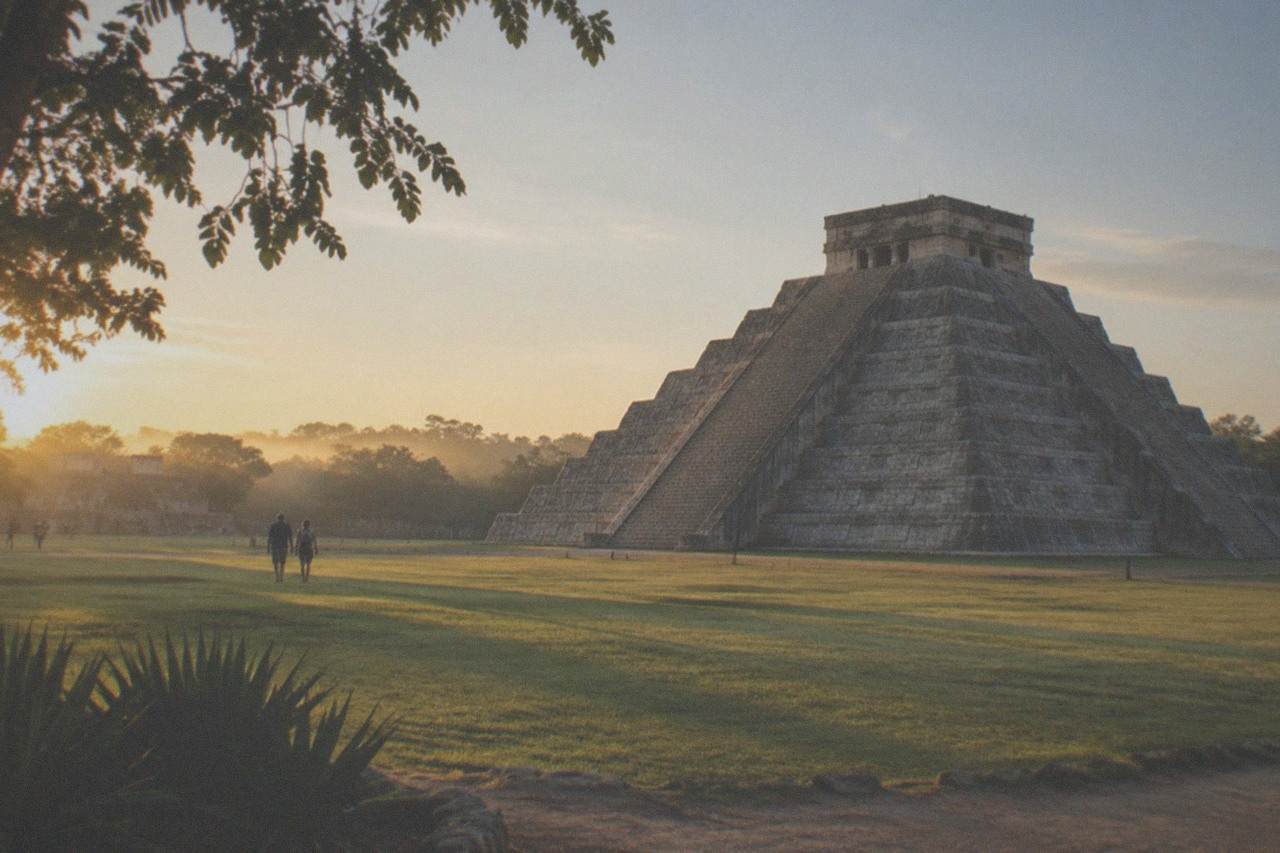
Chichen Itza is a Maya city, built and occupied by Maya people on the Yucatan peninsula, and it has nothing to do with the Aztec empire, which sat hundreds of kilometers to the west in central Mexico and rose to power long after Chichen Itza's political peak had passed. The mix-up is one of the most common factual errors travelers arrive with, and it gets repeated in casual conversation, on social media, and occasionally by guides who should know better.
The nuance that keeps the question alive is real, though. Parts of Chichen Itza, especially the great pyramid of El Castillo and the surrounding plaza buildings, show unmistakable central-Mexican architectural traits that archaeologists associate with the Toltecs of Tula. That influence is why the confusion persists. But Toltec is not Aztec, and influence is not authorship: the city, its people, its calendar, its language, and its deities were Maya.
Is Chichen Itza Mayan Or Aztec?
Chichen Itza is Maya, not Aztec. It was founded and built by Maya people in the northern Yucatan, its inscriptions are in Maya script, and its ceremonial life centered on Maya deities such as Kukulkan, the feathered serpent. The Aztec empire, based in the Valley of Mexico around Tenochtitlan, rose centuries after Chichen Itza's political height and never controlled any part of the Yucatan peninsula.
The word itself is Maya: Chichen Itza roughly means "at the mouth of the well of the Itza," referring to the sacred cenote at the site and the Itza, a Maya lineage or people whose name is attached to the city's later flourishing. The famous carved columns and reliefs at the site depict Maya ritual scenes, and the site's astronomical alignments follow the Maya calendar system, with El Castillo's staircase count built around the solar year.
The Aztecs, by contrast, were Nahuatl speakers whose capital Tenochtitlan stood where Mexico City stands today. Their temples, their gods, and their writing system were entirely different. By the time Spanish forces reached the Yucatan, both Chichen Itza and the Aztec empire were already things of the past: the city had faded as a political center centuries earlier, while Tenochtitlan fell to the Spanish conquest in the early colonial period.
If you are planning around this from Tulum, three day-trip options cover the practical side of getting there, from the cheapest headline price on the list to its most-reviewed product.
The cheapest of those three, the from-Tulum Chichen Itza, cenote and Valladolid tour, runs from $90 with hotel pickup in Tulum, a bilingual guide, a cenote swim stop, and a regional buffet lunch across a 12-hour day. Chichen Itza admission is paid separately. It carries a 4.6 rating from 377 reviews. The small-group alternative from $214 is the most-reviewed Chichen Itza tour on this list, at 4.9 across 2,207 reviews, in about 10 hours with Tulum hotel pickup, a guided Chichen Itza visit, a cenote swim, and lunch.
Who Built Chichen Itza And When?
Maya builders constructed Chichen Itza in stages, with the city's great flourishing roughly between the 9th and 12th centuries AD, after the collapse of southern Maya capitals pushed power northward into the Yucatan. El Castillo and the Toltec-style plaza buildings belong to the later phase, roughly the 10th to 12th centuries, when the Itza lineage dominated the city and central-Mexican influence arrived.
The site's older core, called the Puuc-style section after the architectural tradition of the region, predates the famous plaza. It features facades with geometric stone mosaics in the local Maya manner. Then came the change: the monumental center that every visitor photographs, with its serpent columns, its warrior carvings, and the great ball court, the largest in Mesoamerica. That later architecture is where the central-Mexican fingerprints show up, and archaeologists have debated for a century whether Toltec people actually migrated into the city or whether Maya elites simply imported a fashionable foreign style to legitimize their rule.
Either way, the builders were Maya. The debate is about who held the chisels' inspiration, not whose city it was. The site's own visitor experience makes the Maya identity plain: the equinox phenomenon at El Castillo, when the afternoon sun casts a serpent-shaped shadow down the northern staircase, is a piece of Maya solar astronomy, connecting the pyramid to Kukulkan, the Maya version of the feathered serpent.
Visiting the site yourself is straightforward from Tulum: the drive is about 153 km via the 180D toll road, roughly two hours each way, which is why nearly every visit from the coast is a full-day tour rather than a casual half-day hop.
That Coba and Tulum pairing is worth a moment of thought even on a page about Chichen Itza, because it answers the question this article raises in physical form. Standing at Tulum's cliff-top Castillo and then at Coba's jungle pyramid in the same day gives you two unmistakably Maya cities, one coastal and walled, one inland and sprawling, and the contrast makes the "which civilization built this" question feel concrete rather than academic. It departs Cancun or the Riviera Maya, from $179, with a 4.5 rating from 39 reviews.
Why Do People Confuse Chichen Itza With The Aztecs?
The confusion has three roots: the popular habit of lumping all pre-Hispanic Mexico under the Aztec label, the genuine central-Mexican architectural influence at Chichen Itza, and the sheer fame of both names. Mexico's tourist shorthand often flattens Maya, Aztec, Toltec, and Olmec into one generic pyramid-building past, and Chichen Itza's Toltec-style buildings give that flattening a surface plausibility it does not deserve.
The Aztecs are the empire everyone learned about in school, the one Hernan Cortes defeated. Chichen Itza is the pyramid everyone photographs. When two famous names meet a vague memory of "old Mexico," the brain merges them. Tour operators in Cancun sometimes make it worse by marketing "Aztec pyramids" to visitors heading to sites that are Maya through and through.
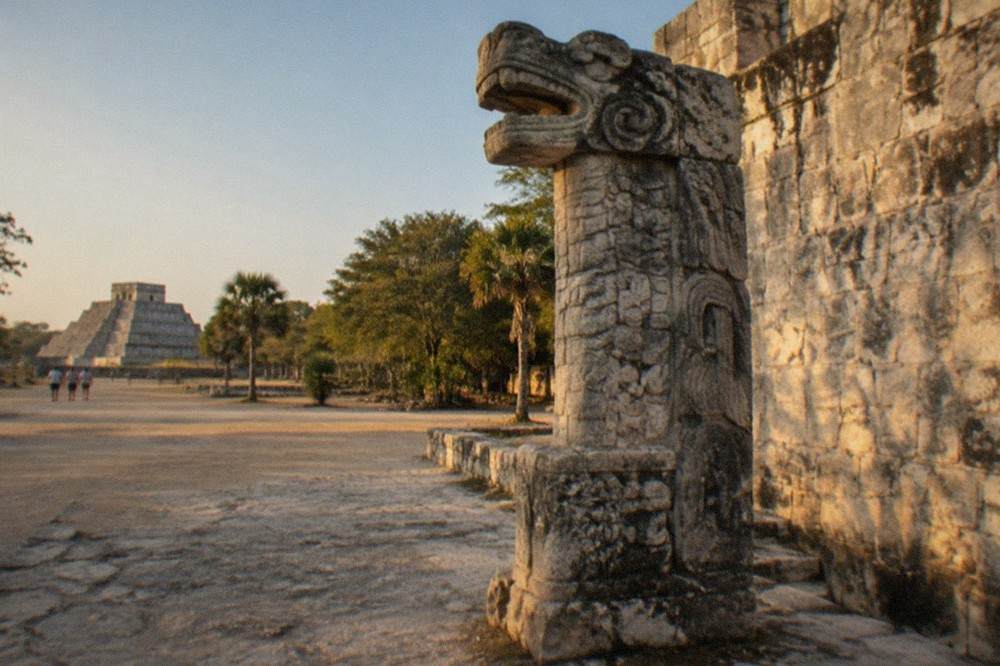
The serpent columns in the photo above are the exact source of the honest confusion. Feathered serpents appear in both Maya and central-Mexican traditions, and Chichen Itza's versions carry the beaked profile associated with Toltec warrior art. A traveler looking at them and thinking "this looks like the Aztec stuff I saw in Mexico City" is observing something real, a shared iconography across Mesoamerica, but drawing the wrong conclusion from it. The Maya called the feathered serpent Kukulkan; central Mexico called it Quetzalcoatl; the Aztecs venerated Quetzalcoatl too, but they arrived at that veneration as inheritors of much older traditions, not as the people who built this city.
The clean way to hold it: Mesoamerica was a connected world of trade, migration, and shared religious imagery, the way the Mediterranean connected Egypt, Greece, and Rome. Shared motifs do not mean shared builders. For a fuller walk through what the site actually shows you, the Chichen Itza guide from Tulum covers the structures in order.
What Is The Toltec Influence At Chichen Itza?
The Toltec influence appears in Chichen Itza's later monumental architecture: serpent columns, atlantean warrior figures, chacmool statues, and the stepped pyramid form of El Castillo, all echoing the city of Tula in central Mexico. Archaeologists debate whether Toltec migrants arrived or Maya elites copied the style; nobody debates that the city itself remained Maya.
Tula, the Toltec capital in the modern state of Hidalgo, flourished roughly a century or two before Chichen Itza's late phase. Its iconic columns carved as feathered-serpent warriors have close cousins at Chichen Itza. The chacmool, a reclining figure holding an offering plate, appears at both sites. The layout of El Castillo, with its nine terraced levels and temple at the summit, has long been compared with the Pyramid of B at Tula. Everything else covered here is indexed on Tulum Ruins Tours.
Here is how the two layers of the city sort out:
| Feature | Earlier Maya (Puuc) Core | Later Toltec-Influenced Plaza |
|---|---|---|
| Architecture | Geometric stone mosaic facades, local Maya style | Serpent columns, warrior carvings, talud-tablero forms |
| Iconography | Maya rain god Chaac masks | Feathered serpents, atlantean warriors, chacmools |
| Best example | The Nunnery complex and its facades | El Castillo, the Temple of the Warriors, the ball court |
| Interpretation | Northern Maya building tradition | Maya city adopting or absorbing central-Mexican style |
The most useful reading for a visitor is political rather than ethnic: a Maya city styling itself after a prestigious foreign power, the way medieval European kings built faux-Roman triumphal arches. The Maya identity of the city is not in question in mainstream Mesoamerican archaeology. What remains genuinely debated is the mechanism, migration versus emulation, and that debate is what serious guides will point at when you ask about the Aztec thing.
Can You Climb The Pyramid At Chichen Itza?
No. Climbing El Castillo has been banned since 2006, after a fatal accident and to protect the structure from erosion, and the ban is fully enforced, with barriers keeping visitors back from the staircases. The interior, including the Red Jaguar Throne hidden inside, is also closed. No structure at Chichen Itza is open to climbing, so plan your photos from ground level.
This matters for trip expectations. Travelers who remember older photos of people on the pyramid sometimes arrive expecting to climb, and the change surprises them. The enforcement is real and visible: ropes and barriers ring the base, and staff watch the plaza. The rules at the site are worth reading before you go, since they also cover the sacred cenote, vendor areas, and what you can bring in; the site's rules guide covers the current restrictions.
The contrast within the region is striking. Tulum's structures are likewise closed to climbing. But Coba's Nohoch Mul pyramid, about 45 minutes from Tulum, reopened to climbers around December 2025 on a new wooden staircase, with small-group access, an 8:00 to 15:30 climbing window, and a short summit limit. Ek Balam's Acropolis is also climbable via steep stone steps with a rope assist. So if standing on a Maya pyramid is the goal, Coba or Ek Balam is the honest answer, not Chichen Itza. The Coba climbing question covers that reopening in detail.
That regional contrast is exactly what the Coba and Tulum ruins day trip from Cancun or Riviera Maya is built around: two Maya cities in one day, one of them with the region's only major climbable pyramid. It runs from $179, departing Cancun or the Riviera Maya, and holds a 4.5 rating from 39 reviews.
How Do You Plan A Chichen Itza Day Trip From Tulum?
Plan a full day: the drive is about 153 km each way, roughly two hours via the toll road, and the site itself deserves three to four hours, so most tours from Tulum run 10 to 12 hours total. Arrive at opening, 8:00, ideally on a weekday, to see El Castillo before the mid-morning buses from Cancun and Playa del Carmen arrive. Budget the entrance fee separately from your tour price.
The entrance fee for foreign adults is approximately 697 MXN, roughly $35 to $40, split between a federal INAH portion and a Yucatan state fee, and some tours include it while others do not, so check inclusions before booking. Fees are set by INAH and CULTUR and can change; confirm on arrival. Mexican nationals pay less with ID, and Sundays are free for Mexican citizens, which makes Sundays some of the site's busiest days. The entrance fee breakdown tracks the current split.
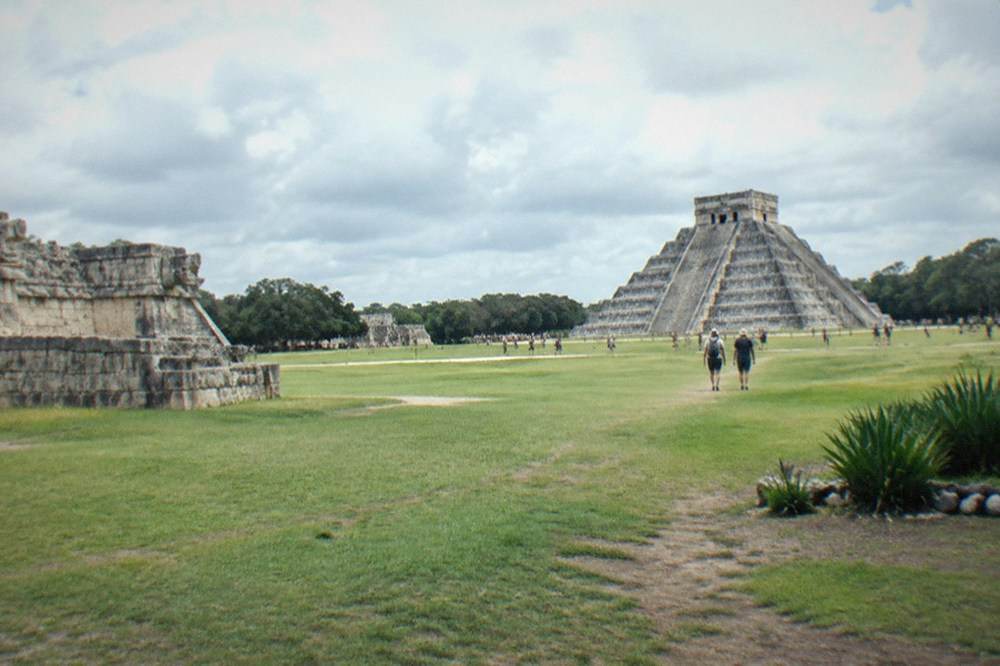
Across these tours from Tulum, the options sort cleanly by price and style:
| Tour | Headline Price | Rating And Reviews | Shape |
|---|---|---|---|
| From-Tulum Chichen Itza, cenote and Valladolid tour | From $90 | 4.6 from 377 reviews | 12 hours, Tulum hotel pickup, cheapest headline price |
| Chichen Itza, cenote and Valladolid small-group day trip | From $214 | 4.9 from 2,207 reviews | About 10 hours, small group, most-reviewed product |
| Chichen Itza, Ek Balam and Hubiku cenote small group | From $119 | 4.7 from 193 reviews | 12 hours, adds a second ruins site and breakfast |
| Chichen Itza day trip from Tulum including cenote and lunch | From $149 | 4.0 from 293 reviews | 12 hours, certified bilingual guide, buffet lunch |
The small-group option at 4.9 across 2,207 reviews is the one most travelers pick when the visit is the centerpiece of the day rather than a checkbox, since the guide time at the pyramid is where the Maya-versus-Toltec story above actually gets told well.
A note on timing: equinox days around March 20-21 and September 22-23 draw very large crowds for the serpent shadow at El Castillo, wonderful if the phenomenon is the point of your trip, punishing if it is not. Midday, roughly 11:00 to 14:00, is the site's peak for heat, vendors, and tour groups. The early window, from opening until about 10:00, is the calm version of Chichen Itza, and it is the version worth planning around. Whether the site justifies the long day at all is a fair question with a generally positive answer, laid out in whether Chichen Itza is worth it.
Whichever of the three formats fits your trip, the underlying answer to this article's question travels with you to the site itself. A guided visit makes the Maya identity of Chichen Itza impossible to miss, because a good guide walks you from the Puuc core into the Toltec-style plaza and shows you the seam between the two, and that seam is the whole story in miniature: a Maya city, borrowing a foreign look, never becoming anything other than Maya.
Common Questions About Chichen Itza
Is Chichen Itza Mayan Or Aztec?
Chichen Itza is Maya. It was built by Maya people in the northern Yucatan, its inscriptions are Maya, and its principal deity, Kukulkan, is the Maya feathered serpent. The Aztec empire was based in central Mexico, rose centuries after Chichen Itza's peak, and never controlled the Yucatan. The confusion comes from Chichen Itza's Toltec-influenced architecture, and Toltec is not Aztec.
Why Does Chichen Itza Look Like Aztec Architecture?
Because parts of it, especially El Castillo and the Temple of the Warriors, borrow from the Toltec style of central Mexico: serpent columns, warrior figures, and a pyramid form echoing Tula. Archaeologists debate whether Toltec migrants arrived or whether Maya elites copied a prestigious foreign style. Either way, the city and its builders remained Maya.
Who Were The Itza In Chichen Itza?
The Itza were a Maya lineage associated with the city's later flourishing, roughly the 10th to 12th centuries AD. The site's name means roughly "at the mouth of the well of the Itza," referring to the sacred cenote. Their descendants, the Itza of the Peten in Guatemala, held out against Spanish control longer than almost any other Maya group.
Is Kukulkan The Same God As Quetzalcoatl?
They are regional versions of the same feathered serpent concept. Kukulkan is the Maya name, Quetzalcoatl the central-Mexican name, and both traditions venerated the figure long before the Aztecs rose. Seeing feathered serpents at Chichen Itza does not make the site Aztec; it makes it part of a Mesoamerican world that shared imagery across cultures.
Can You Climb El Castillo At Chichen Itza?
No. Climbing has been banned since 2006, after a fatal accident and to prevent erosion, and the ban is fully enforced with barriers around the base. The interior is closed as well. If climbing a Maya pyramid matters to you, Coba's Nohoch Mul reopened to climbers around December 2025 with limits, and Ek Balam's Acropolis is climbable with a rope assist.
How Far Is Chichen Itza From Tulum?
About 153 km, roughly two hours each way via the 180D toll road. Nearly every visit from Tulum is therefore a full-day tour, typically 10 to 12 hours including transport, the site visit, and often a cenote swim and lunch. Departing at opening time is the standard way to beat the mid-morning crowds.