Are The Coba Ruins Worth Seeing?
An honest verdict on the Coba ruins: the climbable Nohoch Mul pyramid, the jungle setting, the fees, the crowds, and how Coba compares to Tulum and Chichen Itza.
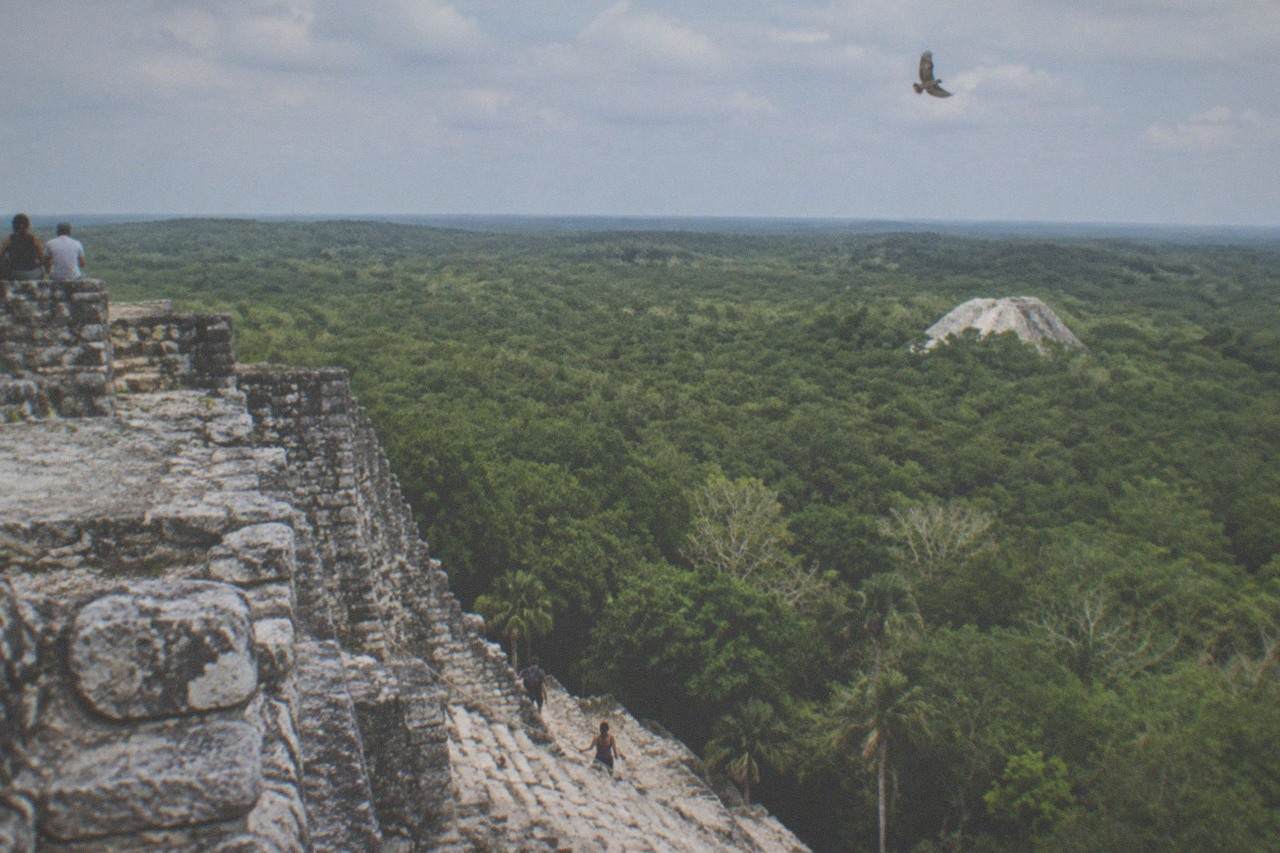
Coba does not look like Tulum. There is no ocean, no cliff, no postcard cove under a pyramid. What there is instead is jungle: a vast, spread-out site where the structures sit along sandy paths under the canopy, and where one of them, Nohoch Mul, rises 42 meters above the trees as the tallest Maya pyramid structure in the Yucatan. For roughly six years that pyramid was closed to climbers. It reopened in December 2025 with a new wooden staircase and a set of rules, and that change alone has put Coba back on a lot of itineraries.
The honest short answer is yes, with conditions. Coba rewards travelers who want space, shade and a physical experience over restored photo backdrops. It punishes anyone who expects a compact, walk-in-fifteen-minutes site, because the structure groups sit a kilometer or more apart along jungle paths. This article lays out what Coba actually offers, what it costs, how the climb works now, and how it stacks up against the two ruins most travelers know better.
Are The Coba Ruins Worth Seeing?
Yes, for most travelers who can spare half a day from Tulum or the Riviera Maya, Coba is worth seeing, mainly because it is one of only two major regional sites where climbing a pyramid is still permitted, Ek Balam being the other. It is also far larger and greener than Tulum or Chichen Itza, with a fraction of their crowds. Travelers wanting ocean views or heavily restored architecture should temper expectations.
The case for Coba rests on three things. First, scale: the site covers roughly 70 to 80 square kilometers, with an estimated 5,000-plus structures, most of them still unexcavated and wrapped in vegetation. You are not looking at a tidy archaeological park, you are looking at a window onto how much of the ancient city still sleeps under the jungle. Chichen Itza's core, by comparison, is a compact 4 to 10 square kilometers.
Second, the climb. Nohoch Mul stands about 42 meters, roughly 138 feet, making it the tallest pyramid structure in the region. Since the reopening around December 8, 2025, visitors can again go up, on a wooden staircase built over the original stone steps. No other major pyramid within day-trip range of Tulum allows this. El Castillo at Chichen Itza has been closed to climbers since 2006, and Tulum's structures have never been open to climbing. Coba is, right now, the one place where the view from the top of a Maya pyramid is still available.
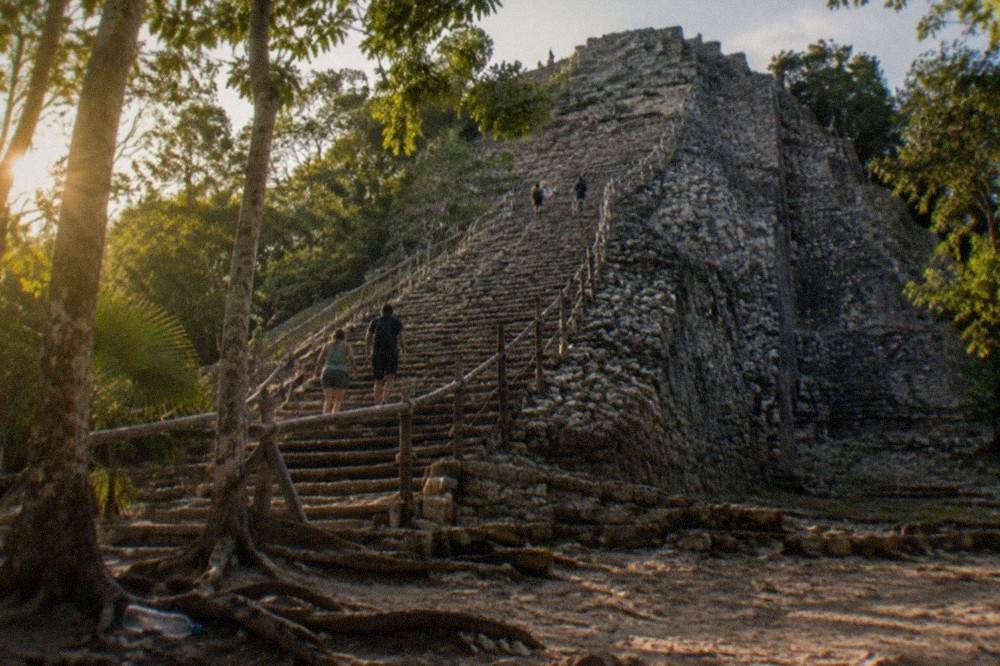
Third, the feel of the place. Because the site is big and the paths wind through forest, Coba rarely feels packed, even when the parking lot is busy. Tulum's visitor numbers have hovered around a million a year and its busiest hours run mid-morning to mid-afternoon; Coba's crowds are thinner and spread across a much larger footprint. For a fuller site orientation before deciding, the Coba ruins planning guide walks the whole site group by group.
If that combination appeals, the practical question becomes how to visit. These three tours from the Riviera Maya and Tulum area cover the main ways to do it, from a small-group ruins-plus-cenote day to a nature-reserve variant:
What Makes Coba Different From Tulum And Chichen Itza?
Coba is a jungle site spread over roughly 70 to 80 square kilometers, versus Chichen Itza's compact 4 to 10 square kilometer core and Tulum's small walled clifftop zone. Coba permits one climbable pyramid, the others permit none. Coba is quieter than both, but demands bikes or long walks to move between its structure groups.
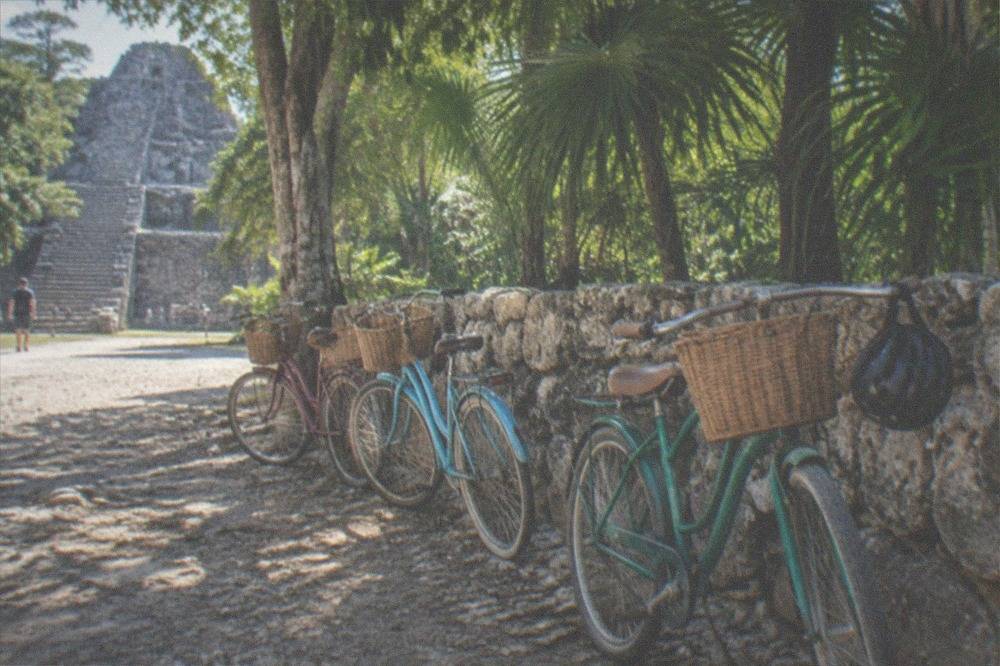
The three sites answer three different travel moods. Tulum is the quick, scenic hit: a walled Postclassic port perched over the Caribbean, visitable in 1.5 to 3 hours, with a small beach cove inside the zone. Chichen Itza is the icon: heavily restored, walkable in a loop, crowded by mid-morning, and strictly look-but-do-not-touch, with every major structure off-limits to climbers. Coba is the expedition. You rent a bicycle or hire a tricycle taxi and roll down sacbeob, the ancient white roads, from group to group under the canopy.
Architecture differs too. Tulum's buildings are small and late, mostly 1200 to 1550 AD, built for trade and ceremony on a defended coast. Chichen Itza's great platforms and colonnades reflect a much larger, earlier political center. Coba's stelae and carved monuments record a city that traded with and rivaled both, and its network of raised causeways, some running tens of kilometers toward sites like Yaxuna, is one of the most extensive known in the Maya world. The jungle setting means you will see fewer fully reconstructed facades than at Chichen Itza, and more mounds still wearing their vegetation.
Crowds follow the same pattern. Chichen Itza peaks between roughly 11 AM and 2 PM, when buses from Cancun and Playa del Carmen arrive in volume. Tulum is busiest from mid-morning to mid-afternoon and on Sundays, when Mexican nationals enter free. Coba gets tour groups, but they thin out fast once you are past the first group of structures, simply because the site is too big to mob. For a deeper side-by-side, the Tulum versus Coba comparison breaks the two sites down head to head.
Can You Still Climb The Nohoch Mul Pyramid?
Yes. Nohoch Mul reopened to climbers around December 8, 2025 after a roughly six-year closure, using a new wooden staircase over the original stone steps. Access runs in small groups of about 14 to 15 people, within a climbing window of roughly 8:00 AM to 3:30 PM, with a summit limit around 15 minutes and closed-toe grip shoes required.
The rules matter as much as the reopening. The staircase exists because the original steps, around 120 of them, were being worn by two decades of climbing traffic; the wooden structure spreads the load and keeps feet off the archaeology. Groups go up in controlled batches, so at busy times you may wait your turn at the base. The summit time limit is enforced, which keeps the queue moving. And the shoe rule is real: staff turn away visitors in flip-flops, so bring closed shoes with actual grip.
The climb itself is steep and the descent is steeper. The view from the top is the payoff, a flat green canopy stretching to the horizon in every direction, with the tops of other structure groups poking through. There is no railing at the summit platform and the wooden steps are close side by side, so anyone with vertigo or shaky knees should think honestly about whether the top is worth it. Going partway up is not really an option, the staircase is a single route.
The contrast with the region's other big pyramids is worth stating plainly. El Castillo at Chichen Itza has been climb-banned since 2006, after a fatal accident and to prevent erosion, and the ban is fully enforced, with barriers keeping visitors at a distance. Tulum's structures are not open to climbing at all. The only other major climbable pyramid in the area is Ek Balam's Acropolis, about 43 meters, reached by steep stone steps with a rope assist. For the full rules and history, the Coba climbing reopening reporting tracks the December 2025 change in detail, and our own can you still climb Coba ruins piece covers the practicalities.
Timing the climb is the one planning detail people get wrong. The site stays open until 5:00 PM, but the pyramid-climb window cuts off around 3:30 PM, and the last site entry is around 4:00 PM. Arrive at opening, 8:00 AM, and you will usually climb with a short wait; arrive after lunch and you risk finding the window closed or the queue long.
How Much Does It Cost To Enter Coba?
Foreign visitors pay roughly 310 to 330 MXN total, about 17 to 19 USD, split across two tickets: about 210 MXN for the INAH federal fee and 100 to 120 MXN for the local ejido community fee. Mexican nationals and residents pay a discounted INAH fee of about 105 MXN and enter free on Sundays with valid ID. Payment is cash only.
The two-ticket system catches people out. You buy the federal INAH portion and then the community portion, sometimes at two windows, and neither card machine can be relied on. Bring cash, more than you think you need, because the bike rentals and tricycle taxis inside the site are also cash. Parking runs about 60 to 80 MXN, and a media or GoPro fee of around 63 MXN can apply if you are carrying serious camera gear. Everything else covered here is indexed on Tulum Ruins Tours.
| Item | Cost (MXN) | Notes |
|---|---|---|
| INAH federal fee, foreigners | ~210 | Cash only, one of two tickets |
| Local ejido fee, foreigners | ~100-120 | Second ticket, paid separately |
| Foreign visitor total | ~310-330 | Roughly $17-19 USD |
| INAH fee, Mexican nationals/residents | ~105 | Free on Sundays with valid ID |
| Parking | ~60-80 | Per vehicle |
| Bike rental | ~60-100 | Self-pedal, strongly recommended |
| Tricycle taxi for two | ~140-200 | Driver-pedaled, round trip |
These are current reasonable figures with minor variance across sources; fees are set by INAH and the local community and can change, so confirm on arrival. A January 2026 foreign-visitor fee adjustment is noted in recent reporting, so the totals above may shift again. For comparison, Tulum's unified gate fee is 265 MXN for foreigners and Chichen Itza runs roughly 697 MXN combined for foreign adults, so Coba sits in the middle of the three on price.
How Do You Get Around The Site?
Rent a bicycle for roughly 60 to 100 MXN or hire a driver-pedaled tricycle taxi for about 140 to 200 MXN for two people. Walking is possible but slow, because structure groups sit 1 to 2 kilometers apart along jungle paths. Rentals are cash only and available near the entrance.
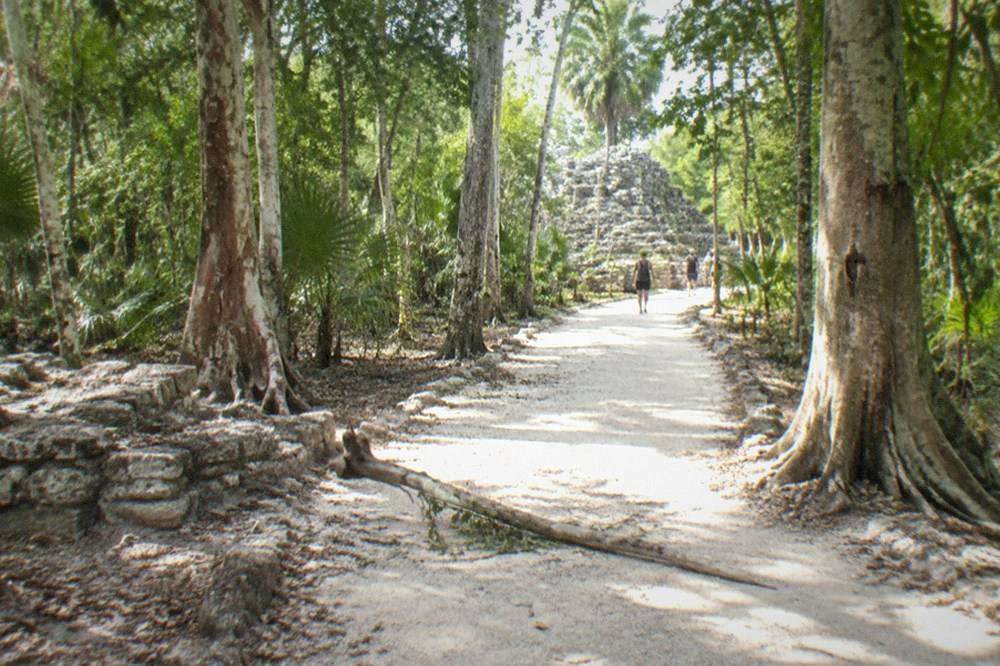
The distances are not a marketing exaggeration. From the entrance to Nohoch Mul is on the order of 1.5 to 2 kilometers, and there are several other groups, including the Grupo Macanxoc stelae cluster, out along other branches. In midday heat the walk is punishing; on a bike it becomes part of the fun, a shaded roll along paths that follow the line of ancient roads. The tricycles, sometimes called Mayan limos, seat two passengers while a driver pedals, and drivers often narrate as they go, which makes them a soft substitute for a formal guide.
Signage at Coba is thin compared with Chichen Itza. The stelae carry real information, dates, rulers, ritual scenes, but almost none of it is explained on panels, which is the main argument for either a guide or a tour. Independent guides work the entrance, and structured day tours from Tulum and the Riviera Maya bundle the guiding with transport and often a cenote swim. The Coba tickets and hours guide covers the on-the-day logistics in more detail.
Among the tour options, the small-group Coba, Multun Ha cenote and Mayan museum day is built around exactly this site's weakness, the spread-out layout and thin signage, by pairing a guided Coba visit with a cenote swim and air-conditioned minivan transport. It runs about 10 hours, from $109, with Coba and Multun Ha cenote entrances included; the Tulum portion of the itinerary carries a separate fee. It holds a 4.5 rating across 774 reviews.
When Is The Best Time To Visit Coba?
Arrive at opening, 8:00 AM, ideally on a weekday. The site runs daily 8:00 AM to 5:00 PM with last entry around 4:00 PM, but the Nohoch Mul climb window closes around 3:30 PM. Midday brings the most heat, the most tour groups and the longest climb queues.
The logic is the same as at every Yucatan ruin site, but with an extra layer at Coba because of the climb cutoff. An 8 AM arrival gets you the coolest hour of the day, the emptiest paths and the shortest wait at the pyramid base. By late morning the humidity under the canopy builds, and by early afternoon the climbing queue can stretch long enough that the 3:30 PM cutoff starts turning people away.
Season matters too. The dry season, roughly November through April, brings lower humidity and less rain; the rainy season from June to November brings afternoon storms and the possibility of a washed-out afternoon, with peak hurricane risk in September and October. Coba is more weather-sensitive than Tulum because so much of the visit happens on jungle paths and a wooden staircase, which get slippery when wet.
What Tours Combine Coba With Other Stops?
Several day tours from the Riviera Maya and Tulum pair Coba with cenotes, Tulum ruins, or nature stops, ranging from $61 to $179 on this site's list. The right pick depends on whether you want a quick combo, a full small-group day, or a private version with everything included.
The combo logic is simple: Coba sits about 42 to 48 kilometers northwest of Tulum, roughly a 45-minute drive, so it slots naturally into a day that also touches Tulum's ruins or one of the region's cenotes. The cheapest headline option on this list is the Riviera Maya Coba and Tulum combo with Cenote Mariposa, lunch and a Mayan traditions demonstration, rated 4.5 from 94 reviews, with round-trip transport from Riviera Maya hotels included and the current price shown on the tour page.
At the other end, the private Coba and Tulum tour from Cancun runs 9 to 11 hours at from $347.83, the highest headline price on this list, but it includes private transport and guide, buffet lunch, both Coba and Tulum entrances and beverages on board. In between sits the small-group Multun Ha day described above, and a nature-focused variant: the Coba, Punta Laguna nature reserve, cenote and Mayan family visit tour, from $119, 8 hours, with transport from Tulum-area hotels, all entrance fees and food included. That one holds a 5.0 rating from 532 reviews, and it is the pick for travelers who want wildlife and a family-run kitchen alongside the archaeology.
One planning note for solo visitors: the site's general jungle pyramids guide confirms the same practical pattern, cash fees, early arrival, bikes over walking, that shapes every tour's schedule. Whichever way you go, book the version whose inclusions match what you actually want to carry: entrances, food and transport vary widely between the $61 and $347.83 ends of the range.
Common Questions About The Coba Ruins
Are The Coba Ruins Worth Seeing?
Yes. Coba is one of only two major Maya sites in the region, along with Ek Balam, where climbing a pyramid is still permitted, following the December 2025 reopening of Nohoch Mul, and it offers a far larger, greener and quieter experience than Tulum or Chichen Itza. It suits travelers who want space and a physical experience over restored photo backdrops.
can you still walk up coba ruins?
Yes, Nohoch Mul is open to climbers again after reopening around December 8, 2025. Access uses a new wooden staircase, small groups of about 14 to 15 people, a climbing window of roughly 8:00 AM to 3:30 PM, a summit limit of about 15 minutes and closed-toe grip shoes.
which mayan ruins are better to visit, coba or tulum?
It depends on what you want. Tulum is compact, scenic and fast to visit, 1.5 to 3 hours, with a beach cove inside the zone. Coba is far larger, jungle-set, quieter and offers the climbable Nohoch Mul, but needs bikes or a tricycle taxi and half a day. Many travelers do both on a combo tour.
How much does it cost to enter Coba?
Foreign visitors pay roughly 310 to 330 MXN total, about 17 to 19 USD, split between an INAH federal fee of about 210 MXN and a local ejido fee of 100 to 120 MXN, cash only. Mexican nationals pay about 105 MXN and enter free on Sundays with valid ID. Fees can change, so confirm on arrival.
How far is Coba from Tulum?
About 42 to 48 kilometers northwest of Tulum, roughly 26 to 30 miles, with a drive time of 39 to 56 minutes depending on traffic, commonly cited as about 45 minutes.
Can you climb the pyramid at Chichen Itza too?
No. El Castillo at Chichen Itza has been closed to climbing since 2006 and the ban is fully enforced, with barriers keeping visitors at a distance. Coba's Nohoch Mul and Ek Balam's Acropolis are the region's major climbable pyramids.