Which Mayan Ruins Are Better To Visit, Coba Or Tulum?
A side-by-side comparison of the Coba and Tulum archaeological sites: fees, climbing rules, crowds, travel time and which site fits which kind of day.
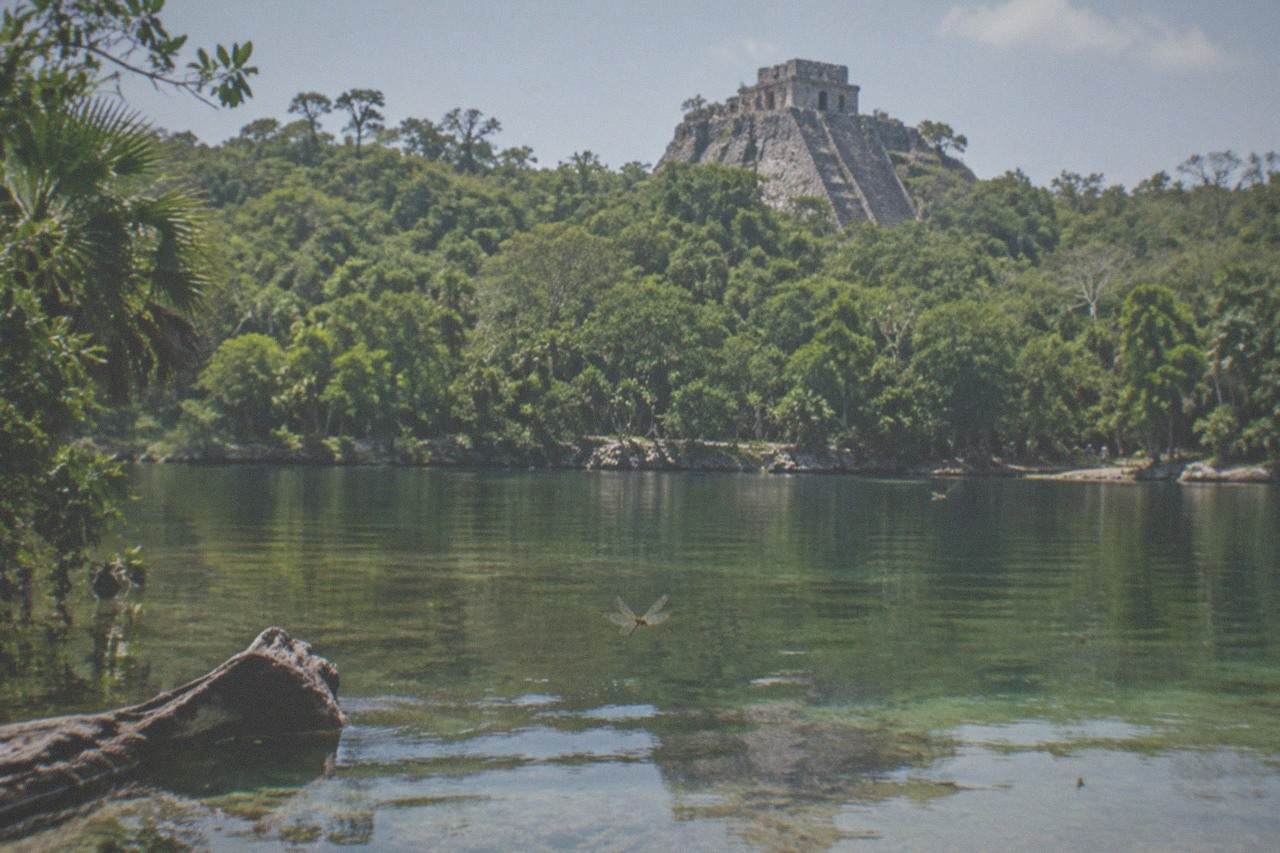
Tulum is a walled city on a cliff above the Caribbean, compact enough to walk in under two hours, with a swimmable cove at the bottom of a wooden staircase. Coba is the opposite: roughly 70 to 80 square kilometers of jungle site, most of it unexcavated, where the structure groups sit a kilometer or more apart along white stone paths and the tallest pyramid in the region is open to climbers again. The two sites are about 45 minutes apart by road, which is why so many travelers end up asking which one deserves the day.
Which Mayan Ruins Are Better To Visit, Coba Or Tulum?
Neither site is universally better, and the honest answer splits cleanly by what you want from the day. Tulum wins on setting, convenience and visit length: ocean cliffs, a swimmable cove, and a site you can see in 1.5 to 3 hours. Coba wins on scale, jungle immersion and the climbable Nohoch Mul pyramid, at the cost of a longer, hotter, more physical visit.
That is the short version. The longer version depends on three things: whether climbing a pyramid matters to you, how much heat and walking you can tolerate, and whether your base is Tulum itself or somewhere up the coast.
Start with the headline differences. Tulum's ruins sit inside a wall on three landward sides, with the sea cliff forming the eastern edge, and the whole visible core is small enough that most visitors finish a loop in about 90 minutes. The setting is the draw. Coba's core is far larger than Tulum's and far less restored, with an estimated 5,000-plus structures spread through the forest, only a fraction of them excavated. The draw there is depth: jungle paths, bike rentals between the groups, and Nohoch Mul, the 42-meter pyramid that reopened to climbers around December 2025 and is currently the only major pyramid in the region where climbing is permitted.
If your trip is short and based in Tulum town, the ruins are a 10-to-15-minute taxi ride away and can share a morning with the beach. If you have a full day and want the more adventurous site, Coba rewards the effort. And if you genuinely cannot decide, a Tulum and Coba combo tour day covers both, which is exactly what several operators on this site sell.
For a quick sense of the tour options that pair the two sites, this is the current shortlist:
What Kind Of Experience Does Each Site Offer?
Tulum delivers a short, scenic, heavily visited walk past restored buildings above turquoise water, with no climbing allowed on any structure. Coba delivers a long, shaded, physically involved exploration of a much larger jungle site, where the payoff is the view from the top of Nohoch Mul. One is a photo stop with history attached; the other is a half-day expedition.
At Tulum, everything you came to see sits within a few hundred meters. El Castillo, the tallest structure, stands about 7.5 meters high on a roughly 12-meter cliff and likely worked as both a temple and a beacon guiding canoes through the reef gap. The Temple of the Frescoes carries faded murals in the Mixteca-Puebla style, and the Temple of the Descending God is named for the winged figure diving above its doorway. None of it is climbable. The site was a Late Postclassic trading port, and INAH's own record notes Stela 1 bears a date of 564 AD, hinting at earlier origins than the visible architecture suggests. Most people spend 1.5 to 3 hours on site, longer if they swim.
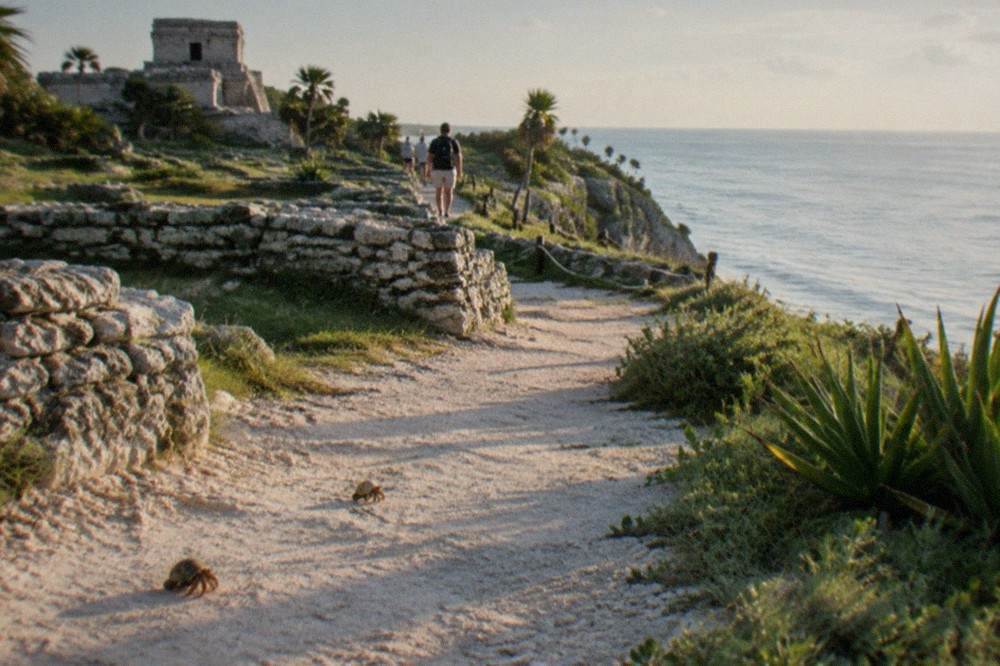
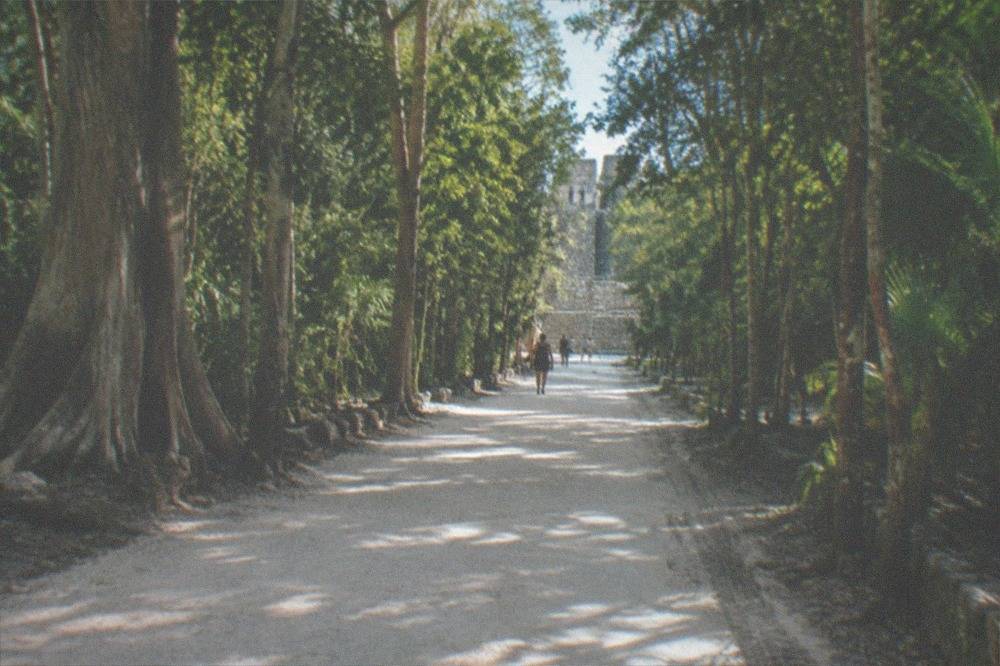
At Coba, the experience inverts. The paths between structure groups run one to two kilometers or more, and the site is large enough that bike or tricycle rental is strongly recommended over walking in the heat. Self-pedal bicycles rent for roughly 60 to 100 MXN, and the driver-pedaled tricycle taxis locals call "Mayan limos" run about 140 to 200 MXN for two people. The jungle canopy gives real shade, which Tulum's exposed clifftop does not, but the site demands more time and more water. A relaxed Coba visit runs closer to three hours than ninety minutes.
The crowd profiles differ too. Tulum is busy mid-morning through mid-afternoon, roughly 10:00 to 15:00, and on Sundays, when Mexican nationals enter INAH sites free. Coba receives far fewer visitors, and its size spreads them thin, so even a moderately busy day feels quiet once you are out on the paths toward Nohoch Mul.
How Much Do The Entrance Fees Cost At Coba And Tulum?
Tulum charges one unified gate fee of 265 MXN for foreign visitors, roughly $13 to $15, covering the INAH zone and the Parque del Jaguar access in a single payment. Coba uses a two-ticket cash system totaling roughly 310 to 330 MXN, about $17 to $19, split between the federal INAH fee and a local ejido fee.
Tulum's visitor count comes from official INAH figures. A July 2026 federal decree unified what had been separate charges into one payment at the gate: 80 MXN for Mexican nationals and residents, 265 MXN for foreigners, with no second window for the park. Fees are set by INAH and CULTUR and can change, so confirm on arrival.
Coba's system is older and clunkier. Foreign visitors pay roughly 210 MXN to INAH plus roughly 100 to 120 MXN to the local ejido community, and both windows are cash only. These are current reasonable figures with minor source variance, not fixed prices. Mexican nationals pay a discounted INAH fee of about 105 MXN and enter free on Sundays with valid ID, the same Sunday policy that applies at INAH-run sites across the country, foreign tourists still pay full price on Sundays.
| Cost item | Tulum | Coba |
|---|---|---|
| Foreign adult entrance | 265 MXN (roughly $13-15), one unified fee | ~310-330 MXN total (roughly $17-19), two tickets |
| National/resident entrance | 80 MXN | ~105 MXN INAH fee |
| Sunday entry (nationals with ID) | Free | Free |
| Parking | ~80-100 MXN at the Parque del Jaguar lot | ~60-80 MXN |
| Getting around on site | Walk, or ~20 MXN electric shuttle from the lot | Bike ~60-100 MXN, tricycle ~140-200 MXN for two |
| Typical time on site | 1.5-3 hours | ~3 hours |
One practical note on Tulum's layout: the parking lot sits at the highway entrance, and the walk from the lot to the ticket area is a flat five to ten minutes through the park, with an optional electric shuttle at about 20 MXN per adult. Budget that time if you are aiming for the 8:00 opening.
Can You Still Climb The Coba Pyramid?
Yes. Nohoch Mul reopened to climbers around December 8, 2025 after roughly six years closed, using a new wooden staircase built over the original stone steps. Access runs in small groups of 14 to 15 people, within a climbing window of about 8:00 to 15:30, with a roughly 15-minute summit limit and closed-toe shoes with grip required.
This is the single biggest factor separating the two sites, and it is worth understanding the rules before you count on the climb. The staircase exists for preservation and safety, not as a suggestion, and the summit limit is enforced. The view from the top is the payoff: an unbroken canopy of jungle stretching to the horizon in every direction, with only a handful of excavated structures breaking through. Reporting on the reopening and its current rules is collected in Coba climbing coverage, and the site's general logistics are covered in the Coba ruins guide.
The contrast with Tulum is absolute. Tulum's structures are not open to climbing, and the same is true at Chichen Itza, where El Castillo has been off-limits since 2006. Coba is currently the only major regional pyramid where climbing is permitted at all, which is why the question can you still climb Coba's pyramid has its own answer on this site. If standing on top of a Maya pyramid is on your list, Coba is not the better choice, it is the only choice among these two.
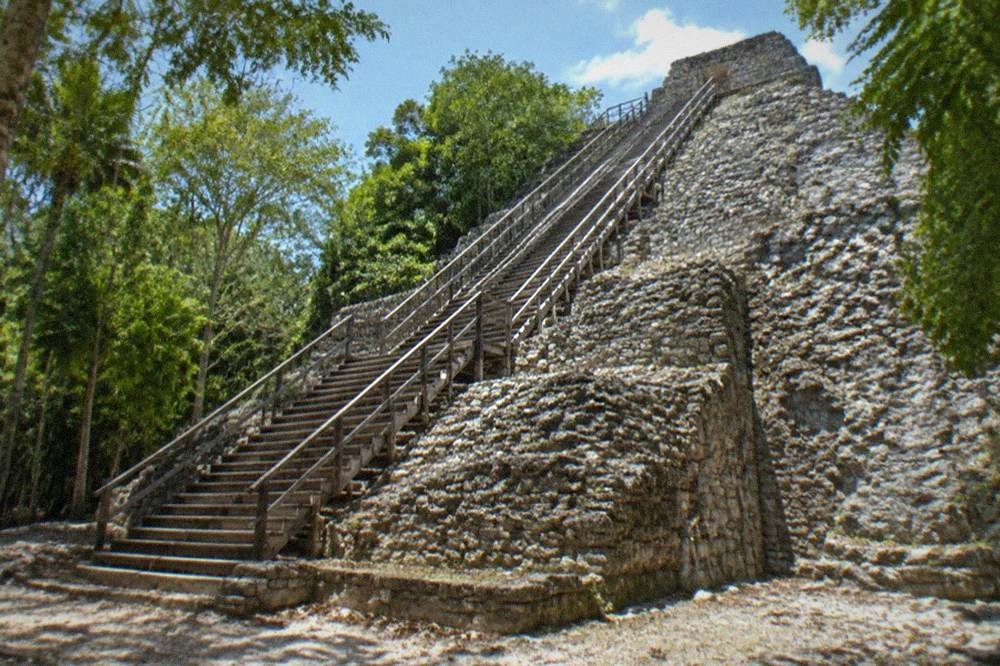
Timing matters more at Coba than at Tulum because of that climbing cutoff. The site itself is open daily 8:00 to 17:00 with last entry around 16:00, but the pyramid climb stops at about 15:30. Arrive mid-afternoon and you will see the site but not the summit. The full index of guides sits on Tulum Ruins Tours.
How Long Do You Need And How Do You Get To Each Site?
Tulum needs 1.5 to 3 hours and sits 10 to 15 minutes from Tulum town by taxi or colectivo. Coba needs closer to 3 hours plus travel, and lies 42 to 48 km northwest of Tulum, a drive of roughly 45 minutes, longer from Playa del Carmen or Cancun. Tulum fits a half-morning; Coba is a half-day commitment door to door.
Getting to the Tulum ruins without a tour is straightforward. Colectivo vans run from Tulum Pueblo toward the highway stop every 10 to 15 minutes for roughly 20 to 30 MXN per person, and taxis run about 150 to 200 MXN one way. ADO buses serve the Pueblo terminal, not the ruins gate, so bus arrivals still need a taxi or colectivo for the last leg. The site is open daily 8:00 to 17:00 with last entry at 15:30, and the quiet windows are at the 8:00 opening and late afternoon.
Coba is a different logistics problem. There is no frequent colectivo equivalent, so most independent visitors drive, take an ADO bus toward Valladolid with a Coba stop, or join a tour that includes transport. From Tulum the drive is about 45 minutes; from Cancun or the Riviera Maya hotel zone, plan on two hours or more each way, which is why most Coba visits from up the coast happen on organized day trips rather than self-drives.
That travel reality is the main argument for the combo tours. The Coba, Multun Ha Cenote, Tulum and Mayan Museum small-group tour packs both sites into one 10-hour day from $109, with air-conditioned minivan transport and the Coba and cenote entrances included; the Tulum entrance fee is extra. It carries a 4.5 rating across 774 reviews, a genuinely large review pool for this pairing.
For travelers starting from Riviera Maya hotels rather than Tulum itself, the Coba, Tulum ruins, Cenote Mariposa and lunch tour from $61 covers both sites plus a cenote swim and a Mayan traditions demonstration in one guided day, rated 4.5 from 94 reviews. The cheaper Tulum-plus-two-cenotes half-day option, from $36 with a 4.4 rating across 1,166 reviews, skips Coba entirely and suits visitors who want ruins plus swimming rather than ruins plus ruins.
Which Site Suits Which Kind Of Traveler?
Choose Tulum if you want the iconic photos, a short visit, easy access from town, or a swim below the cliffs. Choose Coba if you want to climb a pyramid, prefer shade and relative solitude, or have a full day and a tolerance for heat and distance. Families with small children usually do better at Tulum; active travelers usually do better at Coba.
The swim point deserves a sentence of its own, because it is often misunderstood. Tulum's Playa Ruinas is a small protected cove below El Castillo, reached by a wooden staircase from inside the archaeological zone, and swimming there is possible when conditions allow. There is no swimmable cenote inside the Tulum zone itself, Casa del Cenote is a named structure, not a swim spot, and the famous cenotes like Gran Cenote sit outside the gate and are reached separately. Coba has no swimming inside the archaeological zone either, but its tours routinely fold in a cenote stop, most commonly Mariposa or Multun Ha.
Heat tolerance should genuinely shape the choice. Tulum's site is small and exposed; you can be done before the midday sun gets brutal. Coba is shaded but long, and the physical effort of the walk or ride plus the pyramid stairs adds up. Either way, water, a hat and closed walking shoes are standard kit, and the what to bring guidance applies to both sites.
Photography tilts to Tulum. The cliff-top setting, El Castillo above the cove and the blue water behind the wall are among the most photographed ruins scenes in Mexico, and no picture from Coba's forest paths replicates that. Coba's best image is the summit view from Nohoch Mul, jungle to the horizon, which is a different kind of photograph and one Tulum cannot offer at all.
For visitors who want Coba with more than ruins, the Coba, Punta Laguna nature reserve, cenote and Mayan family visit tour from $119 runs 8 hours with Tulum-area hotel pickup, entrance fees and food included, and carries a 5.0 rating from 532 reviews. It adds a spider monkey reserve and a meal in a Mayan home to the standard Coba day, a pairing no Tulum-only product matches.
If the combined Coba-and-Tulum day sounds like the right fit, the small-group tour above is the one to check first: it is the most-reviewed pairing on this site, and the operator's listing carries free-cancellation terms you can review before committing.
Should You Visit Both Sites In One Day?
Yes, if you have the stamina and start early. The sites are about 45 minutes apart by road, and a combined day is a well-worn route with several operators selling it. Do Tulum first at opening, when the light is best and the crowds have not arrived, then drive to Coba for the shaded midday hours and the pyramid climb before the 15:30 cutoff.
That sequencing is not arbitrary. Tulum is at its best and least crowded between 8:00 and 10:00, and its exposed site is punishing at midday. Coba's jungle canopy makes midday the more tolerable half of the day there, and arriving after the morning rush thins the paths further. The one hard constraint is the Nohoch Mul climbing window, which closes around 15:30, so a combined day should reach Coba by early afternoon at the latest.
Self-driving both is doable: out to Tulum for 8:00, done by 10:00, on the road to Coba by 10:30, parked and inside by 11:30, summit by early afternoon. But the combo tours remove the parking, route-finding and timing risk entirely, and for most travelers that is worth the price. The 10-hour small-group product described above is the most-reviewed combined option on this site; the private Coba and Tulum tour from Cancun, at $347.83 and a 5.0 rating from 27 reviews, is the premium version with both entrances, lunch and a private guide included.
Whether one day for both is wise depends on your pace. Travelers who like to linger, read every sign and swim at the cove will feel rushed. Travelers who move efficiently will find a combined day entirely comfortable and cheaper than two separate outings once transport is counted.
Common Questions About Coba Or Tulum
Which Mayan Ruins Are Better To Visit, Coba Or Tulum?
Tulum is better for a short, scenic visit with ocean views and a swimmable cove; Coba is better for jungle immersion, fewer crowds and the climbable Nohoch Mul pyramid. If standing atop a pyramid matters, choose Coba. If iconic photos and a quick morning matter, choose Tulum. With a full day, many travelers do both.
Can You Still Walk Up Coba Ruins?
Yes. Nohoch Mul reopened to climbers around December 8, 2025 via a new wooden staircase, in groups of 14 to 15 people, within a roughly 8:00 to 15:30 climbing window, with about 15 minutes allowed at the summit and closed-toe grip shoes required.
How Much Does It Cost To Enter The Tulum Ruins?
Foreign visitors pay a unified gate fee of 265 MXN, roughly $13 to $15, which covers the INAH archaeological zone and the Parque del Jaguar access in one payment. Mexican nationals and residents pay 80 MXN. Fees are set by INAH and CULTUR and can change, so confirm on arrival.
Is Coba Cheaper Than Tulum?
The entrance fees are close: Coba totals roughly 310 to 330 MXN for foreigners across two cash tickets, against Tulum's unified 265 MXN. The real cost difference is time and transport, since Coba lies about 45 minutes from Tulum town and usually needs a tour, a bus or a rental car to reach comfortably.
Can You Climb The Pyramids At Tulum?
No. Climbing is not permitted on any structure at the Tulum archaeological zone, and El Castillo, the Temple of the Frescoes and the other buildings are viewed from marked paths only. The region's only major climbable pyramid is Nohoch Mul at Coba.
How Far Apart Are Coba And Tulum?
Roughly 42 to 48 km, about a 45-minute drive each way on normal traffic. That proximity is why combined tours covering both sites in one day are common and workable.