Free And Low-Cost Things To Do Around The Tulum Ruins
The Tulum ruins gate fee is 265 MXN for foreign visitors, but the beach inside the zone, the Sunday entry rules, a pay-what-you-want bicycle tour to three cenotes, and a 20 MXN colectivo ride add up to a day that costs far less than most visitors expect.
Short answer
Free and low-cost options around the Tulum ruins include the Playa Ruinas beach inside the paid zone, free Sunday entry for Mexican nationals and foreign residents with valid ID, a pay-what-you-want GuruWalk bicycle tour to three cenotes, and 20-30 MXN colectivo transport. Foreign tourists still pay the 265 MXN gate fee on Sundays.
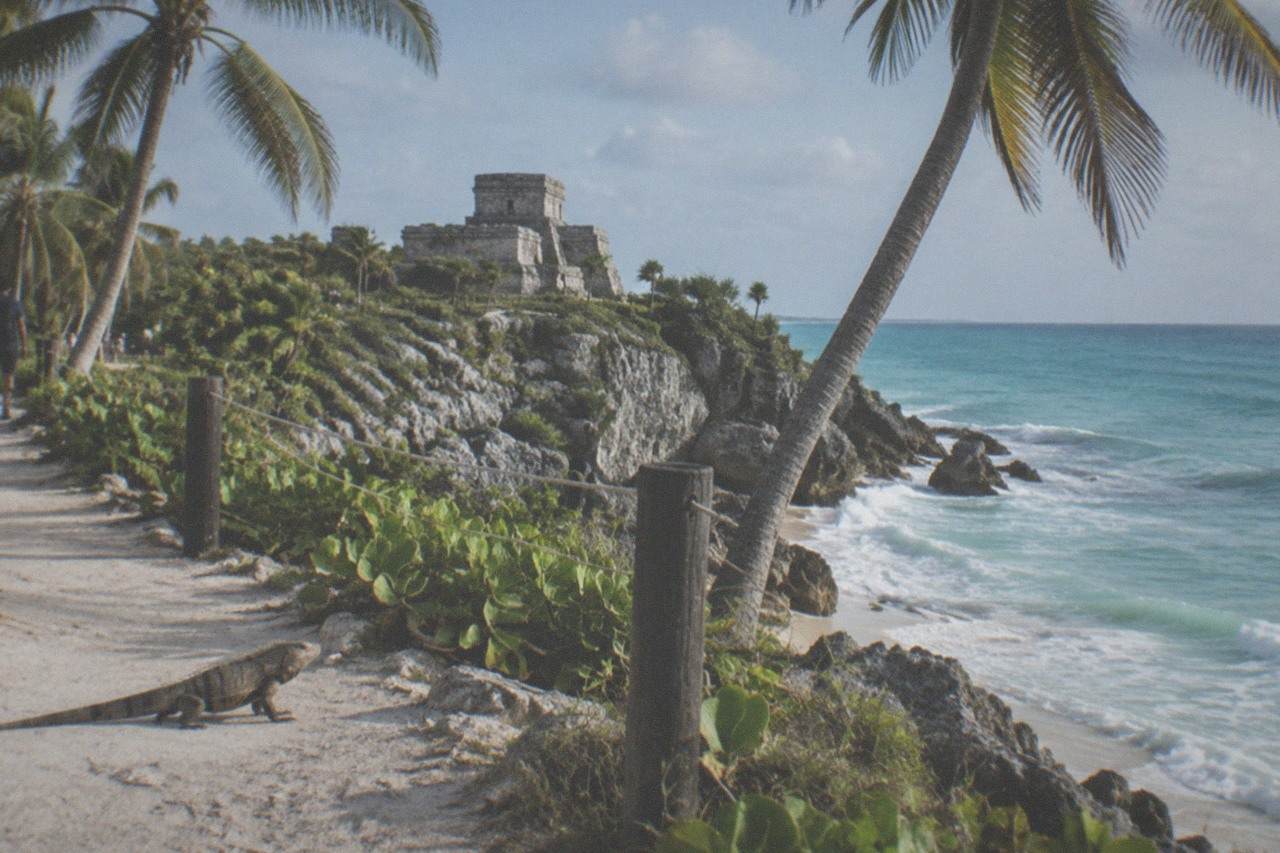
The Tulum ruins sit on a limestone cliff above the Caribbean, and the single biggest cost of seeing them is the gate fee: 265 MXN for foreign visitors, roughly $13-15, under the unified fee structure that took effect with the July 2026 federal decree. Everything beyond that gate is more negotiable than most guidebooks admit. The beach inside the zone costs nothing extra once you have paid entry. The colectivo vans from Tulum Pueblo run every 10-15 minutes and cost about 20-30 MXN per person. There is even a genuinely free, pay-what-you-want guided bicycle tour to three cenotes outside town, run independently on the GuruWalk platform by a local guide named Gilmer.
This guide separates what is actually free from what is merely cheap, and it is honest about where the free options fall short. None of them include a guide inside the archaeological zone itself, and none of them help with the mid-morning queue. The site's own tours fill that gap, and one of them, the tulum-archaeological-zone-guided-walking-tour, carries the cheapest headline price on this list at from $18. For a fuller picture of the site itself, start with the Tulum ruins site guide and the detailed Tulum ruins tickets and fees breakdown.
What Can You Do Around The Tulum Ruins Without Spending Much?
A budget day around the Tulum ruins breaks into four pieces: the INAH gate fee of 265 MXN for foreign visitors, transport at 20-30 MXN each way by colectivo, the free Playa Ruinas beach inside the zone, and free or pay-what-you-want activities outside it. Done independently, the whole day can land under $20 per person before food.
The honest framing matters here. The archaeological zone itself is never free for foreign tourists. INAH, the federal institute that runs the site, sets the fees, and the current unified structure charges 80 MXN for Mexican nationals and residents and 265 MXN for everyone else. That single payment covers the INAH zone plus the CONANP/Parque del Jaguar area, so you are not paying twice at the gate. Fees are set by INAH and CULTUR and can change, so confirm on arrival.
What is genuinely free sits around and inside that paid visit. The beach below El Castillo is included with entry. The walking paths through Parque del Jaguar are part of the same ticket. Outside the zone, the town beach, the beach road cycling path, and the pay-what-you-want GuruWalk bicycle tour all cost nothing upfront. Cheap additions, cenote swims and tacos and colectivos, run in the tens of pesos rather than the hundreds.
Is The Beach At The Tulum Ruins Free To Swim At?
Yes, once you have paid the archaeological zone entry fee, the Playa Ruinas beach costs nothing extra. It is a small protected cove below the cliffs near El Castillo, reached by a wooden staircase from inside the zone, and swimming is possible there. It is not a separate ticket, but it is also not free without entry: the beach sits inside the paid INAH zone.
This is the single best free add-on at the site, and many visitors walk right past it. The staircase down is near El Castillo, the tallest structure on the cliff, and it drops into a cove where the water is calm and shallow in most conditions. Bring a swimsuit if you plan to use it; there are no changing facilities to speak of, and conditions vary with weather and sargassum, which mainly affects beaches May through July rather than the ruins paths themselves.
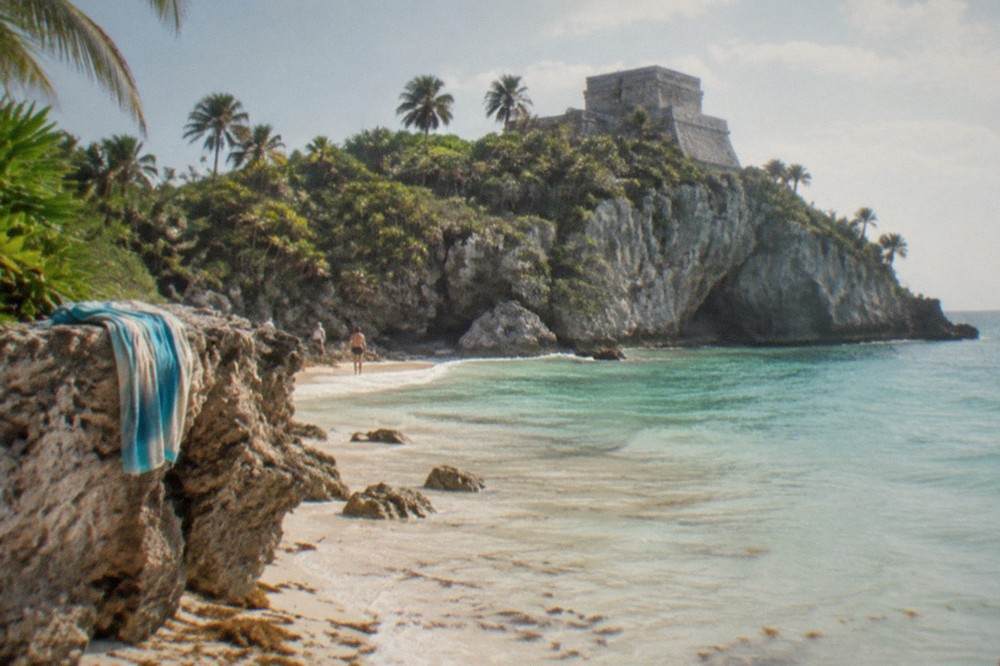
Two honest cautions. First, there is no swimmable cenote inside the archaeological zone, despite a structure on the site map named Casa del Cenote, which is a named ruin, not a swim spot. The famous Gran Cenote and its neighbors are separate, paid attractions outside the zone. Second, the beach is small and gets crowded in the middle of the day, so the same early-arrival advice that beats the queues also gets you the cove at its calmest. The site opens at 8:00 and last entry is 15:30, with the busiest window running roughly 10:00 to 15:00.
If you want the beach plus the ruins plus actual historical context in one morning, a guided visit is the efficient route. The three options below span the budget range for exactly that.
The cheapest of those three, the tulum-archaeological-zone-guided-walking-tour, is a 1.15-hour guided walk rated 4.9 from 109 reviews, from $18, with beach access at Parque del Jaguar. Check the tour page for the current entrance fee arrangements. It has the lowest headline price on this list, and it pairs naturally with a free beach afternoon.
When Is Entry To The Tulum Ruins Actually Free?
Entry is free on Sundays for Mexican nationals and foreign residents of Mexico holding valid official ID, such as an INE card. Foreign tourists still pay the full 265 MXN fee every day of the week, including Sundays. This is a longstanding national INAH policy that applies across Mexico's federal archaeological zones, not a Tulum-specific promotion.
The policy is worth stating plainly because it is the most commonly garbled "free" claim about Tulum online. Sunday free entry is real, but it is real for a specific group. INAH's own communication on free Sunday access is explicit that it covers Mexican citizens and foreign residents with valid identification. If you are a short-stay visitor from abroad, budget for the gate fee whichever day you come.
There is a second catch worth knowing: Sundays are among the busiest days at the site precisely because national entry is free. Families come, tour buses come, and the 10:00-15:00 peak feels heavier than on a Tuesday. For a foreign visitor, Sunday is arguably the worst day to visit, combining full price with the biggest crowds. A weekday at opening, around 8:00, gets you softer light, shorter lines and a calmer Playa Ruinas.
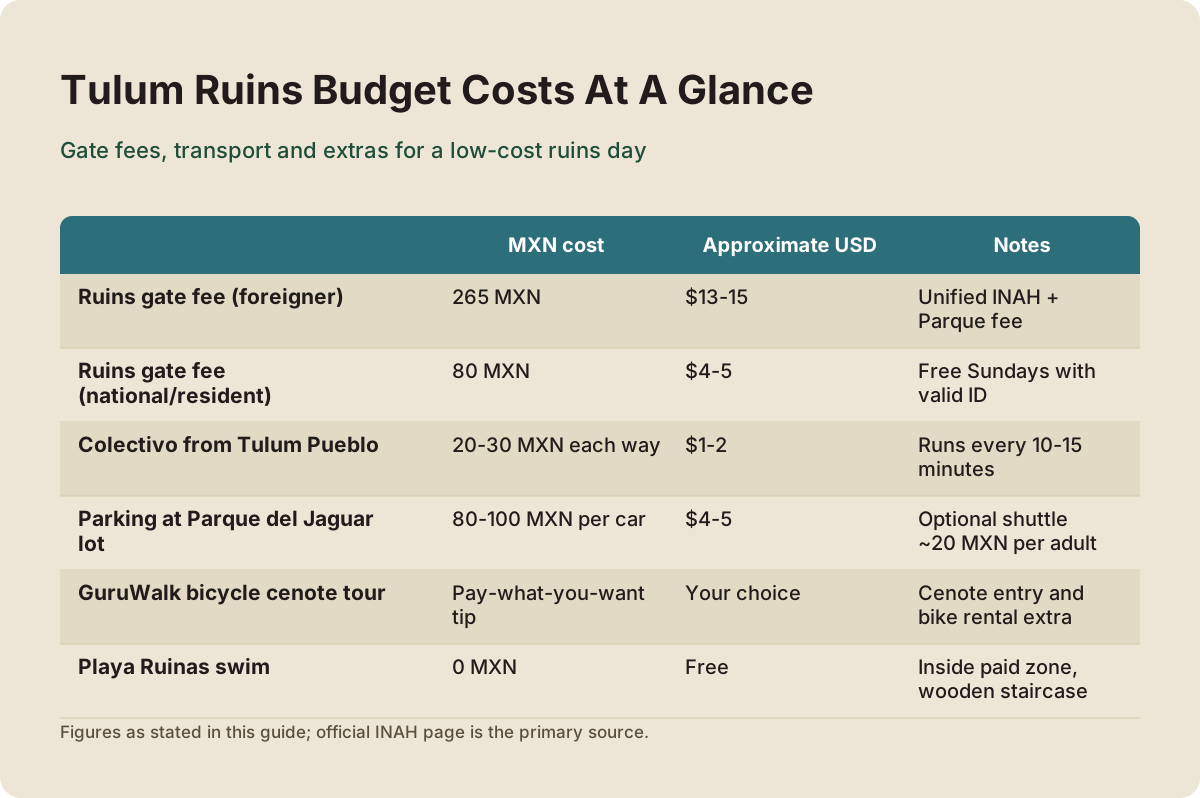
Here is how the main costs stack up for a foreign visitor putting together a low-spend day:
| Item | Cost (MXN) | Approx. USD | Notes |
|---|---|---|---|
| Tulum ruins entry, foreigner | 265 | ~$13-15 | Unified INAH + Parque del Jaguar fee |
| Tulum ruins entry, national/resident | 80 | ~$4-5 | Free on Sundays with valid ID |
| Colectivo from Tulum Pueblo | 20-30 each way | ~$1-2 | Runs every 10-15 minutes |
| Taxi from town | 150-200+ one way | ~$8-11 | ~10-15 minutes |
| Parking at Parque del Jaguar | ~80-100 | ~$4-5 | Highway lot, cash preferred |
| Playa Ruinas beach | 0 extra | $0 | Included with zone entry |
| GuruWalk cenote bicycle tour | Pay what you want | $0 upfront | ~2h45m, tips only |
Fees are set by INAH and CULTUR and can change, so confirm on arrival. If the gate fee itself is what you are researching in depth, the Tulum ruins tickets and fees guide carries the full breakdown, including the January 2026 increase and the July 2026 reduction that followed it.
Wondering whether the paid visit justifies even this modest outlay? The honest answer, with the site's history and its crowds weighed against each other, is in are the Tulum ruins worth visiting?.
Is There A Genuinely Free Tour Near The Tulum Ruins?
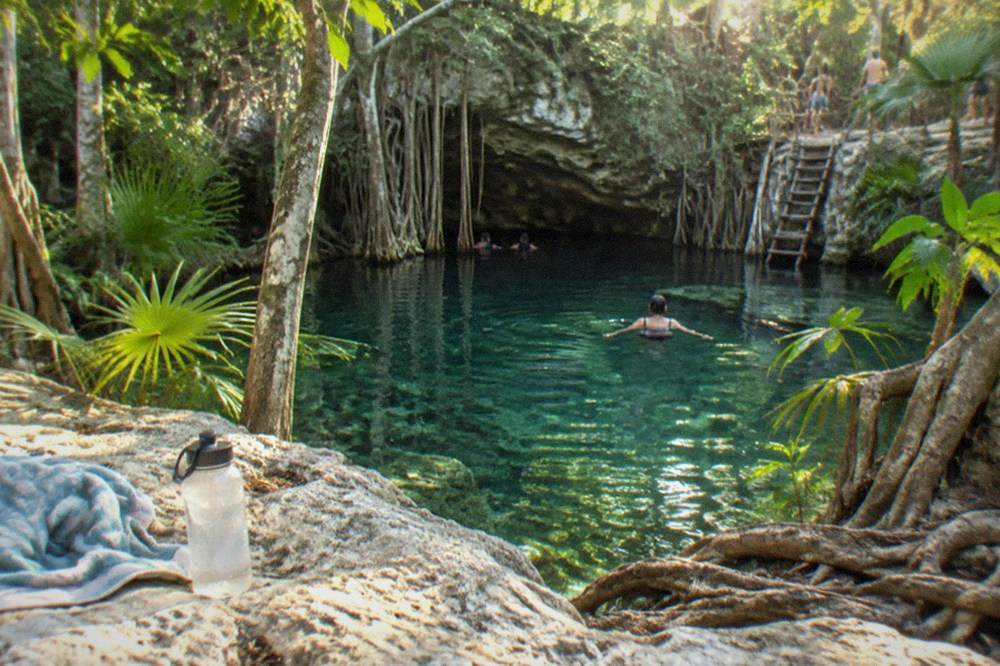
Yes, but it is not a ruins tour. An independent guide named Gilmer runs a free, pay-what-you-want bicycle tour to three cenotes near Tulum, listed on the GuruWalk platform, lasting about 2 hours 45 minutes and rated 4.97 from 34 reviews. GuruWalk is a separate, independent platform for tipping-based tours; this is not a product of this site.
The distinction matters. This site publishes and earns from its own paid tour listings, and the GuruWalk bicycle tour is none of them. It appears here because it is a real, verified, genuinely free option for the same day, and burying it would be dishonest. The tour covers three cenotes reached by bicycle, not the archaeological zone, so it complements a ruins visit rather than replacing one. Bike rental and any cenote entry fees are separate costs you pay directly, and the guide's income is entirely tips.
The pay-what-you-want model deserves a plain explanation, because travelers often misunderstand it. There is no set price, no minimum, and no booking fee. You reserve a spot, take the tour, and hand the guide cash at the end. A fair tip for a nearly three-hour guided bicycle outing in the region runs in the range of what a short paid tour would cost, but that is your call, not a requirement. The listing itself carries the details, and the 4.97 rating from 34 reviews is small in pool size but consistently strong.
See this free tour on GuruWalk
Sequencing it with a ruins morning works well. The archaeological zone is best at 8:00 opening, the cenote ride fills the late morning or early afternoon, and the two together make a full day where the only fixed costs are the INAH gate fee, bike rental and cenote entries. Anyone comparing that day against a packaged ruins-plus-cenote combo should know the combo alternative exists: the riviera-maya-tulum-ruins-and-2-cenotes-half-day-tour runs 6 hours with hotel pickup, a guided ruins visit and swims at two cenotes, from $36, rated 4.4 from 1,166 reviews, with entrance fees of 265 MXN (roughly $13-15 USD) per foreign adult extra. The GuruWalk route is the free-activity version of the same idea; the combo is the no-logistics version.
What Does A Cheap Independent Day Around The Ruins Actually Cost?
A foreign visitor doing everything independently can keep a full day around the Tulum ruins to roughly 400-500 MXN, about $20-25, before food: 265 MXN entry, 40-60 MXN colectivo transport round trip, and free activities like the Playa Ruinas beach filling the rest. Add the GuruWalk bicycle tour and pay bike rental and cenote entries, and the day still lands under most packaged tour prices.
The lever that moves the total most is transport. A taxi from town runs 150-200 MXN or more each way, while the colectivo vans labeled "Ruinas" cost 20-30 MXN per person and drop you on the highway with a short walk to the entrance. ADO buses serve the Tulum Pueblo terminal only, not the ruins gate, so the colectivo or a taxi covers the last leg. Full transport detail, including the hotel zone options, is in the getting to the Tulum ruins guide.
Here is how the independent day compares with the site's paid options at the budget end:
| Approach | Fixed cost per person | What you get | Main trade-off |
|---|---|---|---|
| Fully independent | ~265 MXN entry + transport | Ruins at your own pace, free beach | No guide, no context, queue at peak |
| GuruWalk cenote bike tour + independent ruins | Pay-what-you-want + entry | Cenotes with a guide, ruins self-guided | Two bookings, ruins still unguided |
| Guided walking tour, from $18 | $18 + optional entry package | 1.15 hr guided walk, beach access | Short duration, no transport |
| Ruins plus 2 cenotes combo, from $36 | $36 + ~265 MXN ($13-15) entry | 6 hr, pickup, guide, two cenote swims | Entry fees add noticeably to the headline |
Food is the other negotiable. Tacos in Tulum Pueblo run a fraction of hotel-zone prices, and the difference between eating in town and eating on the beach road can exceed the entire cost of the ruins entry. Water matters more than food in the heat: the site is exposed, shade is scarce along the main path, and the general guidance is a hat, closed walking shoes and more water than feels necessary.
Which Free Options Leave A Real Gap At The Ruins?
All of them leave the same gap: none of the free activities around the Tulum ruins include a historical guide inside the archaeological zone, and none offer skip-the-line help. The GuruWalk tour covers cenotes, not ruins. The beach and the Sunday policy cover access, not understanding. A paid guided walk fills exactly that gap, and the cheapest one on this list starts at $18.
Being specific about what is missing makes the choice clearer. Walking the zone alone, you see El Castillo, the Temple of the Frescoes and the Temple of the Descending God as beautiful stone. A guide tells you the site was likely called Zamá, "dawn," that it functioned as a trading port handling cacao, obsidian and jade between inland Coba and the coast, and that El Castillo may have served as a beacon guiding canoes through the reef gap. Stela 1 at the site carries a date of 564 AD, hinting at origins far earlier than the Postclassic walls most visitors assume are the whole story. None of that is on the signage in any depth.
The queue is the other quiet cost. The busiest window runs 10:00 to 15:00, and a tour that starts at opening effectively moves you ahead of the buses. The tulum-archaeological-zone-guided-walking-tour is designed around exactly this: a 1.15-hour guided walk with beach access at Parque del Jaguar, guided entry with the mandatory entrance fee included, rated 4.9 from 109 reviews, with current pricing shown on the tour page.
For visitors with a bigger budget and less appetite for logistics, the private version of the same idea runs 4 hours with air-conditioned transport, water, snacks and all fees included, from $159, rated 4.9 from 239 reviews. It is the opposite end of the price range from the free day this guide describes, which is precisely why it is worth naming: the free and the private versions bracket the same decision, how much context and how much convenience a morning at the ruins is worth to you.
How Do You Get To The Tulum Ruins Without A Tour?
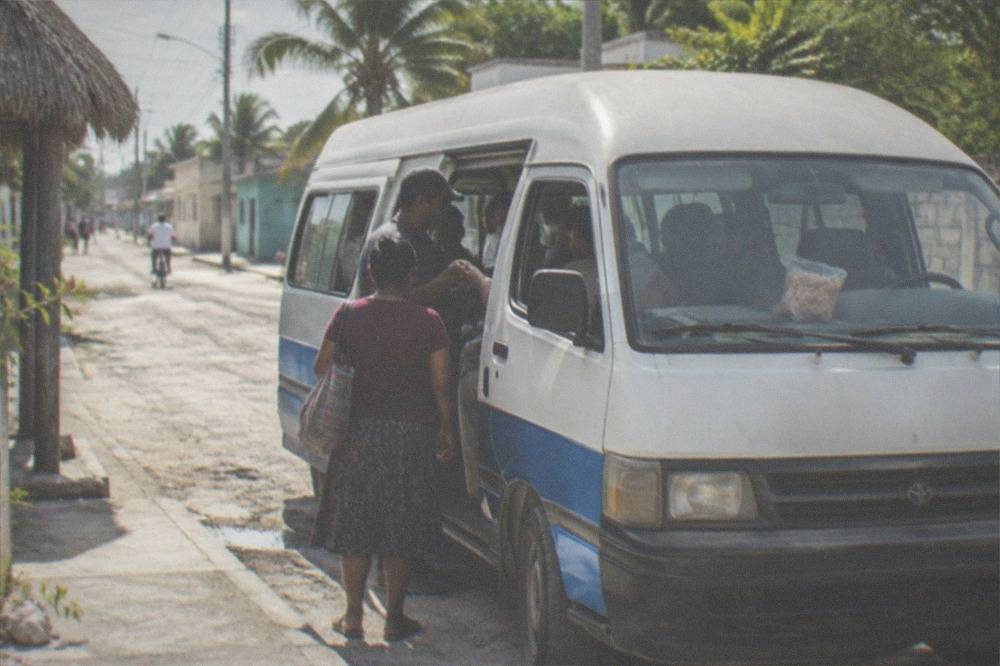
Take a colectivo. The shared vans run from Tulum Pueblo toward the ruins every 10-15 minutes, cost roughly 20-30 MXN per person, and drop you on the highway with a short walk to the entrance. Taxis cost 150-200 MXN or more one way, and ADO buses reach only the Tulum Pueblo terminal, so they do not serve the ruins gate directly.
The colectivo system is the budget traveler's best tool on the Riviera Maya, and it is simple in practice: white and blue vans, often labeled with their destination, leaving when reasonably full, cash paid on board. Confirm with the driver that the van is heading to the ruins stop before boarding. From the highway drop-off, the walk to the Parque del Jaguar entrance area is short, and from the main parking lot it is roughly a 5-10 minute flat walk to the ticket area, with an optional electric shuttle costing about 20 MXN per adult if the heat makes that worthwhile.
Cycling is the other low-cost route from town, and it doubles as a free activity in itself. The distances are short enough that a bicycle day combining the ruins, the town beach and the beach road is realistic, and it is the same logic behind the GuruWalk cenote bicycle tour described above. Locks and helmets are worth asking about at rental shops, and the highway section is the one stretch where caution is warranted.
One safety note, stated plainly because it belongs in an honest budget guide: Quintana Roo carries a US State Department Level 2 "Exercise Increased Caution" advisory, the same tier as several Western European countries, and the ruins themselves are ticketed, patrolled, daytime sites described as generally safe. The advisory's cautions concern after-dark areas in town, not the archaeological zone at 9 in the morning.
What Nearby Ruins Sites Are Cheaper Or Quieter Than Tulum?
Muyil is the standout budget alternative: about 20-25 minutes south of Tulum, a 145 MXN foreigner entry fee, free parking, and a fraction of Tulum's crowds. Coba costs more at roughly 310-330 MXN total for foreigners but offers the only major regional pyramid where climbing is permitted. Ek Balam is a longer drive and a bigger fee, roughly 691 MXN for foreigners.
Muyil reopened to the public in February 2026 after a conservation closure of nearly two years, with expanded visitor paths and improved signage, and it sits inside the Sian Ka'an UNESCO Biosphere Reserve. Climbing is not permitted on any of its structures, and its boat and canal float tours through the lagoon system are a separate paid add-on, not part of the entry fee, so budget accordingly if the lazy-river float tempts you. As a low-cost day, though, it is hard to beat: quiet, shaded, and roughly half of Tulum's gate fee for foreign visitors.
| Site | Foreigner entry fee | Distance from Tulum | Climbing | Crowd level |
|---|---|---|---|---|
| Tulum | 265 MXN | At the site | Not permitted | High, 10:00-15:00 |
| Muyil | 145 MXN | ~20-25 min south | Not permitted | Low |
| Coba | ~310-330 MXN total | ~45 min northwest | Nohoch Mul, reopened with limits | Moderate |
| Ek Balam | ~691 MXN total | ~1.5-2 hours | Acropolis, rope-assisted | Low |
The Coba figure is a two-ticket cash system, roughly 210 MXN federal plus 100-120 MXN local ejido fee, and like all fees on this page it can change, so confirm on-site. The Nohoch Mul climb reopened around December 2025 with a wooden staircase, small groups of 14-15 at a time, a climbing window of roughly 8:00 to 15:30 and a 15-minute summit limit, closed-toe grip shoes required. It is currently the only major regional pyramid where climbing is permitted, which is a genuine, honest differentiator against both Tulum and Chichen Itza, where climbing has been banned since 2006.
For a fuller comparison across all of these sites, including the packaged tours that combine them, see the Mayan ruins near Tulum comparison guide.
Free, Cheap, Or Worth Paying For: How To Decide
Pay for a guide if the history matters to you, pay for a package if logistics stress you, and pay for neither if your budget is the priority. The free activities around the Tulum ruins, the beach, the Sunday policy where it applies, the GuruWalk bicycle tour, are real and rewarding. They simply do not include interpretation of the ruins, and that is the one gap worth spending $18 to close.
The cleanest framing is a question: what will you remember in a year? For many travelers it is the cliff-top view and the swim below it, both of which the free and cheap route delivers. For others it is finally understanding what the descending god figure means, why a trading port built walls on three sides and let the sea guard the fourth, or why the site's population lived mostly outside those walls. That is what a guide sells, and the walking tour sells it at the lowest price on this list.
Whichever way you lean, the sequencing advice is the same: ruins at 8:00 opening, beach before the crowds build, colectivo both ways, and the cenote ride or a town afternoon to finish. The full range of guided options, from the $18 walk to private half-days, is collected on Tulum Ruins Tours, and the trio below repeats the budget-relevant picks for a final comparison.
Common Questions About Free And Low-Cost Things Around The Tulum Ruins
Is the beach at the Tulum ruins free?
Yes, once you have paid the archaeological zone entry fee. Playa Ruinas is a small cove below El Castillo, reached by a wooden staircase from inside the zone, and swimming is possible there at no extra charge. It is not accessible without paying zone entry.
When is entry to the Tulum ruins free?
On Sundays, for Mexican nationals and foreign residents of Mexico with valid official ID such as an INE card. Foreign tourists pay the full 265 MXN fee every day, including Sundays, which are also among the site's busiest days.
Are there free tours near the Tulum ruins?
There is one verified free option: an independent pay-what-you-want bicycle tour to three cenotes near Tulum, run by a guide named Gilmer on the GuruWalk platform, about 2 hours 45 minutes and rated 4.97 from 34 reviews. It covers cenotes rather than the ruins themselves, and you tip the guide what you choose.
How much does it cost to enter the Tulum ruins?
265 MXN for foreign visitors, roughly $13-15, and 80 MXN for Mexican nationals and residents, under the unified fee structure in place since the July 2026 decree. The single gate fee covers both the INAH zone and the Parque del Jaguar area. Fees are set by INAH and CULTUR and can change, so confirm on arrival.
Can you swim in a cenote inside the Tulum ruins?
No. There is no swimmable cenote inside the archaeological zone; Casa del Cenote is a named structure, not a swim spot. You can swim at the Playa Ruinas ocean beach inside the zone, and the well-known cenotes like Gran Cenote are separate paid attractions outside it.
What is the cheapest way to get to the Tulum ruins?
The colectivo vans from Tulum Pueblo, which run every 10-15 minutes toward the ruins, cost about 20-30 MXN per person and drop you on the highway with a short walk to the entrance. Taxis run 150-200 MXN or more one way, and ADO buses serve only the Tulum Pueblo terminal.