Are Tulum Ruins Worth Visiting?
An honest verdict on the Tulum ruins: the real ocean-cliff setting, the unified 80/265 MXN entrance fee, how long a visit actually takes, and whether a guided tour or self-guided visit fits you better.
Are Tulum Ruins Worth Visiting?
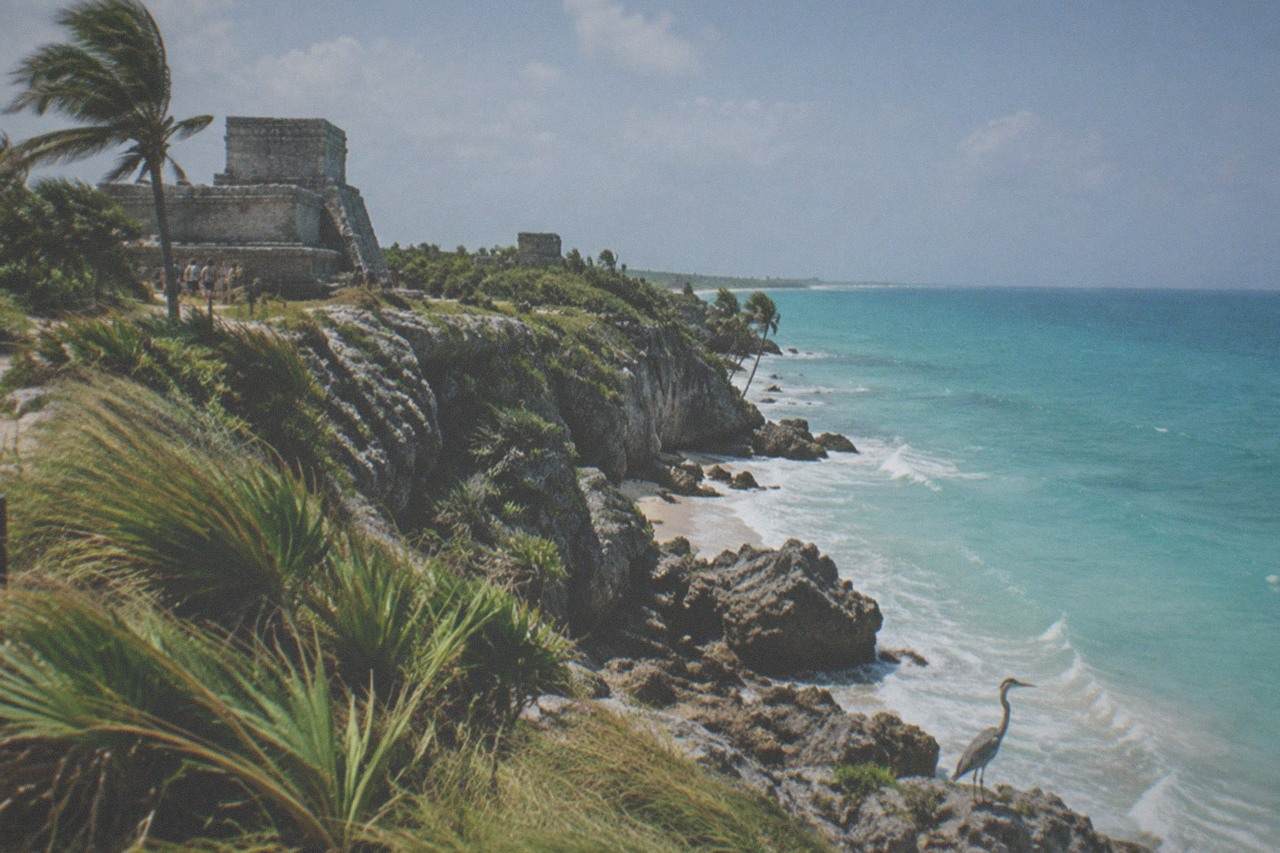
Yes, for most travelers the Tulum ruins are worth visiting, and the reasons are concrete. This is the only major Maya city built directly on a cliff over the Caribbean, the unified entrance fee settled at 265 MXN for foreign visitors after a July 2026 decree, and a realistic visit runs 1.5 to 3 hours. The one honest caveat is crowding between 10:00 and 15:00, a scheduling problem rather than a reason to skip it.
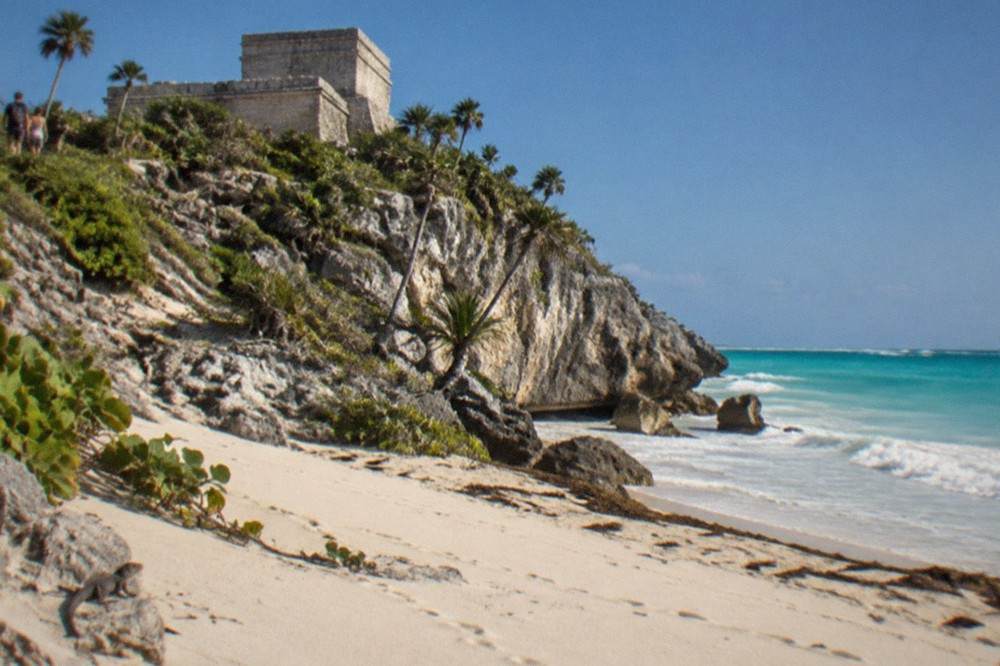
The setting does most of the work here. Nearly every other Maya site in the Yucatán sits inland, wrapped in jungle: Coba under a canopy of ceiba trees, Chichen Itza on open scrubland, Ek Balam in dry forest. Tulum alone faces the open Caribbean, with El Castillo standing on a roughly 12 meter limestone cliff and turquoise water below it. When Juan de Grijalva's 1518 expedition sailed past, the chronicler compared the walled, painted city to Seville. That first impression is still the one that lands when you walk through the gate.
The second reason is practical: the price dropped. Early 2026 had pushed the foreign fee to around 210 MXN or more, before the mid-July 2026 decree unified and reduced the charges. Now one payment at the gate covers both the INAH archaeological zone and the CONANP/Parque del Jaguar access, with no second window. The full fee picture, including who pays what, is covered in detail in the next section, and in the Tulum ruins tickets and fees guide.
The third reason is time budget. At 1.5 to 3 hours on site, Tulum fits a morning without consuming a vacation day. You can pair it with a cenote swim, a beach afternoon, or nothing at all. For travelers deciding between Tulum and the region's bigger names, the Tulum ruins versus Chichen Itza comparison works through that trade-off directly.
If you already know the answer is yes and only need the logistics, three formats cover most situations:
How Much Does It Cost To Enter The Tulum Ruins?
Foreign visitors pay 265 MXN (roughly $13-15), Mexican nationals and residents pay 80 MXN, and since the July 2026 decree this is one unified gate fee covering both the INAH zone and the CONANP/Parque del Jaguar access. Fees are set by INAH and CONANP and can change, so confirm on arrival. Parking runs about 80-100 MXN per car at the main lot.
The unified fee is the single biggest recent change at this site, and it works in the visitor's favor. In January 2026 Tulum was placed in INAH's top fee category with a general rate around 210 MXN, before the higher combined charges drew criticism during a rough tourism year, and the "Plan Tulum Renace" decree of July 17, 2026 pulled the numbers back down and merged the payments. Reporting on that fee history is tracked at Riviera Maya News, and the official current figures live on INAH's Tulum zone page.
| Item | Mexican nationals / residents | Foreign visitors | Notes |
|---|---|---|---|
| Unified entrance fee | 80 MXN | 265 MXN | One gate fee, covers INAH + CONANP/Parque del Jaguar |
| Sunday entry | Free with valid ID | Full price | Longstanding INAH policy, still in effect |
| Parking, Parque del Jaguar lot | ~80-100 MXN per car | ~80-100 MXN per car | Cash preferred in many reports |
| Optional electric shuttle, lot to gate | ~20 MXN adult | ~20 MXN adult | About 10 MXN for children, short flat walk otherwise |
Two details matter for planning. First, the walk from the parking lot to the ruins entrance takes roughly 5 to 10 minutes on a flat paved path, and the optional shuttle cart costs about 20 MXN per adult if the heat is winning. Second, Sunday is not a free day for foreign tourists: the free-entry policy applies to Mexican nationals and foreign residents with valid ID, and Sunday is actually one of the busier days precisely because of that policy. The INAH announcement on free Sunday access states the eligibility plainly.
Guides at the gate are optional, not mandatory. Reported rates for a small-group on-site guide run roughly 600-800 MXN for about 90 minutes, which is a real cost but not a required one. If you would rather lock in a guide before you arrive, the cheapest guided option on this site starts at $18 and can be reserved ahead with free cancellation on the tour page.
How Long Does A Visit Take, Really?
Plan for 1.5 to 3 hours inside the archaeological zone, with most of that time spent on a compact loop past El Castillo, the Temple of the Frescoes and the Temple of the Descending God. The site is small by regional standards, the walk from parking adds 5-10 minutes each way, and adding the beach cove below the cliffs easily stretches a quick loop toward the longer end of that range.
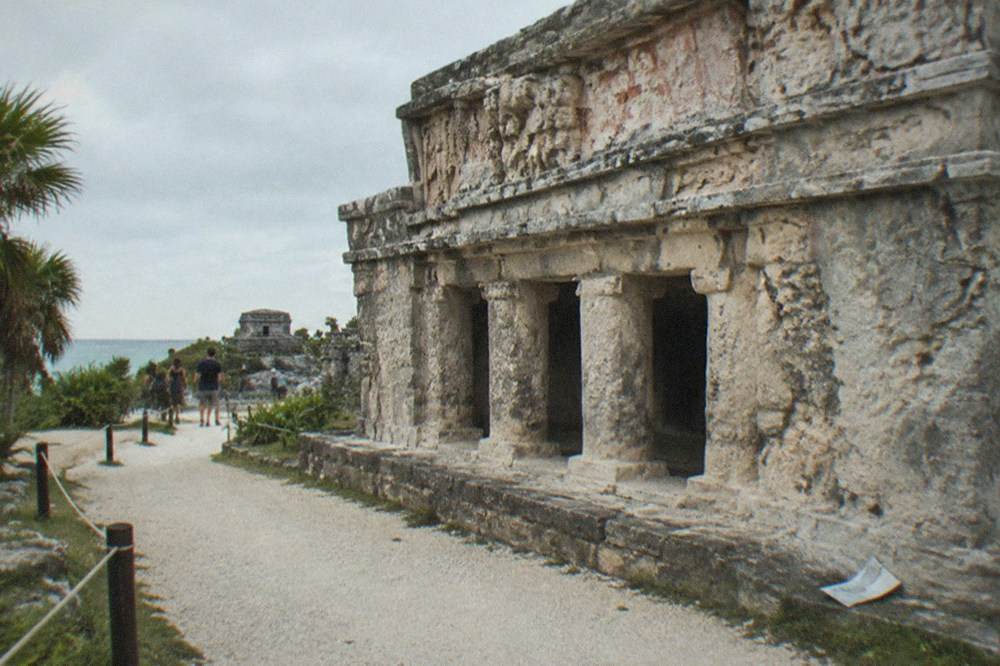
The compactness cuts both ways. Visitors who arrive expecting something on the scale of Chichen Itza sometimes feel the site is over quickly, and that reaction is fair: the walled ceremonial core held only several hundred residents at its peak, with most of the population living outside the walls. But a short visit is not a thin visit when the structures are this distinctive. The Temple of the Frescoes carries faded murals in the Mixteca-Puebla style, dated to around 1450 AD, with red, blue and yellow pigment outlined in black. The Temple of the Descending God takes its name from the stucco figure of a winged, diving deity above its doorway, possibly the bee god Ah Muzencab, a motif tied to the region's honey trade.
The beach is the variable most first-time visitors underestimate. Playa Ruinas, a small protected cove below El Castillo, is reached by a wooden staircase from inside the zone, and swimming there is possible when conditions allow. Bring a swimsuit if you want it; a quick photo stop becomes a 45-minute detour fast. There is no swimmable cenote inside the archaeological zone itself, despite the name of one structure there, the Casa del Cenote, which is a building, not a swim spot. Nearby cenotes like Gran Cenote sit outside the ruins and are reached separately, often via the combo tours.
What Makes The Setting Different From Other Maya Sites?
Tulum is the region's only major Maya site built on a sea cliff, it was a functioning trading port rather than an inland ceremonial capital, and its wall enclosed the city on three landward sides with the Caribbean serving as the eastern boundary. That combination of ocean, wall and commerce produces a site that looks and feels unlike Coba, Chichen Itza or Ek Balam.
The history explains the view. Tulum, likely called Zamá, "dawn," in its own era, was a Late Postclassic coastal city whose main visible architecture dates roughly 1200 to 1550 AD, though Stela 1 at the site carries a date of 564 AD, hinting at much earlier origins as a possible dependency of nearby Tancah. The city's wealth came from its harbor: a gap in the offshore reef and a landing beach let canoes trade cotton, cacao, obsidian from as far as Guatemala, jade and copper items, likely feeding into networks run by Mayapán and Putún traders after about 1250 AD. Tulum also served as the coastal port for inland Coba, which is why the two sites pair naturally on a single day trip.
The wall itself is the name: "Tulum" is Yucatec for wall or palisade, a colonial-era label for a fortification that averages 3 to 5 meters high and up to 8 meters thick in places. In an unstable Postclassic era, that wall defended the city and likely regulated trade traffic through its gates. The broader Tulum-Tancah area may have supported up to 15,000 people around the time of Spanish contact, and the site stayed occupied for roughly 70 years after contact before abandonment and disease emptied it by the end of the 16th century. By 1579 it was already described as ruins.
Guided Tour Or Self-Guided: Which Fits You?
A guided tour fits travelers who want the murals, the trade history and the descending god explained in context, and the cheapest guided option on this site costs from $18 per person for a 1.15 hour walk. Self-guided fits confident independent visitors who read ahead, since guides are optional at the gate and the site's signage is limited. Budget and curiosity, not ability, decide this one.
The case for a guide is the case for the site's details. The faded murals, the Toltec-influenced columns on El Castillo, the possible lighthouse function of that same temple, and the reef gap that made the harbor work are all things a guide narrates in about an hour and a half and a placard summarizes in a sentence. The Tulum Archaeological Zone guided walking tour, rated 4.9 across 109 reviews and priced from $18, has the lowest headline price on this list and includes beach access at Parque del Jaguar, with the park entrance fee paid separately and mandatory, and transport not included. More of these guides are collected on Tulum Ruins Tours.
Travelers who want the site largely to themselves, or who want a guide's full attention, have a private option. The private half-day Tulum ruins tour, 4.9 across 239 reviews and from $159, runs 4 hours with air-conditioned transport, bottled water, snacks and all fees included, which makes it a different product class rather than a premium version of the same walk.
| Approach | Typical cost | Time on site | Best for |
|---|---|---|---|
| Self-guided, own transport | 265 MXN entry plus colectivo or taxi | 1.5-3 hours | Independent travelers who read ahead |
| Guided walking tour | Price shown on the tour page | ~1.15 hours guided, more on your own | First-time visitors wanting context |
| Private half-day tour | From $159, fees included | 4 hours total | Families, photographers, early arrivals |
| Ruins plus cenote combo | From $36, entry ~265 MXN extra | 6 hours | Visitors wanting a swim on the same ticket |
The deeper version of this decision, including early-access options and what a guide actually adds at each structure, is laid out in the guided versus self-guided Tulum ruins guide.
What Are The Downsides Worth Knowing Before You Go?
The honest downsides are crowding between 10:00 and 15:00, midday heat on a site with little shade, a fee and access history that has been unstable over the past year, and the fact that no structure at Tulum can be climbed. None of these are disqualifying, but each one shapes when and how you should visit, and pretending otherwise would make this verdict worth less.
Crowds first. Tulum's visitor numbers actually dropped about 20 percent in 2025 to roughly 1.03 million, the lowest non-pandemic figure since 2010, partly linked to the fee and access disputes around Parque del Jaguar. Even so, the site is compact and tour buses concentrate between mid-morning and mid-afternoon, so the middle of the day is when the narrow paths feel busiest. Arriving at the 8:00 opening, or coming after 15:00, changes the experience dramatically.
Heat second. The loop is exposed, the Yucatán sun is direct, and the dry season highs of roughly 28-30°C feel hotter on stone. Water, a hat and closed walking shoes are the standard kit, and the site's own guidance points the same way. The what to bring to the Tulum ruins guide covers the packing list in full.
Climbing third. Tulum's structures are not open to climbing, period. If standing on a pyramid matters to you, that changes the regional calculus: Coba's Nohoch Mul reopened to climbers in December 2025 on a new wooden staircase with small-group limits, and Ek Balam's Acropolis is climbable via steep stone steps with a rope assist, while Chichen Itza's El Castillo has been climb-banned since 2006. The are the Coba ruins worth seeing piece works through that alternative.
When Is The Best Time To Visit?
Arrive at the 8:00 opening, ideally on a weekday outside the March and September equinox windows, and plan the dry season months of November through April for the most comfortable conditions. The site opens daily 8:00-17:00 with last entry at 15:30, and the quietest windows are the first two hours and the late afternoon.
The seasonal logic is straightforward. Dry season, roughly November to April, brings less rain, lower humidity and daytime highs around 28-30°C in the peak December-to-March stretch, at the cost of larger crowds and higher prices. Rainy and hurricane season, June to November with peak risk in September and October, brings afternoon showers and possible disruption, but thinner crowds. Sargassum seaweed mainly affects the beaches rather than the ruins themselves, though it can touch the cove below El Castillo.
The time-of-day logic matters more than the month. Tour buses from Cancún and the Riviera Maya land mid-morning, so the 8:00-to-10:00 window is the calm one, and the last two hours before closing recover some of that quiet. The full hour-by-hour pattern, including why Sunday is busier despite the free national entry, is broken down in the Tulum ruins hours and best time guide.
The Verdict, And Who Should Skip It
The verdict stands: for a first-time visitor to the Riviera Maya with half a day or less, the Tulum ruins are worth the fee and the early alarm, because no other site in the region delivers ocean, wall and history in one compact loop. Skip or defer it only if you have already seen it, if you specifically want a climbable pyramid, or if your single day is better spent at Chichen Itza.
For most itineraries the decision is not actually Tulum versus nothing. It is Tulum alone, Tulum plus a cenote, or Tulum plus Coba. The combo logic favors travelers staying in the Riviera Maya: the ruins and two cenotes half-day tour, rated 4.4 across 1,166 reviews and from $36, bundles hotel pickup, the guided ruins visit and swims at two cenotes, with Tulum's entrance fee paid separately at the gate. That product turns a 2-hour ruins visit into a 6-hour day without any of the driving falling on you.
For the fuller regional picture, including how Tulum stacks against Muyil's biosphere quiet and Ek Balam's climbable Acropolis, the Mayan ruins near Tulum comparison is the site's dedicated head-to-head resource. Whichever way you choose, this much is stable: the cliff, the wall and the reef gap have been worth the trip since Grijalva's sailors said so in 1518, and the current fee structure makes the math easier than it has been at any point in the past year. More on planning the whole visit, including transport options from town, is in the getting to the Tulum ruins guide.
Common Questions About Visiting The Tulum Ruins
Are Tulum Ruins Worth Visiting?
Yes, for most travelers. The cliff-top Caribbean setting is unique among Maya sites, the unified foreign entrance fee of 265 MXN is lower than it was earlier in 2026, and a realistic visit of 1.5 to 3 hours fits easily into a half day. The main caveat is midday crowding, which you avoid by arriving at the 8:00 opening.
How Much Does It Cost To Enter The Tulum Ruins?
Foreign visitors pay 265 MXN (roughly $13-15) and Mexican nationals and residents pay 80 MXN, as one unified gate fee covering both the INAH zone and the Parque del Jaguar access. Parking runs about 80-100 MXN per car. Fees are set by INAH and CONANP and can change, so confirm on arrival. Plan for 1.5 to 3 hours inside the zone. A quick loop of the main structures takes about 90 minutes, and the beach cove below El Castillo, reached by a wooden staircase, easily adds another hour if you swim. The walk from parking adds 5-10 minutes each way. No. Climbing is not permitted on any structure at Tulum. If standing on a pyramid matters to you, Coba's Nohoch Mul reopened to climbers in December 2025 under small-group limits, and Ek Balam's Acropolis is climbable with a rope assist, while Chichen Itza's El Castillo has been closed to climbing since 2006. Only for Mexican nationals and foreign residents with valid official ID. Foreign tourists pay the full 265 MXN fee on Sundays, and Sunday is actually one of the busier days at the site because of the free national entry. No. The Casa del Cenote is a named structure within the site, not a swim spot, and no swimmable cenote sits inside the archaeological zone. There is ocean beach access at the Playa Ruinas cove, and nearby cenotes like Gran Cenote are outside the ruins and reached separately, often via combo tours.How Long Do You Need At The Tulum Ruins?
Can You Climb The Structures At The Tulum Ruins?
Is Sunday Free At The Tulum Ruins?
Is There A Cenote Inside The Tulum Ruins?