Which Is Better, Tulum Ruins Or Chichen Itza?
An honest site-versus-site comparison of the Tulum ruins and Chichen Itza, answered by traveler priority rather than a single winner.
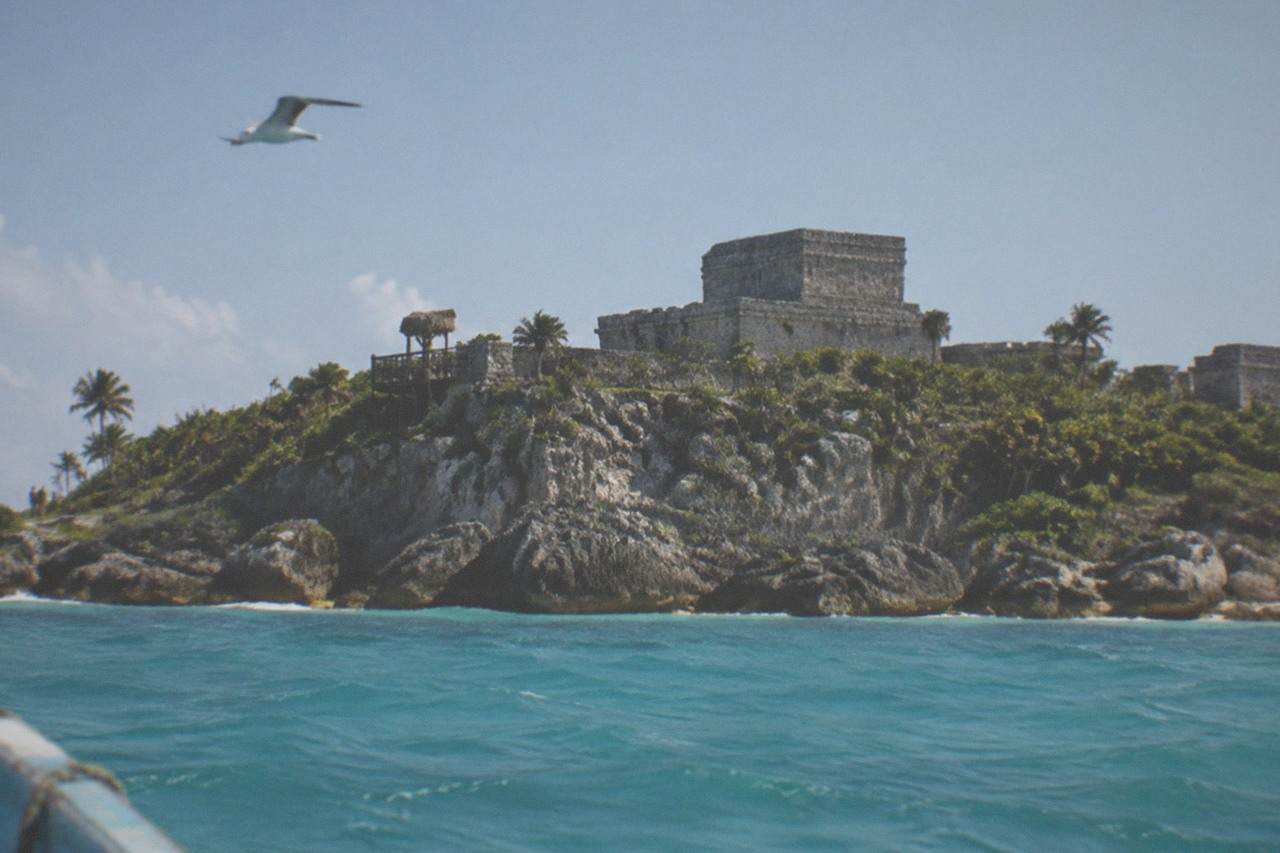
The Tulum ruins sit on a limestone cliff above the Caribbean, a walled Postclassic trading port you can walk end to end in under two hours. Chichen Itza sprawls across the flat Yucatán interior as one of the New Seven Wonders of the World, roughly 153 km and about two hours from Tulum via the toll road. Travelers ask which one deserves the limited days of a Riviera Maya trip, and the honest answer is that the question has no single winner: the two sites reward completely different priorities. This comparison lays out what each one actually offers, what each costs, and which traveler type each suits, using verified fees, climb rules and tour data rather than brochure language.
Which Is Better, Tulum Ruins Or Chichen Itza?
Tulum is better for ocean-cliff scenery, short trip length and low logistical effort, while Chichen Itza is better for monumental scale, Wonder-of-the-World status and the deepest single-site Maya experience in the region. A traveler with one relaxed half-day should choose Tulum; a traveler with a full day and a hunger for the big pyramid should choose Chichen Itza. The verdict genuinely depends on your priorities, not on a universal ranking.
The case for Tulum is setting and convenience. No other major Maya site ends at a turquoise cove, and the walled core, El Castillo perched roughly 7.5 m above the sea on a cliff, reads as a postcard from nearly every angle. The site is small. Most visitors spend 1.5 to 3 hours on site, and the gate is a colectivo ride of a few minutes from Tulum town. A guided walking tour of the zone, such as the tulum-archaeological-zone-guided-walking-tour at from $18, runs just 1.15 hours and includes beach access at Parque del Jaguar. You can see Tulum, swim at the cove and be back in town for a late lunch.
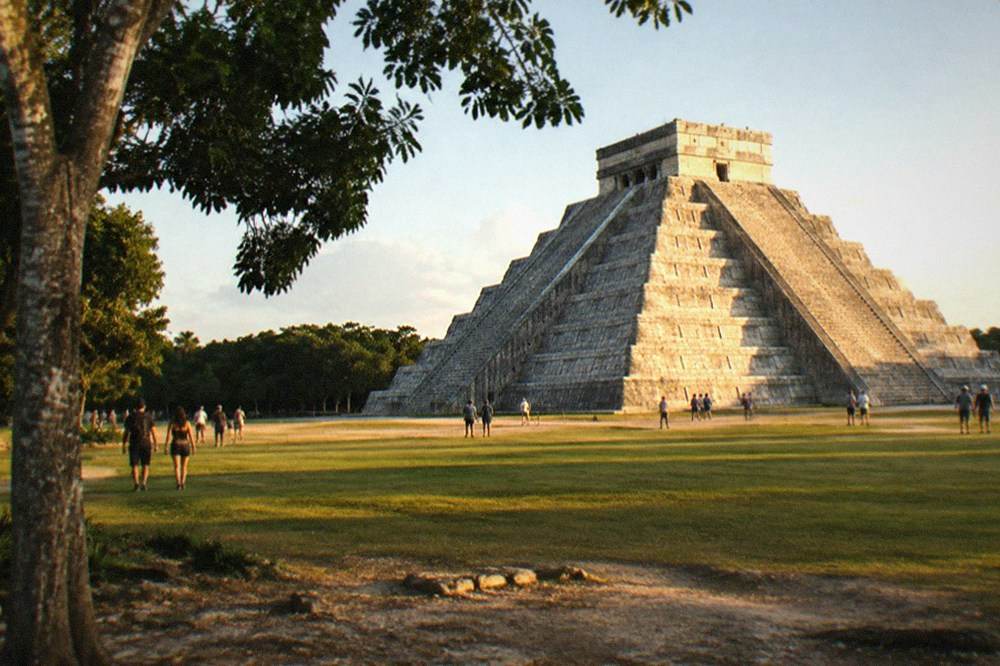
The case for Chichen Itza is scale and status. El Castillo, the Pyramid of Kukulkan, is the single most famous pre-Hispanic structure in the Americas, and the surrounding site, the Great Ball Court, the Temple of the Warriors, the Sacred Cenote, carries an architectural weight Tulum cannot match. Tulum's visible architecture dates mostly to the Postclassic, roughly 1200 to 1550 AD, a late, smaller, coastal chapter of the Maya story. Chichen Itza's peak centuries produced monuments on a completely different order of magnitude. It is a full-day commitment from Tulum, but it is the day most first-time visitors remember longest.
For a fuller walk-through of each site on its own terms, the Tulum ruins site guide covers the structures and history in depth, and the Chichen Itza from Tulum guide does the same for the day trip north. Read those after this verdict if one site has already pulled ahead for you.
What Does Each Site Actually Offer?
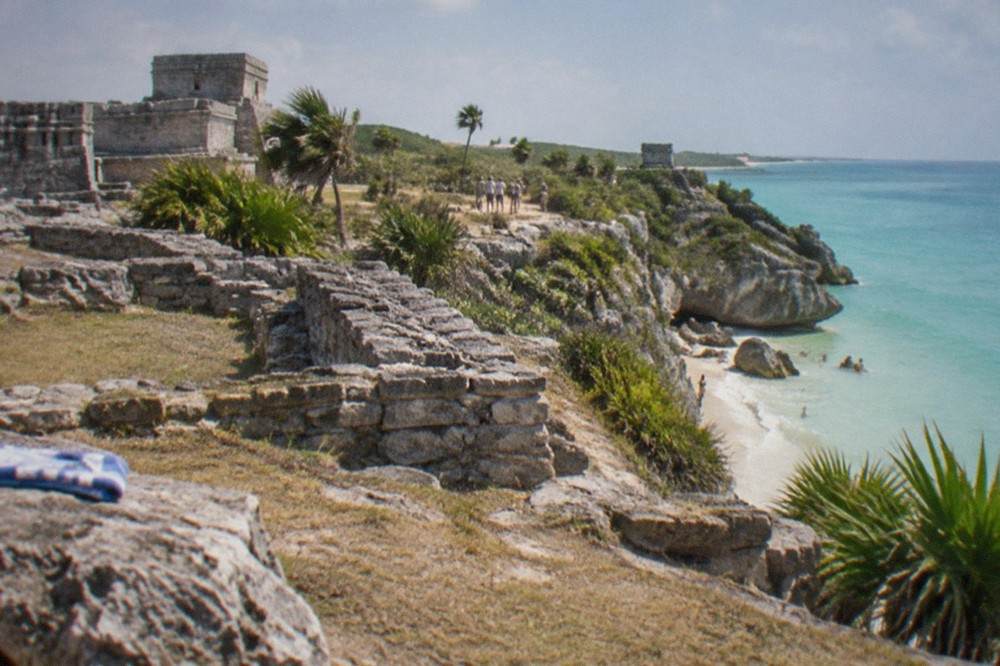
Tulum offers a compact cliffside city with a swimmable cove, faded murals, a three-sided defensive wall and a 90-minute core loop. Chichen Itza offers a vast ceremonial center with El Castillo, the Great Ball Court and the Sacred Cenote, at roughly 4 to 10 square km of core. Tulum is intimate and photogenic; Chichen Itza is monumental and, for many visitors, genuinely awe-inducing.
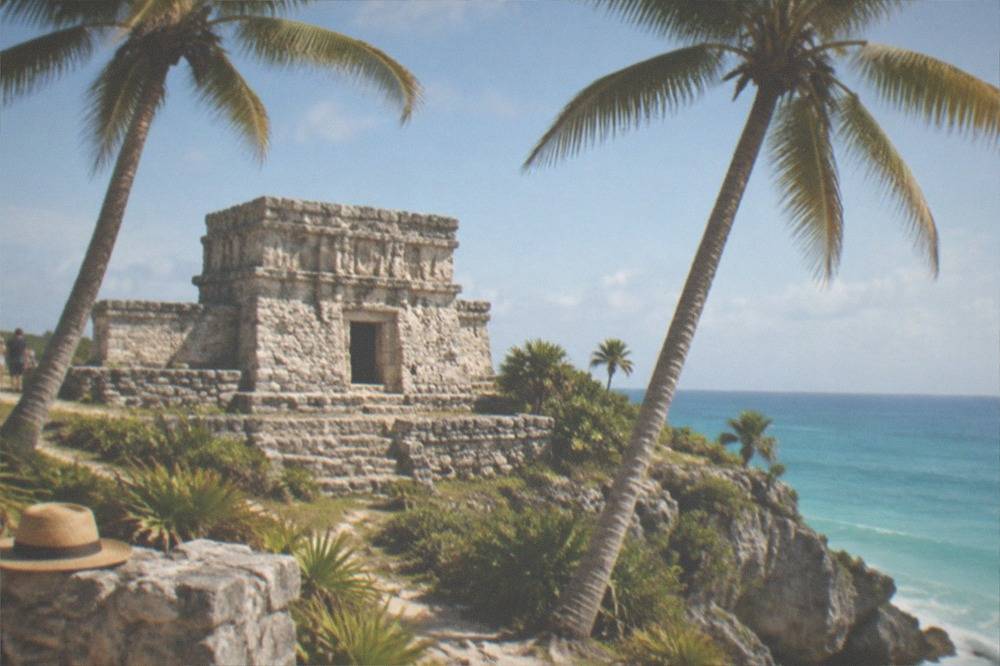
At Tulum the highlights cluster close together. The Temple of the Frescoes carries murals in the Mixteca-Puebla style, some dated around 1450 AD, plus stucco reliefs of the descending god and Chac masks. The Temple of the Descending God takes its name from the winged diving figure above its doorway, possibly the bee god Ah Muzencab, a nod to the region's honey trade. The wall itself, averaging 3 to 5 m high and up to 8 m thick, encloses the site on three landward sides while the cliffs guard the east. Below El Castillo, a wooden staircase drops to Playa Ruinas, a small protected cove where swimming is possible. There is no swimmable cenote inside the zone; Casa del Cenote is a named structure, not a swim spot, and the famous cenotes like Gran Cenote sit outside the gate.
Chichen Itza plays a different game. El Castillo dominates the great plaza, and its climb ban, in force since 2006, keeps visitors at a respectful distance, but the geometry alone is worth the trip. The Great Ball Court is the largest in Mesoamerica. The Temple of the Warriors and its forest of columns, the skull platform and the Sacred Cenote round out a circuit that easily fills three to four hours at a walking pace. Vendors line the paths in a way Tulum's site does not, which some travelers find part of the atmosphere and others find wearing by midday. The trade is simple: you give up the sea breeze and gain the biggest ceremonial architecture in the Yucatán.
For scale: Coba's territory ran roughly 70 to 80 square km with an estimated 5,000-plus structures, dwarfing Chichen Itza's compact 4 to 10 square km core, and Tulum was a modest coastal port of a few hundred residents inside the wall. Scale rankings and experience rankings are not the same thing. Tulum's smallness is precisely why it pairs so well with a cenote swim on the same half-day, which is exactly what the riviera-maya-tulum-ruins-and-2-cenotes-half-day-tour does, pairing a guided ruins visit with swims at two cenotes over about 6 hours, with Tulum's entrance fee paid separately at the gate (roughly 265 MXN, about US$13-15 per foreign adult).
How Do The Costs Compare?
A foreign visitor pays 265 MXN, roughly $13 to $15, to enter the Tulum zone under the unified post-July 2026 fee, while Chichen Itza runs about 697 MXN, roughly $35 to $40, split between federal and Yucatán state fees. Add transport and the gap widens: Tulum is a cheap colectivo hop, Chichen Itza is a two-hour drive each way.
| Cost item | Tulum ruins | Chichen Itza |
|---|---|---|
| Foreigner entrance fee | 265 MXN (roughly $13-15) | ~697 MXN (roughly $35-40), minor source variance |
| National/resident fee | 80 MXN | ~298-310 MXN weekdays with ID |
| Getting there from Tulum town | Colectivo ~20-30 MXN; taxi ~150-200+ MXN one way | ~153 km drive, ~2 hours each way; tour transport or rental car plus tolls |
| Parking | ~80-100 MXN at the Parque del Jaguar lot | ~80 MXN reported |
| Typical visit length | 1.5-3 hours | 3-4 hours on site, 10-12 hours door to door from Tulum |
Fees are set by INAH and CULTUR and can change, so confirm on arrival. The Tulum figure is the confirmed unified gate fee covering the INAH zone plus the CONANP/Parque del Jaguar access in one payment, per INAH's official Tulum page. The Chichen Itza figure is a current reasonable range from secondary sources with minor variance, split between a ~105 MXN federal portion and a ~592 MXN state portion, and you can check the entrance fee breakdown before you go. Sunday free entry applies to Mexican nationals and foreign residents with valid ID at INAH-run sites; foreign tourists still pay full price, and Sundays are among the busiest days.
The tour economics mirror the gate economics. Tulum-only guided products run from $18 to $159, with the private half-day option, tulum-ruins-tour-private-half-day at 4.9 from 239 reviews, carrying all fees and transport. Chichen Itza day trips from Tulum run from $90 to $214, and the price usually buys the two-hour drive, a guide and often a cenote and lunch. Neither site is expensive by international standards, but Tulum is the clear budget pick once transport is counted.
Can You Climb The Pyramids At Either Site?
No. Climbing is banned at both: Tulum's structures have never been open to visitors to scale, and El Castillo at Chichen Itza has been climb-banned since 2006, with barriers and the interior, including the Red Jaguar Throne, fully closed. Travelers who want to stand on a Maya pyramid need a third site, Coba or Ek Balam, not a winner of this matchup.
This is the point where the head-to-head breaks down and a third option enters. Coba's Nohoch Mul pyramid, 42 m and the tallest in the region, reopened to climbers around December 8, 2025 after roughly six years closed, with a new wooden staircase over the original stone steps, small groups of 14 to 15 at a time, an 8:00 to 15:30 climbing window, a roughly 15-minute summit limit and a closed-toe grip shoe requirement, per 2026 reporting on the reopening. Ek Balam's Acropolis, El Trono, about 43 m tall, is climbable via steep stone steps with a rope assist. Those two sites are the region's honest answer to "I want to climb one."
For this matchup the takeaway is simpler: if standing atop a pyramid is the goal, neither Tulum nor Chichen Itza delivers it, and the comparison should shift to a Coba and Tulum combination instead. The private-tour-coba-and-tulum-ruins-from-cancun product, 5.0 from 27 reviews and from $347.83, bundles both sites with entrances and buffet lunch included over 9 to 11 hours, and it exists precisely because some travelers refuse to choose.
Which Site Fits Your Trip Length?
Tulum fits a half-day, even a long morning, and can be combined with a cenote swim in the same outing. Chichen Itza demands a full day, roughly 10 to 12 hours door to door from Tulum, and punishes anyone who tries to squeeze it between other commitments. If your itinerary has a free afternoon, Tulum wins by default; if it has a free day, Chichen Itza earns it.
The arithmetic is unforgiving. The drive from Tulum to Chichen Itza is roughly 153 km, about two hours each way on the 180D toll road, per drive-time reporting. Add three to four hours on site, a cenote stop and lunch, and the standard day trips run about 10 to 12 hours total. The From Tulum: Chichen Itza, Cenote & Valladolid Tour, the cheapest Chichen Itza tour from Tulum, runs a full 12 hours with hotel pickup from Tulum, a bilingual guide and a regional buffet lunch. That is a commitment, and in tropical heat it is a bigger one than it looks on paper.
Tulum, by contrast, is a 1.5 to 3 hour site experience sitting minutes from your hotel if you are staying in Tulum. The guided tour from Cancun and the Riviera Maya, tulum-ruins-guided-tour-from-cancun-and-riviera-maya at 4.8 from 502 reviews and from $67, compresses the whole thing into two hours at the site plus transport. Even the full combo products stay inside a half-day window: the riviera-maya-tulum-ruins-and-2-cenotes-half-day-tour covers ruins plus two cenote swims in about 6 hours. The practical verdict is that Tulum is the only one of the two that fits a trip built around beach time, and Chichen Itza is the one that requires you to build the day around it.
What About Crowds And Timing?
Tulum is busiest 10:00 to 15:00 and on weekends, with roughly 1.03 million visitors in 2025, down about 20 percent from the prior year. Chichen Itza peaks mid-morning to mid-afternoon and on equinox days, and arriving by 7:45 to 8:15 AM on a Tuesday to Thursday is the standard advice. Both reward an opening-time arrival; Chichen Itza punishes a midday one harder.
Tulum's crowd pattern is manageable because the site turns over quickly. Arrive at the 8:00 opening or come late afternoon, and the cliff paths stay walkable; show up with the tour buses between 10:00 and 15:00 and you will queue for the classic photo spots. The 2025 visitor drop, the lowest non-pandemic figure since 2010, was tied to fee changes and access disputes, and the current unified fee has simplified the gate, but the midday pattern has not changed. Hours are daily 8:00 to 17:00 with last entry at 15:30.
Chichen Itza's midday is a different beast. Buses from Cancun and Playa del Carmen land from late morning, and between 11:00 and 14:00 the great plaza combines peak crowds, peak heat and peak vendor activity. The calm window runs from opening at 8:00 until roughly 10:00 to 10:30, which is why every serious planning guide says arrive by 7:45 to 8:15 on a weekday, ideally Tuesday to Thursday. Equinox days around March 20 to 21 and September 22 to 23 draw enormous numbers to the serpent-shadow phenomenon and should be avoided unless that spectacle is the entire point of the trip.
Season matters for both. The dry season, roughly November to April, brings lower humidity and less rain; the rainy and hurricane season, June to November with peak risk in September and October, brings afternoon storms, cheaper rates and thinner crowds. Sargassum mainly affects beaches rather than the ruins themselves, so it should not drive this particular decision.
The Verdict By Traveler Type
Choose Tulum if you value the ocean setting, have half a day or less, are staying in or near Tulum, or want to pair ruins with a cenote swim. Choose Chichen Itza if you want the Wonder-of-the-World scale, have a full day free, accept a two-hour drive, or may never return to the Yucatán. Split travelers should do both, on different days.
| Traveler type | Better pick | Why |
|---|---|---|
| Short stay in Tulum, 1-2 days | Tulum | The site is minutes away and fits a morning |
| Once-in-a-lifetime Yucatán trip | Chichen Itza | The scale and status justify the full day |
| Beach-first vacation, ruins second | Tulum | Cliff views plus a swim, back by lunch |
| History and archaeology focused | Chichen Itza | Deepest ceremonial architecture in the region |
| Travelers who want to climb a pyramid | Neither | Coba or Ek Balam instead |
| Families with young kids | Tulum | Short loop, beach cove, easy exit |
| Photography driven | Tulum | Ocean-cliff backdrops beat flat jungle plaza |
Two honest caveats sharpen the table. First, Chichen Itza's 4.0-rated day trip in this comparison, chichen-itza-day-trip-from-tulum-including-cenote-and-lunch at 4.0 from 293 reviews, is the site's lowest-rated product, kept because it is real and verified, and its rating is a reminder that a long day with a weak operator sours even a great site. The stronger small-group option, chichen-itza-cenote-and-valladolid-small-group-day-trip, 4.9 from 2,207 reviews and from $214, adds a cenote swim and lunch with Tulum hotel pickup over about 10 hours, and the review pool suggests it consistently delivers. Second, Tulum's magic depends heavily on timing: the same site is a serene morning and a shuffling queue by noon, so whichever you choose, choose your hour deliberately.
If the comparison has left you wanting a third option entirely, the best Maya ruin to visit question widens the field to Coba, Ek Balam and Muyil, and Tulum Ruins Tours covers all of them in depth. For most travelers, though, this matchup resolves itself the moment they look at their calendar: the free half-day goes to Tulum, the free full day goes to Chichen Itza, and the rare lucky trip with room for both gets both.
Common Questions About Tulum Ruins Versus Chichen Itza
Which Is Better, Tulum Ruins Or Chichen Itza?
There is no single winner. Tulum is better for ocean-cliff scenery, a short half-day visit and easy access from Tulum town; Chichen Itza is better for monumental scale, Wonder-of-the-World status and the deepest single-site Maya experience in the region. Decide by priority: setting and convenience point to Tulum, scale and status point to Chichen Itza.
Can You Do Both Tulum And Chichen Itza In One Day?
It is possible but rushed. The drive alone is about two hours each way, so a combined day means a quick Tulum stop early and a compressed Chichen Itza visit, with little margin for a cenote or lunch. Most travelers do better splitting them across two days, or choosing one and adding a cenote instead.
Is Chichen Itza Worth The Drive From Tulum?
For most first-time visitors, yes. El Castillo and the Great Ball Court are the most famous monuments in the Maya world, and the standard small-group day trips from Tulum, roughly 10 to 12 hours, bundle transport, a guide, a cenote swim and lunch. Travelers with only a free half-day should stay in Tulum instead.
Are The Tulum Ruins Worth Visiting If You Have Already Seen Chichen Itza?
Yes, because the two are different experiences. Chichen Itza is vast, flat and monumental; Tulum is small, walled and perched over the Caribbean with a swimmable cove below El Castillo. Tulum's Postclassic coastal trading port story, its murals and its setting give it a character Chichen Itza does not replicate.
Which Site Is Cheaper To Visit?
Tulum, clearly. The unified foreigner fee is 265 MXN, roughly $13 to $15, and the site is a short colectivo hop from town. Chichen Itza's combined foreigner entrance is about 697 MXN, roughly $35 to $40, plus a two-hour drive each way. Fees are set by INAH and CULTUR and can change, so confirm on arrival.
Which Site Has Fewer Crowds?
Tulum at opening time and Chichen Itza before 10:00 AM are both pleasant. Chichen Itza's midday, roughly 11:00 to 14:00, is the most crowded and hottest window at either site. At Tulum, avoid 10:00 to 15:00 and weekends; at Chichen Itza, arrive by 7:45 to 8:15 AM on a Tuesday to Thursday and skip the equinox dates.