What Are The Mayan Ruins In Tulum?
The Mayan ruins in Tulum are a walled Late Postclassic coastal city with El Castillo, the Temple of the Frescoes, the Temple of the Descending God and the Casa del Cenote, perched on Caribbean cliffs. Here is what each structure is, what it costs to visit, and how it differs from the area's other ruin sites.
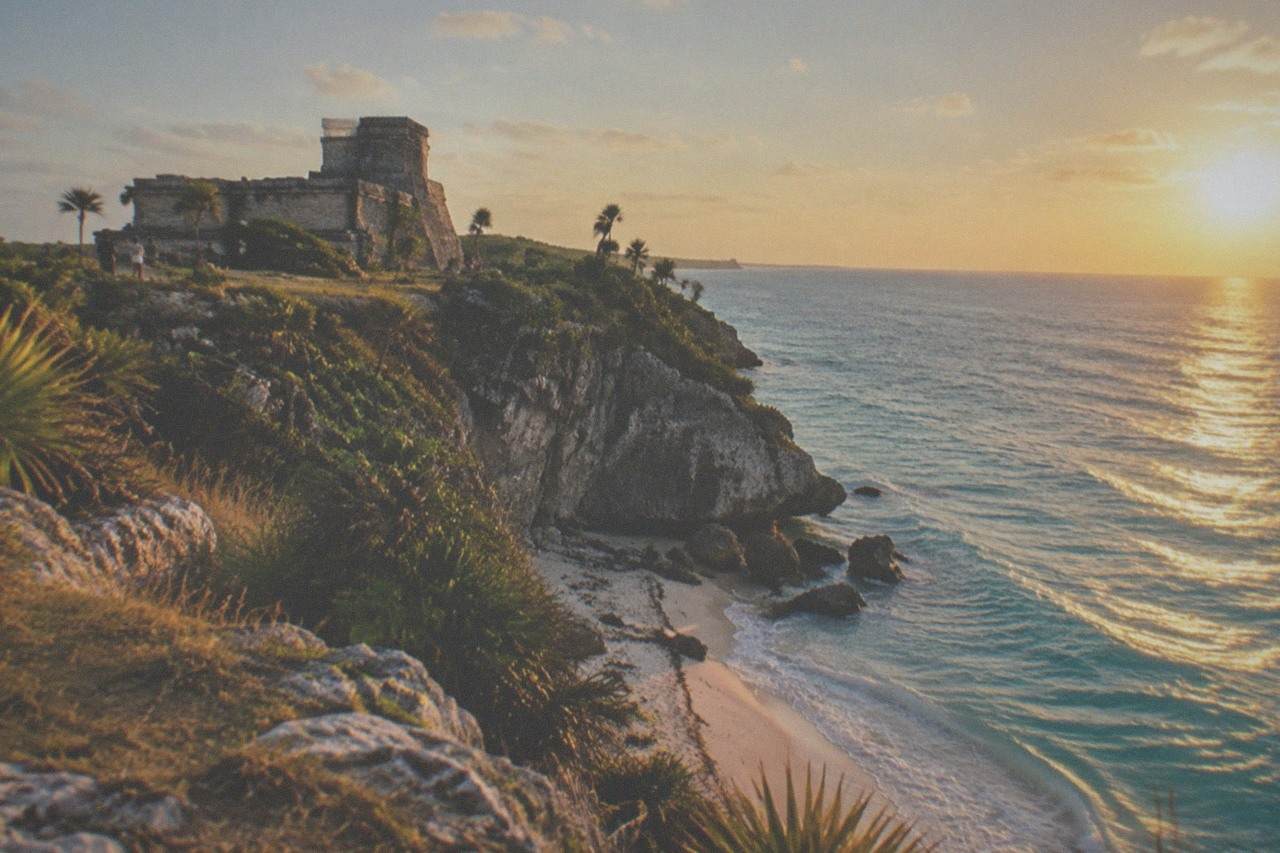
The Mayan ruins in Tulum are a single archaeological zone on a low cliff above the Caribbean, a walled trading city the Maya called something close to Zamá, "dawn", before the colonial name Tulum, "wall", stuck. Most travelers picture one pyramid. The site is actually a compact complex of temples, palaces, a fortress wall and a small cove beach, and it is only one of a dozen Maya sites you can reach from the town that borrowed its name. That distinction, the ruins versus the day trips, confuses a remarkable number of itineraries.
What Are The Mayan Ruins In Tulum?
The Mayan ruins in Tulum are the remains of a Late Postclassic Maya coastal city, occupied roughly 1200 to 1550 AD, enclosed by a stone wall on three landward sides and by 12-meter sea cliffs on the fourth. The structures visitors see inside are El Castillo, the Temple of the Frescoes, the Temple of the Descending God, the Casa del Cenote and several palace groups, all managed by INAH as one ticketed archaeological zone.
The site's own history is older than its main buildings. Stela 1, a carved stone slab found at Tulum, carries a date of 564 AD, and Structure 59 shows Classic-period architectural traits, which suggests the location mattered to the Maya long before the walled city rose. The visible city, though, is a product of the last centuries before Spanish contact, when Tulum worked as a trading port between the provinces of Cochuah and Cozumel. Cotton, cacao, obsidian from as far away as Guatemala, jade and copper items moved through a reef gap and a landing beach below El Castillo, and the site likely served as the coastal outlet for inland Coba.
The first Europeans to see it were unimpressed in an unintentionally flattering way. Juan de Grijalva's 1518 expedition sighted a large walled settlement with painted buildings in red, blue and yellow, a prominent tower and a ceremonial fire, and the chronicler compared its size to Seville. The city survived roughly seventy years after contact, then emptied out amid conquest and disease; by 1579 a Spanish administrative report described it as ruins.
If you want the full structure-by-structure walkthrough with maps and photos, the Tulum ruins site guide covers every stop on the circuit in order. The short version of what you are buying a ticket to:
| Structure | What it is | What to look for |
|---|---|---|
| El Castillo | Temple-pyramid on a 12 m cliff, about 7.5 m tall | Reef-gap alignment, possible beacon or lighthouse role for canoe pilots |
| Temple of the Frescoes | Two-story building, part solar observatory | Faded Mixteca-Puebla murals, diving god reliefs, Chac masks |
| Temple of the Descending God | Small temple, west-facing doorway | Winged descending figure in stucco, possibly the bee god |
| Casa del Cenote | Named structure near the north wall | A building, not a swimmable cenote, a common mix-up |
| The wall | 3-5 m high, up to 8 m thick, three landward sides | Five gates, defensive and trade-control roles |
| Playa Ruinas | Small cove beach below El Castillo | Wooden staircase down, swimming possible |
None of Tulum's structures are open to climbing, on any of them. The paths are for viewing, and INAH enforces that firmly. For most visitors a guide earns its keep here, because the signage is thin and the murals and reliefs are faded enough that a pointing finger helps a great deal. Three ways of seeing the site sit at different price points:
The cheapest of those, the guided walking tour, covers the zone in about 1.15 hours and includes beach access through Parque del Jaguar, though the government entrance fee is mandatory and paid separately at the gate. The private half-day option, from $159, adds air-conditioned transport, water and snacks with all fees included over four hours. The combo option, from $36, pairs the ruins with swims at two cenotes over six hours, with the entrance fees paid separately at the gate.
El Castillo: The Watchtower Over The Caribbean
El Castillo is Tulum's tallest and most prominent structure, a temple-pyramid about 7.5 meters high standing on a roughly 12-meter cliff above the sea. It was built in phases with Toltec-influenced elements including plumed serpent columns, and its windows and alignments likely helped it work as a beacon guiding trading canoes through the reef gap to the landing beach below.
It is the building on every postcard, and the one most visitors assume they can climb. They cannot. Tulum's structures have been off-limits to climbing for years, and the barrier lines around El Castillo are watched. The reward for respecting them is the view itself: from the clifftop platform you can read the whole logic of the site, the wall closing off the landward approach, the reef gap in the water below, and the cove where cargo canoes once landed.
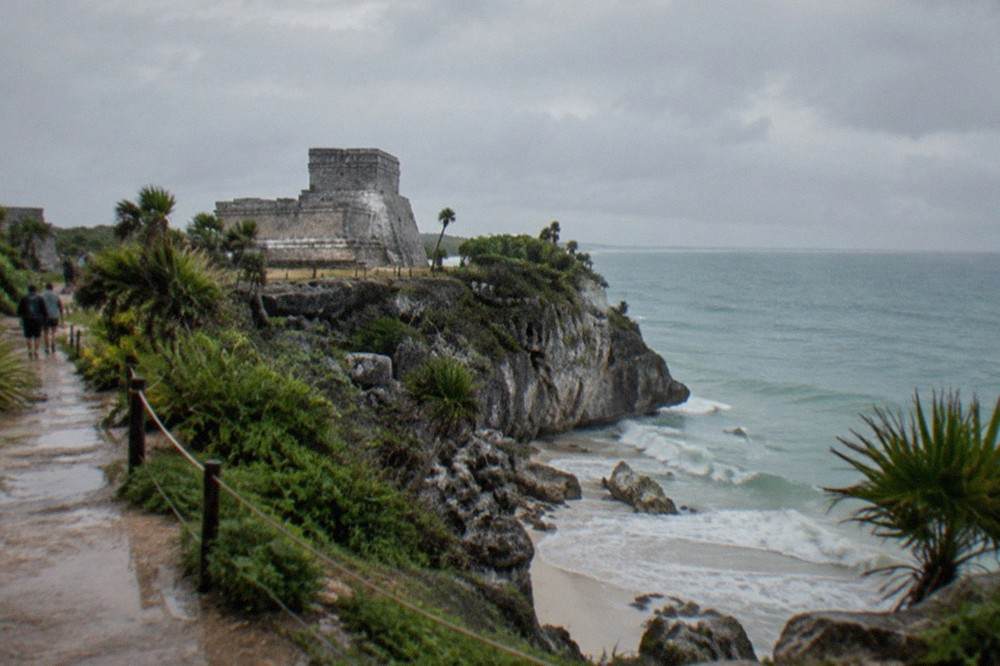
The beacon theory is worth pausing on, because it is what makes El Castillo more than a pretty ruin. Researchers studying the building's windows and sightlines argue that from out at sea, a fire or light placed in the structure would line up with the reef gap at night, marking the one safe passage through the barrier reef. A trading port whose most prominent building doubles as a lighthouse tells you what this city was actually for. The Maya were not building a fortress first. They were running a harbor, and the wall came later, in an unstable era, to protect it.
The Temple Of The Frescoes And The Descending God
The Temple of the Frescoes is a two-story building that served partly as a solar observatory, decorated with faded murals in the Mixteca-Puebla style, stucco reliefs of the descending god and Chac masks. The Temple of the Descending God is a smaller temple named for the winged figure diving headfirst above its western doorway, possibly the bee god Ah Muzencab, a motif that repeats across the site.
The murals are the reason this building matters more than its size suggests. Painted in red, blue and yellow with black outlines, some dated to around 1450 AD, they show deities, celestial bodies, agriculture and daily scenes including corn grinding. Time and salt air have faded them badly, but the outlines survive, and the Mixteca-Puebla style tells archaeologists the city was plugged into trade networks reaching far into highland Mexico. A guide genuinely changes what you see here; the panels are small and easy to walk past.
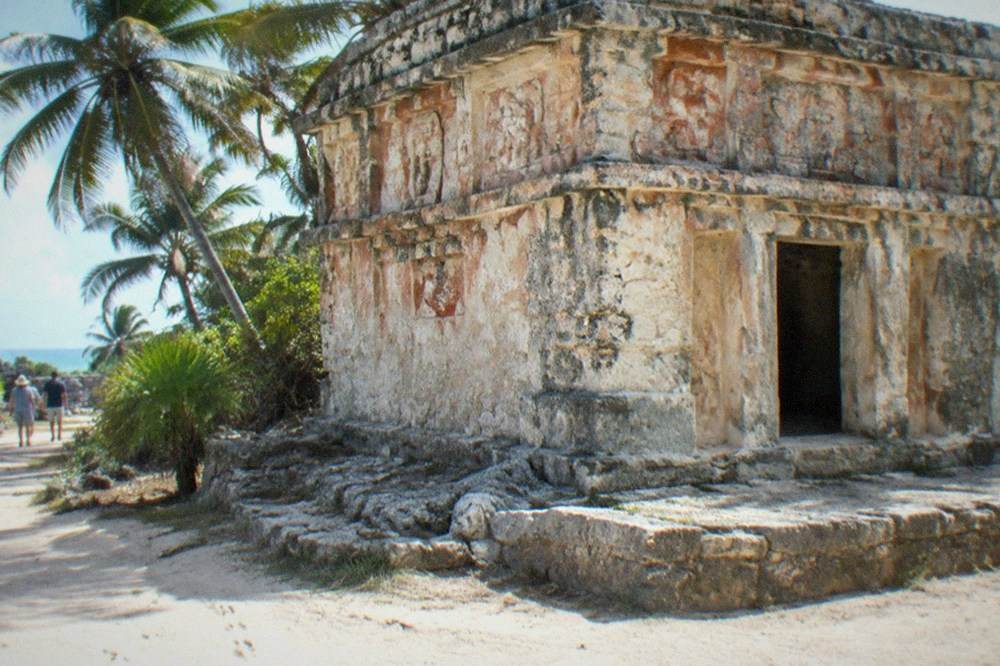
The descending god is Tulum's signature image. The winged figure, arms spread, plunging headfirst, appears above the doorway of the small temple that carries his name and again on other buildings around the site. Who he is remains genuinely unsettled: candidates include the bee god Ah Muzencab, Venus, the setting sun, or some combination tied to the honey trade, which was a real Postclassic industry on this coast. That ambiguity is honest, and any guide who tells you definitively is telling you a story. A good one will say so.
Both buildings sit within a few minutes' walk of El Castillo, and both are stops on essentially every guided circuit of the site. If the fading murals and the interpretive guesswork are the part of the visit you care about, the private half-day tour from $159, with a guide to yourself for four hours, is the format that gives you the most time at them without a group pulling you along.
The Casa Del Cenote Structure And The City Wall
The Casa del Cenote is a named structure inside the archaeological zone, not a swimmable cenote, despite what its name suggests to visitors. The city wall encloses the site on its three landward sides, averaging 3 to 5 meters high and up to 8 meters thick, with the Caribbean cliffs serving as the eastern boundary, and it is the wall that gave Tulum its colonial-era name.
The Casa del Cenote mix-up is worth correcting plainly, because it sends people to the site expecting a swim inside the gate. There is no swimmable cenote in the Tulum archaeological zone. What the name marks is a building near the north wall, and the swimming inside the site happens at Playa Ruinas, the small cove below El Castillo reached by a wooden staircase. Real cenotes, Gran Cenote and others, sit nearby but outside the zone, and they are reached separately, most easily on one of the ruins-and-cenote combo tours that leave from Tulum.
The wall itself repays a slow look. A roughly 400-meter section runs parallel to the sea, with shorter perpendicular arms closing the north and south approaches, and a secondary inner wall in places. Five gates pierce it. In the unstable Postclassic era it provided defense, but it probably also regulated access and trade through a city whose walled core housed only a few hundred people, with most residents living outside. The broader Tulum-Tancah area may have supported up to 15,000 people around the time of Spanish contact, which tells you the wall was less about hiding and more about controlling a busy commercial street.
Which Other Ruins Can You Reach From Tulum?
The other Maya ruins reachable from Tulum are Coba about 45 minutes northwest, Muyil about 20 to 25 minutes south inside the Sian Ka'an Biosphere Reserve, Chichen Itza about two hours west, and Ek Balam about 1.5 to 2 hours away in Yucatan state. None of these are "the Tulum ruins", they are separate sites with separate fees, and tour listings that say "Tulum" in the title sometimes visit them instead.
This is the confusion this page exists partly to fix. A traveler books something called a Tulum tour and can end up at any of four sites, or at two of them in one day. Coba is the region's only major pyramid you can currently climb, its Nohoch Mul staircase having reopened around December 2025 with a wooden stairway, small-group limits and a roughly 15-minute summit window. Chichen Itza bans climbing on El Castillo entirely, and has since 2006. Ek Balam permits climbing its Acropolis via steep stone steps with a rope assist. Tulum permits climbing on nothing. The four sites sort travelers neatly by what they want to do.
| Site | From Tulum | Foreigner entrance fee (MXN) | Climbing allowed |
|---|---|---|---|
| Tulum | At the site | 265 MXN (roughly $13-15) | No |
| Coba | ~45 min, ~42-48 km | ~310-330 MXN total (roughly $17-19) | Yes, Nohoch Mul, regulated |
| Muyil | ~20-25 min, ~18-25 km | 145 MXN | No |
| Chichen Itza | ~2 h, ~153 km | ~697 MXN (roughly $35-40) | No, banned since 2006 |
| Ek Balam | ~1.5-2 h, ~121-130 km | ~691 MXN (roughly $35-40) | Yes, Acropolis, rope assist |
All fees are set by INAH and CULTUR and can change, so confirm on arrival; the Coba and Chichen Itza figures in particular carry minor variance across current sources. The Tulum figure is the most solid, set by a July 2026 federal decree that unified the INAH and Parque del Jaguar charges into one gate payment, per the official INAH zone page.
If your plan is ruins plus a swim, the combo format does the logistics for you. The Riviera Maya half-day tour pairs the Tulum ruins with swims at two cenotes over six hours, from $36 per person, with hotel pickup, water, snacks, life vests and lockers included and the entrance fees paid on top. It carries a 4.4 rating across 1,166 reviews, a large pool by the standards of this coast.
For a wider comparison across all the area's sites, including the quieter ones most day-trippers skip, the Mayan ruins near Tulum comparison lays out travel times, fees and crowd levels side by side. The short answer for most first visits: see Tulum itself first, then add Coba if climbing matters to you, or Muyil if quiet matters more.
How Much Does It Cost To Enter The Tulum Ruins?
Entry to the Tulum archaeological zone costs 265 MXN for foreign visitors, roughly $13 to $15, and 80 MXN for Mexican nationals and residents, as one unified gate fee covering both the INAH zone and the Parque del Jaguar access. The site opens daily 8:00 to 17:00 with last entry at 15:30, and Sunday free entry applies only to Mexican nationals and residents with valid ID, not to foreign tourists.
The unified fee is recent and worth knowing about, because older guides online still quote the higher pre-decree rates. Fees roughly doubled in January 2026 to around 210 MXN before a July 2026 federal decree cut and unified them to the current 80/265 MXN structure, a shift covered in local reporting on the fee changes. Parking runs about 80 to 100 MXN per car at the Parque del Jaguar lot, followed by a flat 5-to-10-minute walk to the entrance, or an optional electric shuttle at about 20 MXN per adult. INAH's Sunday free-entry policy is the source of the persistent myth that Sundays are free for everyone; they are not, and Sundays are among the site's busiest days because of it.
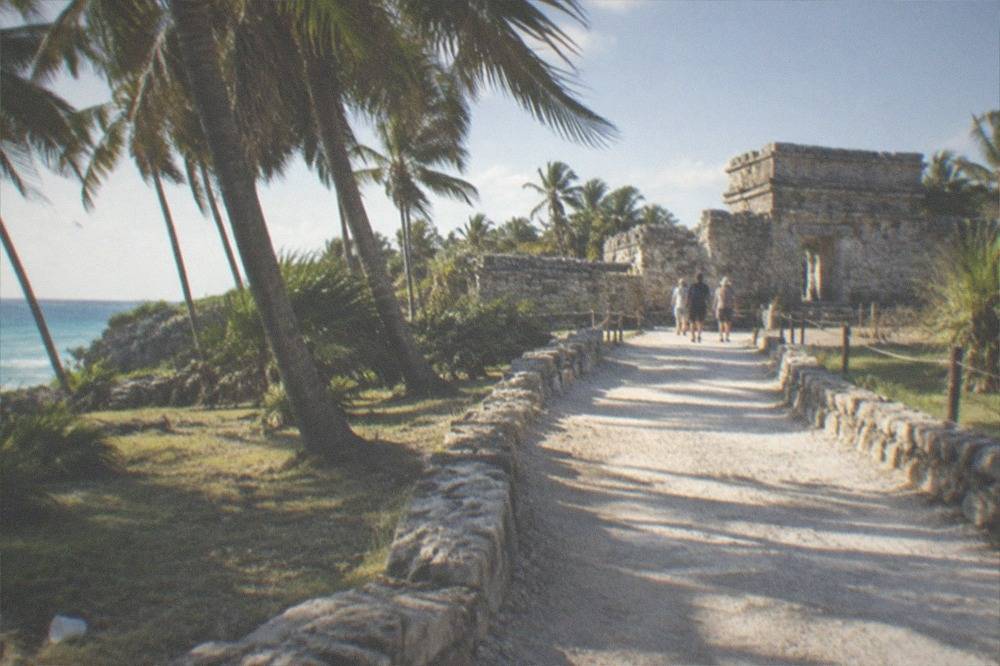
Guides are optional at the gate, not mandatory, which surprises people who have read otherwise. Independent guides at the entrance typically run around 600 to 800 MXN for a small group for a roughly 90-minute circuit, while the bookable walking tour from $18 per person covers the same ground in about 1.15 hours with beach access included and holds a 4.9 rating across 109 reviews. Whether a guide is worth it at this particular site comes down to the murals: the Temple of the Frescoes panels and the descending god reliefs are the two things a self-guided visitor most often walks straight past.
Most visitors spend 1.5 to 3 hours inside the zone, longer with beach time. The crowd pattern is predictable: busiest from about 10:00 to 15:00 and on weekends, calmest at the 8:00 opening and in the late afternoon. For the full timing, packing and transport picture, the Tulum ruins tickets and fees guide carries the detail, and the question of whether the site justifies the fee gets a straight answer in are the Tulum ruins worth visiting.
One planning note that belongs here rather than buried elsewhere: the site is genuinely walkable from town without a tour. Colectivo vans run from Tulum Pueblo toward the ruins every 10 to 15 minutes for roughly 20 to 30 MXN per person, and taxis run about 150 to 200 MXN one way. A tour buys you interpretation and logistics, not access; the gate sells the same ticket either way. This site, Tulum Ruins Tours, exists because the guided version is worth it at this particular site, but the honest baseline is that you can always walk in.
Common Questions About The Mayan Ruins In Tulum
What Are The Mayan Ruins In Tulum?
The Mayan ruins in Tulum are a walled Late Postclassic coastal city, occupied roughly 1200 to 1550 AD, set on cliffs above the Caribbean. The main structures are El Castillo, the Temple of the Frescoes, the Temple of the Descending God, the Casa del Cenote and the surrounding wall, all inside one INAH-managed ticketed zone.
Are the Tulum ruins the same as the Chichen Itza ruins?
No. They are separate sites about two hours apart by road. Tulum is a small walled coastal city with no climbing permitted; Chichen Itza is a far larger inland site whose great pyramid has been closed to climbing since 2006. Tours from Tulum town visit either or both, but they are distinct archaeological zones with separate entrance fees.
Can you climb the pyramid at the Tulum ruins?
No. Climbing is prohibited on all structures at Tulum, and the barriers around El Castillo are enforced. If climbing a Maya pyramid is the goal, Coba's Nohoch Mul reopened to climbers around December 2025 with a wooden staircase and regulated access, and Ek Balam's Acropolis is climbable with a rope assist.
Is there a cenote inside the Tulum ruins?
No. The Casa del Cenote is a named building, not a swim spot, and there is no swimmable cenote inside the archaeological zone. There is a small beach cove, Playa Ruinas, below El Castillo where swimming is possible. Swimmable cenotes like Gran Cenote sit nearby but outside the site, and are usually visited on combo tours.
How old are the Tulum ruins?
The visible city was built mainly between roughly 1200 and 1550 AD, in the Late Postclassic period. The location is older: Stela 1 at the site carries a date of 564 AD, and some structures show Classic-period traits, suggesting the spot was significant centuries before the walled city rose.
How much time do you need at the Tulum ruins?
Most visitors spend 1.5 to 3 hours inside the zone, with the longer end including beach time at Playa Ruinas. The site is compact compared with Coba or Chichen Itza, so a half day including travel from town is generous, and several tours pair it with cenote swims in a single six-hour outing.