How Much Does It Cost To Enter The Tulum Ruins?
The real cost of entering the Tulum ruins: the unified 265 MXN foreign-visitor gate fee, parking, shuttle, and how it stacks against tours from $18 and combos from $36.
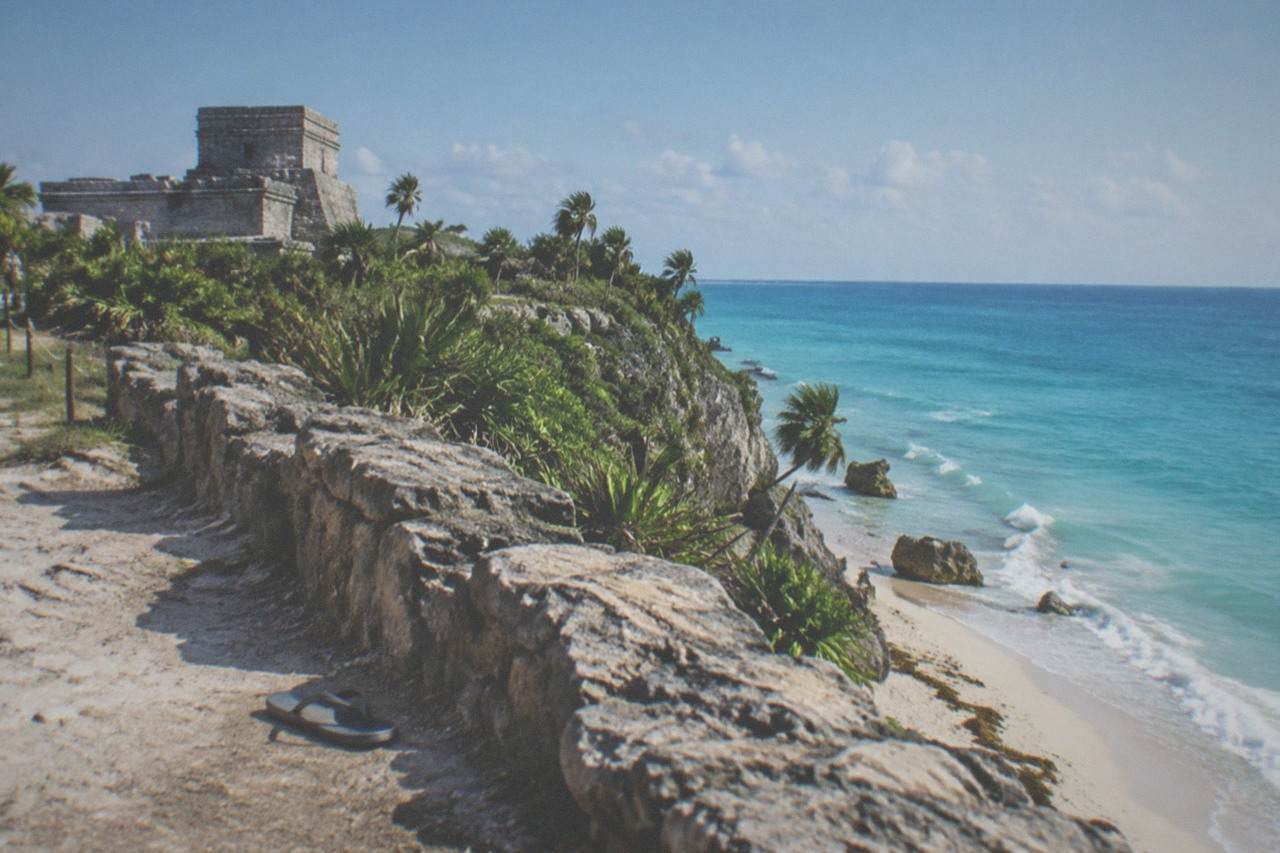
The Tulum archaeological zone charges a single unified gate fee: 80 MXN for Mexican nationals and residents, 265 MXN for foreign visitors, roughly $13-15 at recent exchange ranges. That one payment, set by the July 2026 federal decree, covers both the INAH archaeological zone and the CONANP/Parque del Jaguar access that every visitor must pass through. There is no second ticket window inside.
That is the headline number, but it is not the whole budget. Parking runs about 80-100 MXN per car at the Parque del Jaguar lot, an optional electric shuttle costs about 20 MXN per adult for the stretch between lot and gate, and a guide, if you want one, is extra. Fees are set by INAH and CULTUR and can change, so confirm on arrival. This page does the full math, then stacks the DIY total against the cheapest packaged tour on this list at $18 and compare the cheapest ruins-plus-cenote combos against the 265 MXN foreigner entrance fee and DIY transport costs.
How Much Does It Cost To Enter The Tulum Ruins?
Foreign visitors pay 265 MXN (roughly $13-15) at the gate, and Mexican nationals and residents pay 80 MXN. Since the July 2026 decree, this is one unified fee covering the INAH zone plus the CONANP/Parque del Jaguar access, so there is no separate park payment anymore. Fees are set by INAH and can change, so confirm on arrival.
The 265 MXN figure is worth pausing on, because it is lower than what many recent guidebooks and older blog posts still print. Early 2026 rates had climbed to around 210 MXN for the INAH portion alone, before the Parque del Jaguar access charge was stacked on top, and the combined cost for foreigners briefly ran higher than that. A federal decree published in July 2026 unified and reduced the whole structure to the current 80/265 MXN split. If you read a price above 265 MXN for the gate itself, that source predates the decree.
Hours matter as much as the price. The zone opens daily at 8:00 and closes at 17:00, with last entry at 15:30, and there is no weekly closure. Sunday entry is free for Mexican nationals and foreign residents with valid ID, per longstanding INAH policy, but foreign tourists pay the full 265 MXN every day of the week. Sundays are also among the busiest days at the gate for exactly that reason.
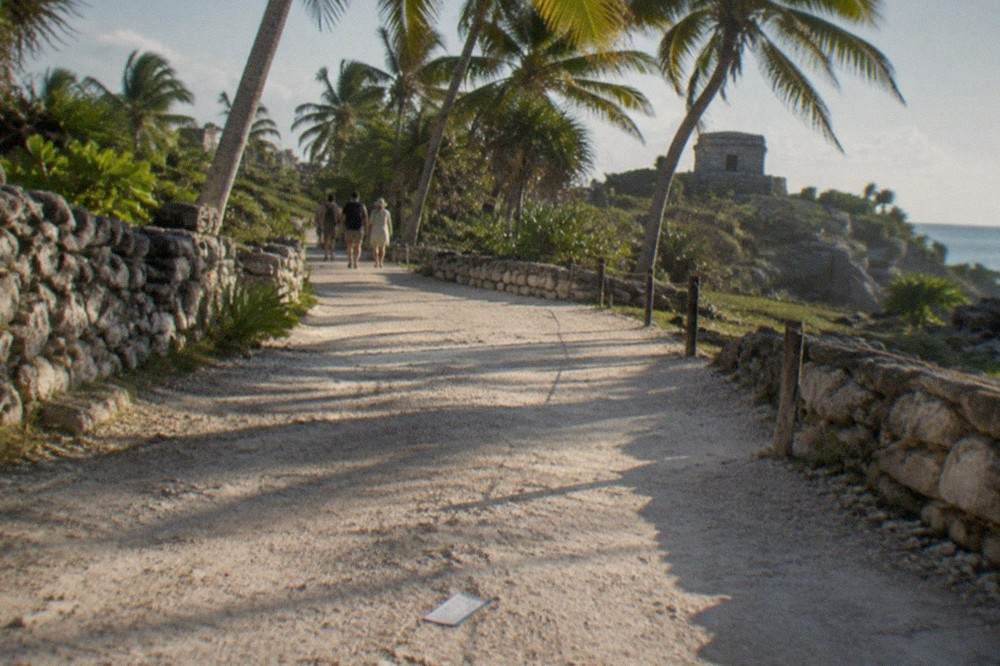
Here is the gate math in one place:
| Cost item | Mexicans/residents | Foreign visitors | Notes |
|---|---|---|---|
| Unified gate fee | 80 MXN | 265 MXN (about $13-15) | One payment, covers INAH zone plus Parque del Jaguar access |
| Sunday entry | Free with valid ID | 265 MXN, no discount | Free entry applies to nationals and residents only |
| Parking, Parque del Jaguar lot | ~80-100 MXN per car | ~80-100 MXN per car | Cash preferred, operator-managed |
| Optional electric shuttle, lot to gate | ~20 MXN adult, 10 MXN child | Same | The walk is roughly 5-10 minutes if you skip it |
The official INAH page for the zone carries the current figures and is the right place to check before you go: the INAH Tulum archaeological zone listing.
For a fuller breakdown of ticketing, hours and the fee's recent history, the site's own Tulum ruins tickets and fees guide goes deeper than this page does.
Once you know the gate number, the natural next question is what a packaged visit costs, because at Tulum the gap between DIY and a tour is smaller than at almost any other Maya site. Here are the three ways most visitors actually spend the money:
What Does The 265 MXN Fee Actually Cover?
The unified fee covers entry to the archaeological zone and the Parque del Jaguar corridor every visitor walks through to reach it, in one payment with no add-ons at the gate. It does not cover parking, the optional shuttle, guides, food, or any cenote: there is no swimmable cenote inside the ruins zone, and nearby cenotes are reached separately.
The "one fee, two agencies" structure is the part that confuses people, so it is worth spelling out. Before the decree, visitors effectively paid twice: an INAH archaeological fee, then a separate CONANP/Parque del Jaguar charge for the access corridor and beach area the park controls. The July 2026 unification merged them into the single 265 MXN foreign-visitor payment. The reporting on that fee history, including the earlier doubling, is covered in local Riviera Maya news coverage.
Inside the gate, the fee buys you the full walled site: El Castillo on its cliff, the Temple of the Frescoes, the Temple of the Descending God, and the wooden staircase down to Playa Ruinas, the small protected cove where swimming is possible when conditions allow. Casa del Cenote, despite the name, is a structure, not a swim spot. Most visitors spend 1.5 to 3 hours inside.
What the fee does not cover is where budgets drift. Parking, the shuttle, a guide if you want one, water, and any cenote swim are all separate line items. A common planning mistake is budgeting only the gate fee for a "ruins and cenote" day, when the cenote part of that day is by definition outside the archaeological zone and costs extra, either paid on arrival at the cenote or bundled into a combo tour.
If you are weighing whether the whole visit justifies the money rather than simply what it costs, the are the Tulum ruins worth visiting verdict works through that question with the same numbers.
How Much Does Parking And Getting There Add?
Parking at the Parque del Jaguar lot costs roughly 80-100 MXN per car, and the optional shuttle from lot to gate about 20 MXN per adult, so a couple driving themselves adds around 100-140 MXN before the entry fee. Colectivos from Tulum Pueblo run about 20-30 MXN per person, and taxis about 150-200 MXN or more one way.
The access math depends entirely on where you start. From Tulum Pueblo, the shared colectivo vans toward the ruins highway stop run every 10 to 15 minutes and cost roughly 20-30 MXN per person, dropping you with a short walk to the entrance. A taxi from town runs about 150-200 MXN one way. ADO buses serve the Pueblo terminal in central Tulum, not the ruins gate, so bus arrivals still need a colectivo or taxi for the last leg. The site's getting to the Tulum ruins guide maps all of these options against each other.
For a family of four arriving by rental car, the pre-entry stack looks like this: 100 MXN parking, then 80 MXN for the shuttle if nobody wants the walk, since the cart inside the park runs about 20 MXN per adult. Entry fees at the gate come on top of that. The same four people on a packaged tour pay one per-person price and skip the parking line entirely, which is the real reason the short guided walking tour on this list is interesting: check the listing to confirm the entrance fee is not included in that price.
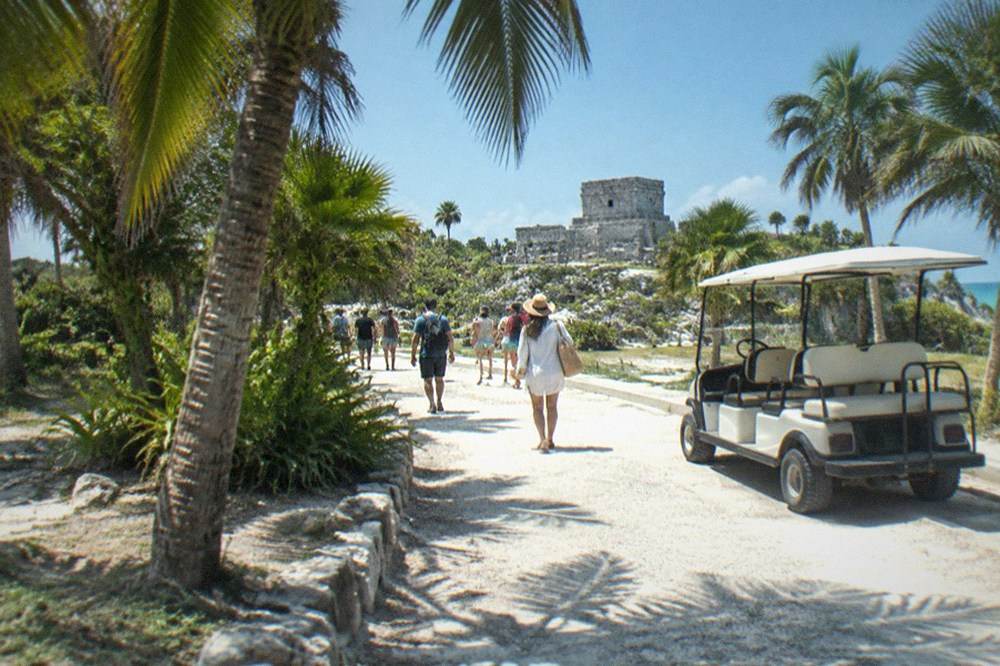
Timing changes the experience more than the price. The gate is busiest roughly 10:00 to 15:00 and on weekends, and arriving at the 8:00 opening or later in the afternoon means shorter lines at the same fee. The best time to visit the Tulum ruins covers the crowding patterns in detail.
Is A Guided Tour Cheaper Than Paying Separately?
The cheapest guided option on this lineup, the Tulum Archaeological Zone guided walking tour, starts at $18 per person for a 1.15-hour guided walk, less than the 265 MXN gate fee plus transport would cost a solo foreign visitor arriving independently. Its 4.9 rating comes from 109 reviews; park entry is a separate government fee, not an optional add-on.
This is the counterintuitive part of Tulum budgeting: because the cheapest packaged tour on this list undercuts the DIY stack for anyone not already in Tulum town, the "tour versus independent" question is not purely about price. The walking tour includes beach access at Parque del Jaguar and a guided walk of the zone, with entrance fees paid separately rather than bundled in, so the exact all-in number depends on the current INAH and park fees at the gate. Transport to the meeting point is not included.
Compare that with the DIY floor for a foreign visitor staying in Tulum: 265 MXN entry, roughly 40-60 MXN round trip by colectivo, and no guide. That is cheaper than $18, barely, and you get no interpretation. Tulum's structures carry limited on-site signage, which is the honest argument for a guide anywhere in the Yucatan, and it is laid out properly in the guided tour versus self-guided comparison.
For visitors who want the guide, the transport, and the fees handled in one price rather than assembled at the gate, the private half-day option runs from $159 for four hours with air-conditioned transport, water, snacks, and all fees included, carrying a 4.9 rating from 239 reviews. That is the premium end of the same decision, not a different one.
What Does A Ruins-Plus-Cenote Day Cost In Total?
The cheapest ruins-plus-cenote combo on this list runs from $36 per person: the Riviera Maya Tulum Ruins and 2 Cenotes half-day tour, rated 4.4 across 1,166 reviews. It includes hotel pickup and drop-off, the guided ruins visit, swims at two cenotes, water and snacks, and vest and locker, with entrance fees for the sites paid separately at the gate.
The combo math is the one place where the "tour or independent" question has a clean answer. A DIY ruins-plus-cenote day for one foreign visitor looks like 265 MXN entry, colectivo or taxi to the ruins, colectivo or taxi onward to a cenote, a cenote admission typically in the 150-350 MXN range depending on the site, and no guide at either stop. The combo covers transport, a guide, and two cenote swims in one booking, while the roughly 265 MXN (about $13 to $15) adult entrance fee, collected separately by the operator, covers access to the ruins and the cenotes.
Read that carefully before booking, because it is the difference between the sticker price and the real price. The combo's headline is $36, and entry costs extra: the Tulum ruins charge 265 MXN (about $13 to $15) per adult, with cenote admission billed separately on top. That is still competitive against assembling the same day alone, and it is materially cheaper than the private version of the same idea: the private Tulum ruins and cenote tour from Tulum and the Riviera Maya runs about 4.5 hours, rated 5.0 from 80 reviews, with the current price shown on the tour page.
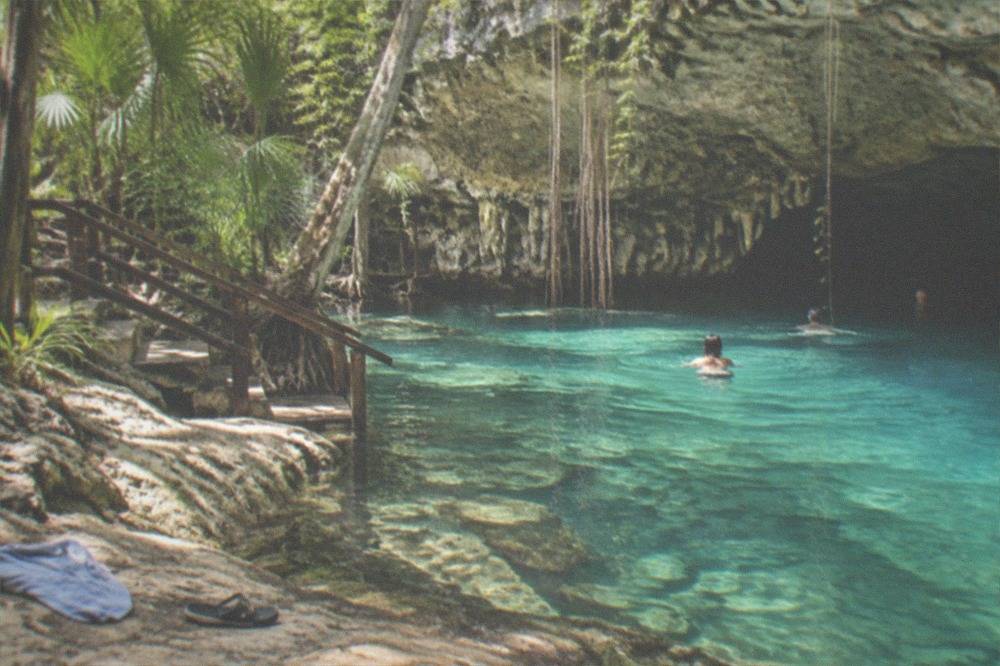
The step-up options fill out the range. The turtles-and-cenote version, which adds an Akumal snorkel and lunch buffet over 8 hours, runs from $129 and is the most-reviewed ruins-plus-cenote product on this list at 4.9 across 2,114 reviews. The all-inclusive version with tequila tasting and three cenotes runs from $211.81 for 6 to 7 hours with the Tulum entrance included, rated 5.0 from 194 reviews. The pattern is consistent: the more the price climbs, the more of the gate fees and extras are folded into the headline.
Do Kids, Students Or Mexican Nationals Pay Less?
Mexican nationals and foreign residents with valid ID pay 80 MXN instead of 265 MXN, and they enter free on Sundays. Foreign tourists pay the full 265 MXN every day, including Sundays. No verified child, student or senior discount for foreign visitors appears in INAH's published Tulum fee structure, so families should budget the full foreign rate per adult and confirm child rates on arrival.
The Sunday rule is the one that trips people up. It is real, it is official INAH policy across the country's archaeological zones, and it does not apply to foreign tourists. A family visiting from abroad on a Sunday pays exactly what they would pay on a Tuesday. What Sunday does change is the crowd: free national entry makes it one of the busiest days at the gate, so a foreign visitor on a Sunday gets the full price and the longest lines simultaneously.
For children, the honest answer is that INAH's published Tulum page does not carry a verified child rate, and this site does not print numbers the research has not confirmed. The practical guidance is to budget the full foreign rate for everyone in your party and ask at the window, where any child or small-child policy is applied. The same confirm-on-arrival framing applies to any student or senior concession: none is verified in the current fee structure, so plan on 265 MXN per foreign adult and treat anything better as a bonus.
How Does The Tulum Fee Compare To Coba And Chichen Itza?
Tulum's 265 MXN foreign-visitor fee is the cheapest of the three big regional sites: Coba totals roughly 310-330 MXN across its two-ticket cash system, and Chichen Itza runs about 697 MXN combined, roughly $35-40, split between federal and Yucatan state fees. All three figures are current reasonable amounts set by INAH and CULTUR with minor source variance, so confirm on arrival.
The comparison matters for anyone planning more than one ruins day from a Tulum base. Coba charges two tickets at the gate, cash only: roughly 210 MXN INAH federal plus 100-120 MXN local ejido fee for foreigners, with nationals at a discounted 105 MXN INAH rate and free Sundays. Chichen Itza's combined foreign-adult fee sits near 697 MXN, split between an INAH federal portion and a larger Yucatan state/CULTUR charge, with Mexican nationals paying less and Yucatan residents often exempt from the state portion. The Chichen Itza fee detail is tracked at a dedicated Chichen Itza fee page.
| Site | Foreign-visitor entry | Mexicans/residents | Extra costs to expect |
|---|---|---|---|
| Tulum | 265 MXN (about $13-15), unified | 80 MXN, free Sundays with ID | Parking ~80-100 MXN, optional shuttle ~20 MXN |
| Coba | ~310-330 MXN total, two tickets, cash only | ~105 MXN INAH, free Sundays | Bike rental ~60-100 MXN, tricycle ~140-200 MXN for two |
| Chichen Itza | ~697 MXN (about $35-40) combined | ~298-310 MXN weekdays with ID, free Sundays | Tolls and ~80 MXN parking on a self-drive day |
The value angle differs at each. Tulum's fee buys a compact, cliff-top site you can see thoroughly in two hours. Coba's buys a sprawling jungle site where the rental bikes are close to essential, and where the reopened Nohoch Mul climb, regulated since December 2025 with a wooden staircase, small groups, and a roughly 15-minute summit limit, is the only major pyramid climb in the region. Chichen Itza's is the most expensive gate and buys the most famous single monument, with climbing banned there since 2006. The Coba ruins guide and the Chichen Itza from Tulum guide each carry their own full cost breakdowns.
For multi-site planners, the comparison of Maya ruins near Tulum puts all of these fees, drive times and crowd levels side by side, and the site's broader Maya ruins of Mexico overview adds the quieter options like Muyil at 145 MXN for foreigners and Ek Balam at roughly 691 MXN foreign total.
The Bottom Line On Tulum Entry Costs
A foreign visitor walking in from the colectivo pays 265 MXN, roughly $13-15, and nothing else that is mandatory. A couple with a car pays about 630 MXN all-in including parking. The $18 guided walking tour and the $36 ruins-plus-cenote combo both sit near or below what many visitors spend assembling the same day independently, once transport and a cenote are counted.
The budget tiers, in plain terms:
| Budget tier | What it costs | What you get |
|---|---|---|
| Bare DIY | 265 MXN entry plus ~20-30 MXN colectivo each way | Entry only, no guide, no cenote |
| DIY with car | ~630 MXN for two, including ~100 MXN parking | Entry for two, no guide |
| Guided walking tour | From $18 per person, 1.15 hours, 4.9 from 109 reviews | Guided walk and beach access, entrance fees by package |
| Ruins and 2 cenotes combo | From $36 per person plus ~265 MXN ($13-15) adult entrance fees, 4.4 from 1,166 reviews | Transport, guide, two cenote swims, vest and locker |
| Private half-day | From $159 for 4 hours, 4.9 from 239 reviews | Private guide, AC transport, all fees included |
Whichever tier fits, the gate fee itself is the smallest and most predictable line in the budget. The variables are transport, the cenote question, and whether a guide is worth it to you, and those are the decisions the trio below prices out directly:
For more on what the site itself delivers once you have paid, the Tulum ruins site guide walks the zone structure by structure, and Tulum Ruins Tours carries the full lineup of bookable options if you want to compare every price point side by side.
Common Questions About How Much Does It Cost To Enter The Tulum Ruins?
How Much Does It Cost To Enter The Tulum Ruins?
Foreign visitors pay a unified 265 MXN fee, roughly $13-15, covering both the INAH archaeological zone and Parque del Jaguar access. Mexican nationals and residents pay 80 MXN. Fees are set by INAH and can change, so confirm on arrival.
Is Sunday entry free at the Tulum ruins?
Only for Mexican nationals and foreign residents with valid official ID. Foreign tourists pay the full 265 MXN every day, including Sundays, which are also among the busiest days at the gate.
Does the 265 MXN fee include parking?
No. Parking at the Parque del Jaguar lot runs about 80-100 MXN per car, and the optional electric shuttle from lot to gate costs about 20 MXN per adult. The roughly 5-10 minute walk is free.
Is a cenote included in the Tulum ruins entry fee?
No. There is no swimmable cenote inside the archaeological zone. Nearby cenotes like Gran Cenote are outside the ruins and charge separately, or you can reach them on a combo tour such as the Riviera Maya Tulum Ruins and 2 Cenotes half-day tour from $36.
Is a guided tour cheaper than visiting the Tulum ruins independently?
For a solo foreign visitor already in Tulum town, DIY entry plus a colectivo costs less than the $18 guided walking tour. For anyone arriving from farther away, or wanting a guide and a cenote, packaged options from $18 and $36 often beat the assembled DIY total once transport is counted.
How does the Tulum entry fee compare to Chichen Itza?
Tulum's 265 MXN is the cheaper gate. Chichen Itza's combined foreign-adult fee runs about 697 MXN, roughly $35-40, split between federal and Yucatan state charges. Coba sits between them at roughly 310-330 MXN across two cash tickets. Confirm all fees on arrival, as they are set by INAH and CULTUR and can change.